Salsa to stock up on
If you’re preparing lots of ingredients for salsa to freeze in portions, a larger bowl can mean fewer refills. Rommelsbacher and WMF list bowl capacities of 1,5 and 1 litre respectively for the models discussed here.


For a large batch of salsa to freeze, a chopper with a larger bowl can save you several refills. For smaller portions, a compact electric or manual model may be a better fit. The key things to consider are the usable capacity for your recipe, how much control you have over the texture, and how easy the parts are to clean. Raw tomatoes can turn soft after thawing, and a chopper won’t preserve their fresh texture.
If you’re preparing lots of ingredients for salsa to freeze in portions, a larger bowl can mean fewer refills. Rommelsbacher and WMF list bowl capacities of 1,5 and 1 litre respectively for the models discussed here.
If you’d rather chop ingredients than blend them, look for a model that gives you control over the process. Kenwood lists salsa as a suggested use, while the German Federal Centre for Nutrition notes that raw tomatoes, which contain a lot of water, can turn mushy when thawed.
If you prefer to prepare smaller quantities, a compact electric or manual chopper may be a good fit. Compare the storage space you’ll need with the extra effort involved in processing further batches and cleaning the chopper.
A good fit if: you’re preparing lots of ingredients and want to refill the bowl less often.
Bear in mind: the stated capacity isn’t the same as the usable amount for your recipe, and a larger bowl also needs more storage space.
A good fit if: you make salsa in smaller portions and want to control how it’s chopped.
Bear in mind: preparing a larger batch for the freezer may mean several rounds of chopping and cleaning.
A good fit if: you want to prepare small quantities without needing a socket.
Bear in mind: manually chopping a large batch means repeating the process by hand.
The German Federal Centre for Nutrition notes that raw tomatoes, which contain a lot of water, can turn mushy when thawed. So think about whether you’ll use the salsa later as a chunky dip or for cooking.
| Buying priority | What to look for | Who is it most important to? |
|---|---|---|
| Amount prepared per batch | Compare the stated capacity and maximum-fill guidance with the amount you usually make for your recipe. | If I’m preparing a large batch for the freezer, I want to refill the bowl as few times as possible; around 36% of consumers may care most about the amount prepared per batch. |
| Texture | Check whether you can control the chopping with short pulses, speed settings or repeated pulls. | If I want chunky salsa, I want to control how it’s chopped; around 29% of consumers may consider texture their top buying priority. |
| Cleaning between batches | Check the care instructions for the bowl, blade and lid individually. | If I’m making several portions, I want to know which parts are easy to clean; around 21% of consumers may prioritise ease of cleaning. |
| Power and storage space | Weigh up the space needed and how the chopper works against the number of batches you plan to prepare. | If I’m short on space or want to work without a socket, a compact or manual chopper may suit me; around 14% of consumers may put this first. |
The stated bowl capacity doesn’t tell you how much salsa you can add at once for your recipe.
Compare the amount in your recipe with the filling guidance for the specific model. For larger quantities, allow for extra chopping and cleaning rounds.
Several rounds take longer and mean more cleaning.
A chopper can’t stop raw tomatoes, which contain a lot of water, from turning soft when thawed. The German Federal Centre for Nutrition describes this change in foods with a high water content.
Decide in advance how you plan to use the salsa later. If you want it to stay chunky when raw, bear in mind that its texture may change after thawing.
A softer texture may not work well in a fresh, chunky dip.
The Tefal K13304 product description gives different care instructions for the bowl and blade, and the lid, which should only be wiped with a damp cloth. A technical specification on the same product page says otherwise.
Before cleaning the appliance, check the instructions for each part in the specific manual.
The lid may need to be cleaned by hand.
The MZ 500 is a larger electric chopper for preparing bigger quantities.
The Easy Chop CHP61.100WH is an electric mini chopper for smaller quantities; Kenwood lists salsa as a suggested use.
The manual K13304 is a 500-ml chopper for smaller quantities, with no electric operation required.
With its bowl size, the Kult X Chopper Edition sits between smaller mini choppers and the MZ 500.
This selection includes electric choppers for larger or smaller portions, as well as a manual pull-cord chopper for preparing salsa ingredients.
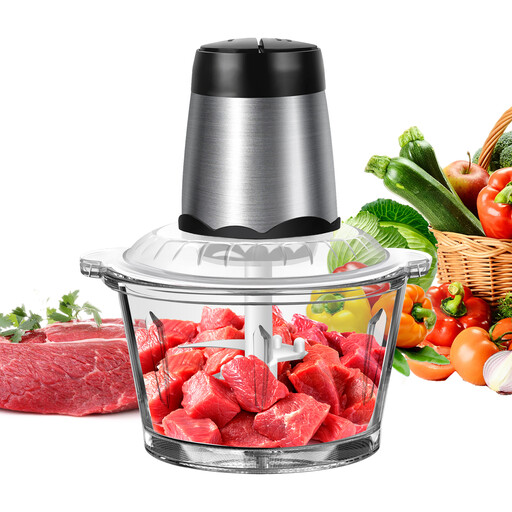 No image available
The 2-l bowl is an option if you’re preparing ingredients for a larger batch; the amount you can actually use depends on the appliance’s filling guidance.
The product description lists two speeds, a pulse function and removable dishwasher-safe parts. Stainless steel blades are mentioned in the product title.
 No image available
Two bowl sizes can come in handy if you need different quantities for different preparation tasks.
The product description lists 2 l and 0,6 l glass bowls, two speed settings and 300 W. According to the description, the bowl and lid are not heat-resistant or suitable for microwave use; sudden temperature changes of more than 50 °C should be avoided.
 No image available
This electric chopper is one option for preparing vegetables before freezing a larger batch.
According to the product title, the model has two speed settings and four blades made from 304 stainless steel. The description states a maximum continuous operating time of 40 seconds, followed by a break of at least 2 minutes, and a 15-minute cooling period after three cycles. Frozen food should not be processed.
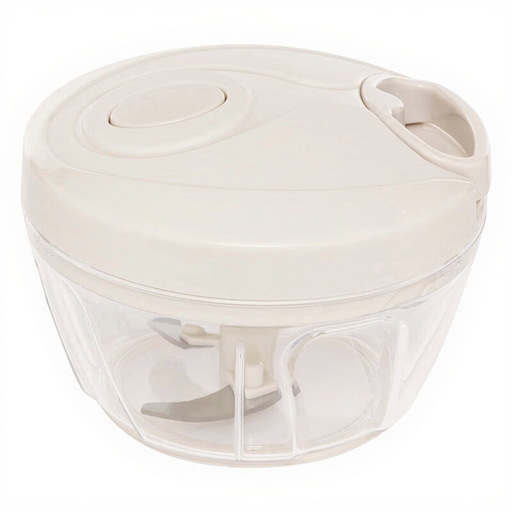 No image available
The manual pull-cord mechanism may suit you if you want to chop salsa ingredients without electricity; preparing a large batch for the freezer means doing the work by hand several times.
The product description lists salsa, herbs, garlic and onions as suitable ingredients, along with stainless steel blades and a transparent bowl.
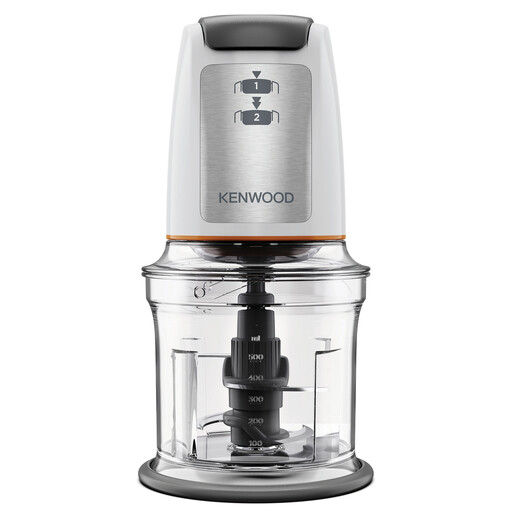 No image available
Kenwood lists salsa as a suggested use for this electric mini model; allow for several rounds if you’re preparing a larger batch for the freezer.
The product title lists a 0,5-l bowl, two speed settings and 500 W.
You can’t tell from the bowl capacity alone. Kenwood and Tefal list a capacity of 500 ml for their respective models. Check how your ingredient quantity compares with the filling guidance for the specific appliance, and allow for several rounds if you’re preparing a larger amount.
You shouldn’t count on it. The German Federal Centre for Nutrition notes that raw tomatoes, which contain a lot of water, can turn mushy when thawed. Bear this in mind when deciding how you’ll use the salsa later.
Follow the instructions for your model and check the bowl, blade and lid individually. For the MZ 500, Rommelsbacher recommends pulses of 2–3 seconds or a maximum of 20 seconds of continuous use. Tefal gives conflicting information about dishwasher suitability, so check the care instructions for each part in the specific manual.
The retailer, not the manufacturer, is responsible for the statutory warranty. The German consumer advice centre states that it generally lasts for two years from the date of delivery; a voluntary manufacturer’s guarantee is separate.
No. The European Union explains that the manufacturer uses the CE marking to declare that the product meets the applicable requirements. It isn’t proof of better chopping performance. The marking also doesn’t automatically apply to every product type, such as every manual pull-cord chopper.