Tapenade fans who like a bit of texture
You want to chop olives carefully rather than accidentally turning them into a smooth paste. Having control over the chopping matters more to you than having the largest possible bowl.


For a chunky olive tapenade, having good control over the chopping is more important than choosing the largest bowl: Kenwood describes two speed settings for the CHP61.100WH, while Tefal explains that you control the manual K13304 by pulling the cord repeatedly. If you’re preparing food for later, a suitable storage lid can save you from transferring it to another container. However, it doesn’t replace chilling perishable ingredients, as recommended by the German Federal Institute for Risk Assessment. A manual chopper doesn’t need electricity, but it does require some effort and individual parts may have specific cleaning instructions.
You want to chop olives carefully rather than accidentally turning them into a smooth paste. Having control over the chopping matters more to you than having the largest possible bowl.
You prepare a dip and serve it later. A suitable lid can make covering it easier, but perishable ingredients should stay chilled until they’re served.
You want to make a small amount of tapenade without taking up too much space. So consider the bowl size and how easy it is to clean, not just the motor’s power.
First decide whether you’d prefer an electric model or a manual pull-cord chopper. For electric models, the key considerations are how much control you want over the texture, the portion size and whether you need a storage lid.
| What matters to you | What to look for | Who is this most important for? |
|---|---|---|
| Controlling the texture | Check whether you can use the appliance in short bursts or choose from several speed settings, and whether you can see inside the bowl. | If you prefer chunky rather than finely puréed olives, you’ll want good control over how finely they’re chopped. Around 31% of consumers say texture is their most important buying consideration. |
| Preparing food to serve later | Check whether a suitable storage lid is included and whether the bowl will fit in your fridge. The German Federal Institute for Risk Assessment recommends keeping perishable foods as cold as possible until they’re eaten or processed. | If you’re serving the dip later, being able to cover it without transferring it to another container is handy. Around 25% of consumers say storage for later is their most important buying consideration. |
| Choosing a bowl to suit your portions | Compare the stated capacity with the amount you usually make. If necessary, check the minimum filling quantity in the instructions: the stated capacity doesn’t tell you what this is. | If you usually make just a little tapenade, you won’t want to use an unnecessarily large bowl. Around 25% of consumers say portion size is their most important buying consideration. |
| Cleaning between uses | Check the instructions for the bowl, blade and lid separately. WMF says its removable parts are dishwasher-safe; Tefal recommends cleaning the K13304 lid with a damp cloth or sponge. | If you use the appliance regularly, you’ll want to know which parts are easy to clean. Around 19% of consumers say cleaning is their most important buying consideration. |
A lid makes it easier to cover tapenade, but it doesn’t tell you how long it can be left unrefrigerated. The German Federal Institute for Risk Assessment recommends keeping perishable foods as cold as possible until they’re eaten or processed.
When planning your meal, consider covering the food and keeping it chilled as two separate things.
The stated bowl capacity doesn’t tell you the minimum filling quantity or guarantee a particular tapenade texture. A bowl that suits your usual portion won’t necessarily be right for every recipe.
First decide on your usual portion size and how you want to operate the chopper. If needed, check the minimum filling quantity in the instructions for the specific model.
For the manual Tefal K13304, the manufacturer says the bowl and blade are dishwasher-safe, but recommends cleaning the lid with a damp cloth or sponge.
Read the cleaning instructions for each part and take care when handling the blade.
The Easy Chop range includes a mini chopper for smaller quantities and a model with a glass bowl and storage lid.
The KÜCHENminis chopper is an option with a particularly small bowl.
The manual 5-second chopper K13304, with a 500 ml capacity, is an option that doesn’t need electricity.
With its 1.5-l glass bowl, the MZ 500 is better suited to larger quantities than very small portions.
The KM 3866 is a cordless electric option with a 1-l glass bowl.
This selection includes electric mini choppers and manual choppers for small quantities, with options that let you see or control how finely the ingredients are chopped.
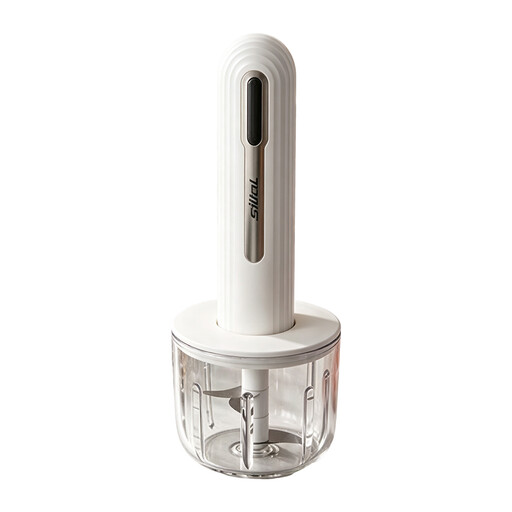 No image available
A good choice if you prepare small quantities and want to see how finely the ingredients are chopped as you go.
The bowl is transparent; according to the product description, the removable parts should be washed by hand. Short bursts are recommended to achieve the consistency you want.
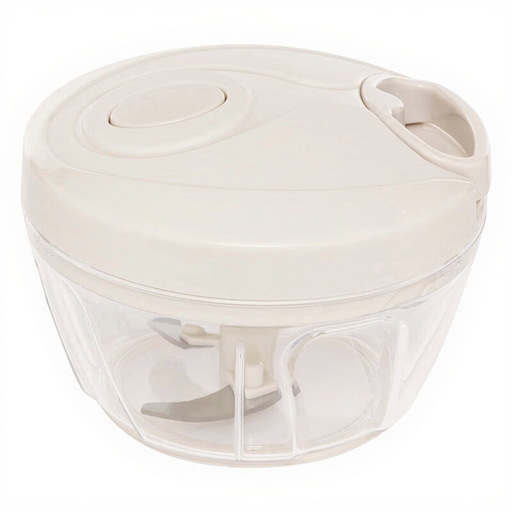 No image available
A good choice if you want to work without a plug and see how finely the ingredients are chopped in the transparent bowl.
Pull the cord to operate it manually. The product description lists herbs, nuts, garlic and onions as suitable ingredients.
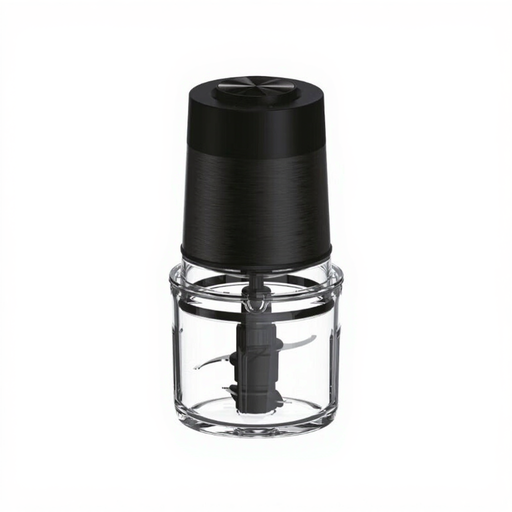 No image available
A good choice if you’re looking for an electric mini chopper with a glass bowl and several speed settings.
The bowl holds 0.5 l. It has four stainless steel blades and two speeds with a pulse function; according to the product description, the bowl and blades are dishwasher-safe.
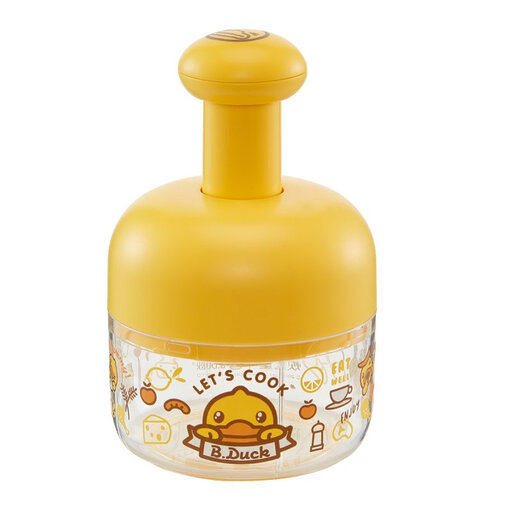 No image available
A good choice if you’re preparing a small quantity and want to control how finely it’s chopped by pulling the cord repeatedly.
It has a 220 ml capacity, stainless steel double blades and a BPA-free bowl. Pull the cord to operate it manually.
 No image available
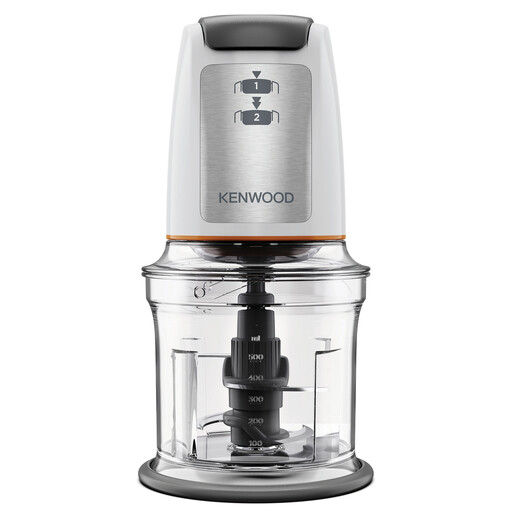
A good choice if you’re looking for an electric mini chopper with adjustable settings to help control the texture.
Kenwood describes two speed settings operated by pressing down on the lid. The title lists a 0.5-l bowl and 500 W; these specifications don’t guarantee a particular tapenade texture.
A storage lid on its own doesn’t answer that question. The German Federal Institute for Risk Assessment recommends keeping perishable foods chilled until they’re eaten or processed. What’s appropriate for a particular tapenade depends on its ingredients and how it’s handled; this recommendation doesn’t establish a general shelf life for fresh tapenade.
Check the instructions for each part of the specific model. For the Tefal K13304, the manufacturer says the bowl and blade are dishwasher-safe; wipe the lid with a damp cloth or sponge.
Statutory rights against the seller are separate from a voluntary manufacturer’s guarantee. The German consumer advice centre explains that, in Germany, sellers are generally liable for two years for defects that were present when the goods were handed over. Check the guarantee terms separately.
No. According to the German Federal Network Agency, the manufacturer uses the CE marking to declare, on its own responsibility, that the product complies with the applicable EU requirements; it isn’t an independent performance test. Food-contact materials used in food-processing appliances are also subject to the relevant EU rules, which are summarised on EUR-Lex.