If you prepare beetroot for individual lunchboxes
If you regularly chop small portions of cooked beetroot, look for a bowl that isn’t too large and a design that lets you check the size of the pieces as you work.


If you want to prepare cooked beetroot for a lunchbox with distinct pieces rather than a purée, choose a chopper that you can run in short bursts and check as you go. For individual portions, consider the bowl size and how easy it is to clean; for several lunchboxes, think about how much you can chop at a time. A manual model doesn’t need electricity, but you’ll have to pull the cord repeatedly. There’s no evidence to support a specific dice size for cooked beetroot. Whatever appliance you use, prepare the meal hygienically and keep it chilled: the Federal Centre for Nutrition recommends storing prepared food in the fridge once it has cooled.
If you regularly chop small portions of cooked beetroot, look for a bowl that isn’t too large and a design that lets you check the size of the pieces as you work.
If you use your chopper regularly, check the cleaning instructions for the bowl, blade and lid separately. Dishwasher guidance varies by model and component.
If you’re filling several lunchboxes, consider whether a larger batch is worth the extra storage space. The Federal Centre for Nutrition recommends storing prepared food in the fridge once it has cooled; keeping it properly chilled during transport is also important.
When chopping beetroot, being able to control how fine it gets is key. Kenwood says the CHP61.100WH has two speed settings, while Tefal says that more pulls with the K13304 produce finer results.
The percentages refer to consumers choosing a mini chopper to prepare cooked beetroot for weekday lunchboxes.
| What matters | What to check before buying | Who is this particularly important for? |
|---|---|---|
| Distinct pieces, not purée | Whether you can operate it in short bursts and check the contents as you go. | I want recognisable pieces in my lunchbox, not a fine purée. Around 36% of consumers put piece size first. |
| Cleaning after chopping beetroot | Check whether the bowl, blade and lid are each dishwasher-safe. | If I prepare beetroot regularly, I want to know which parts are easy to clean. Around 29% of consumers prioritise cleaning. |
| Amount per batch | Compare the bowl’s stated capacity with your usual portion size and follow the filling limits in the instructions. | When I’m filling several lunchboxes, I don’t want to have to process lots of small portions one after another. Around 21% of consumers focus mainly on batch size. |
| Power and worktop space | Choose between a manual or electric model and consider how much space it will take up. | If I want to work without a socket or have limited worktop space, the design is important. Around 14% of consumers put this first. |
A power rating doesn’t tell you what size pieces you’ll get when chopping cooked beetroot. Chopping for longer or repeating the process can make the contents finer.
Check whether you can run the appliance briefly, and inspect the contents as you go. Don’t treat general power specifications as proof of a particular chopping result.
According to Tefal, the bowl and blade of the K13304 are dishwasher-safe, but the lid is not.
Check the cleaning instructions for the bowl, blade and lid separately.
The stated capacities of the models considered here range from 0,3 l to 1,5 l. These figures don’t tell you the recommended amount of cooked beetroot to add, or how well the appliance handles small portions.
Choose a bowl size that suits your usual batch and follow the filling limits in the relevant instructions.
The Easy Chop CHP61.100WH is an electric model with a stated capacity of 500 ml.
The 5-Second Chopper K13304 is a manual 500 ml chopper.
The KÜCHENminis chopper has a stated capacity of 0,3 l.
The MZ 500 is a larger multi chopper with a 1,5 l glass bowl.
The Joybuy products below include manual and electric vegetable choppers, with bowls in a range of sizes. For each appliance, check the information about the parts intended to come into contact with food: the EU framework for food-contact materials doesn’t confirm that an individual product listing complies with it.
 No image available
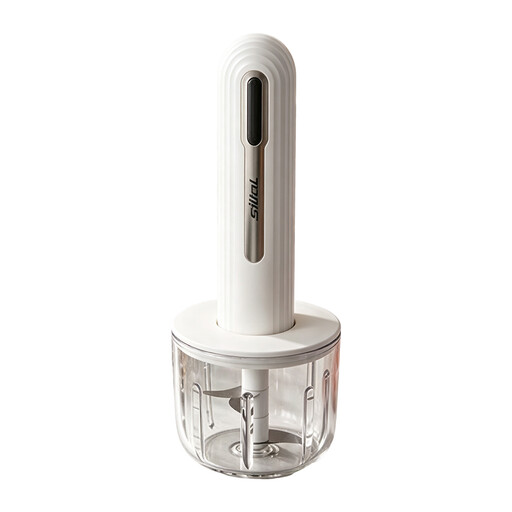
The product description mentions a transparent bowl and short operating intervals, so you can keep an eye on the contents as you chop.
The product details specify cordless operation and removable parts that can be washed by hand.
 No image available
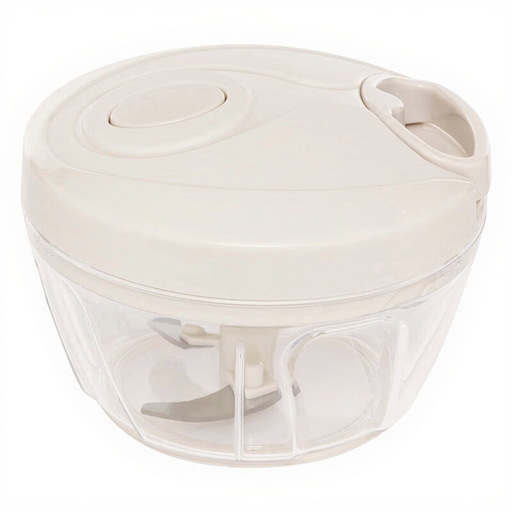
The manual pull-cord design needs no electricity. The product description says you can check the contents through the transparent bowl.
The appliance has stainless steel blades; chopping is done by repeatedly pulling the cord.
 No image available
The product details specify two glass bowls, with capacities of 0,6 l and 2 l, for different quantities.
The model is listed as having 300 W and two speeds; the bowls are described as dishwasher-safe. The bowls and lids are not heat-resistant, and temperature changes of over 50 °C should be avoided.
 No image available
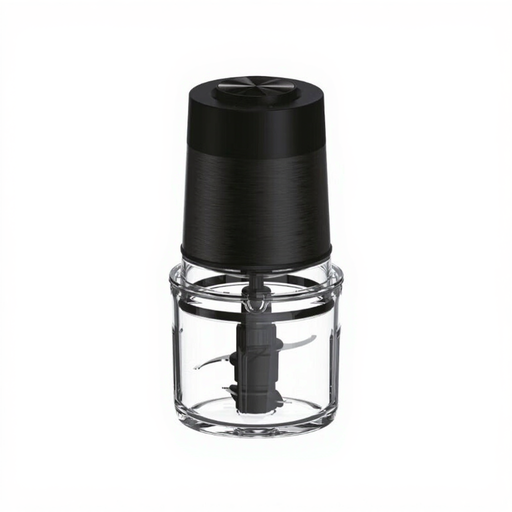
The 0,5 l glass bowl is a compact size for smaller preparation jobs; two speeds with a pulse function are specified.
The model is described as having four removable stainless steel blades. According to the product details, the bowl and blades are dishwasher-safe.
 No image available
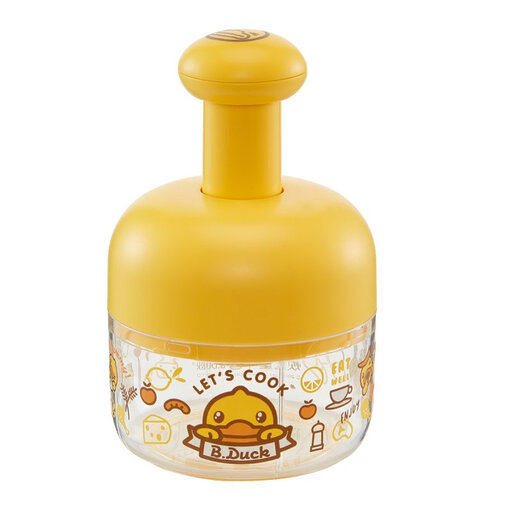
The product description says you can adjust the consistency by pulling the cord repeatedly.
The stated bowl capacity is 220 ml; the product is described as having stainless steel blades and operating without electricity. Check the cleaning instructions for the lid separately.
Start by running the chopper briefly, then check the size of the pieces as you go. Tefal says that more pulls with the K13304 can produce a finer result; it doesn’t guarantee a particular dice size for cooked beetroot.
There’s no simple answer that applies to every model. According to Tefal, the bowl and blade of the K13304 are dishwasher-safe, but the lid is not. Check the instructions for each part of your model separately, and clean any parts that come into contact with food after use.
It’s not possible to say that keeping food unrefrigerated is always safe. The German Federal Institute for Risk Assessment points out that inadequate cooling during transport and storage can allow harmful germs to survive and multiply. The Federal Centre for Nutrition recommends storing prepared food in the fridge once it has cooled.
The EU legal framework for food-contact materials applies to materials and articles that come into contact with food. The European Commission describes Regulation (EC) No 1935/2004 as a common framework; this doesn’t confirm that an individual product listing complies with it. Check the information provided for the specific appliance.
No. The Federation of German Consumer Organisations distinguishes between statutory consumer rights against the seller and a voluntary guarantee with its own terms. Before buying, check who is responsible for customer service and any replacement parts you might need.