Fans of chunky salsa
If you like your onions, tomatoes and herbs in visible pieces, using a few pulls or quick presses makes it easier to stop chopping at just the right point.


For a small portion of chunky salsa after a late shift, choose a mini chopper you can use in short pulls or quick presses, checking the texture as you go. A manual pull-cord model works without a socket, but takes a bit of effort; an electric model does the chopping for you, but needs power and storage space. Also check how each component is cleaned and whether the parts that come into contact with food are suitable for that purpose.
If you like your onions, tomatoes and herbs in visible pieces, using a few pulls or quick presses makes it easier to stop chopping at just the right point.
If you want to spend as little time as possible on prep and washing up after a shift, check separately how the appliance works and which parts need cleaning.
If you usually make salsa for yourself or just a few people, make sure the bowl and accessories suit your portion size and available storage space.
First decide whether you want to operate the pull-cord yourself or chop ingredients electrically. Then consider portion size and cleaning. Bowls, blades and other parts intended to come into contact with food must meet legal requirements for food-contact materials. Germany’s Federal Office of Consumer Protection and Food Safety explains the applicable rules; check the documentation for the specific model.
| What matters | What to check before buying | Who is this important to? |
|---|---|---|
| Control over texture | Pull-cord or button that can be pressed briefly; visibility of the contents. | If I want visible pieces of tomato and onion, I need to be able to stop chopping at the right time. Around 31% of consumers put control over texture first. |
| Less washing up | Care instructions for each component; removable blade. | After a shift, I don’t want to have to clean several separate parts. Around 25% of consumers prioritise easy cleaning. |
| Right-sized portions | Capacity, appliance dimensions and recommended quantity of ingredients. | For salsa for myself or a few people, the appliance needs to fit into my routine and available storage space. Around 25% of consumers put the right portion size first. |
| Ease of use | Type of drive and power supply; comparable noise data if relevant. | After a long shift, I want to keep effort to a minimum, but I also need to consider possible noise late in the evening. Around 19% of consumers prioritise ease of use. |
The capacity in millilitres describes the bowl, but doesn’t automatically tell you the sensible minimum or maximum quantity for every ingredient.
Compare the capacity with your usual portions and check the filling instructions for the specific model.
For the Tefal K13304, Tefal says the bowl and blade are dishwasher-safe, while the lid should be wiped clean.
Follow the care instructions for each individual component.
Power ratings alone don’t tell you how noisy an appliance is or what texture it will produce for a particular salsa recipe.
Control the consistency with short pulls or presses. If keeping the peace in the evening matters, compare noise figures only under similar conditions.
The manual 5-Second Chopper K13304 is designed for smaller portions and works without a socket.
According to Kenwood, the Easy Chop CHP61.100WH is designed for small quantities and is specifically suitable for salsa. The Duo Prep CHP80.000SI also comes with a separate grinding bowl.
The MMR08A1 is an electric universal chopper with a pulse switch.
According to WMF, the Kult X Chopper Edition has a larger glass bowl and two speed settings.
The KM 3865 compact multi-chopper is an electric model with a 0.5-litre bowl.
The Joybuy products below include manual pull-cord and electric choppers for preparing small portions.
 No image available
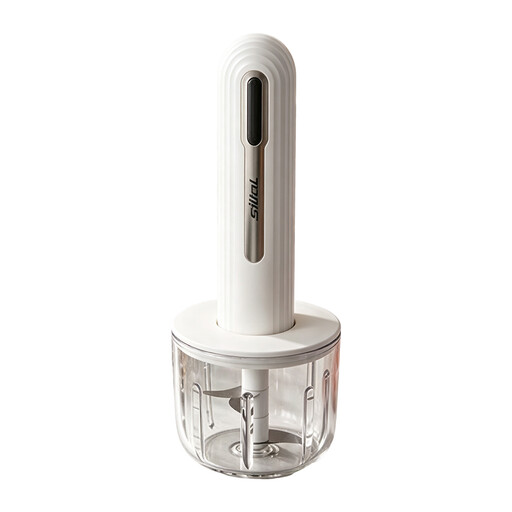
Short bursts are recommended for salsa, and the transparent bowl lets you keep an eye on the texture as you chop.
The removable parts should be washed by hand.
 No image available
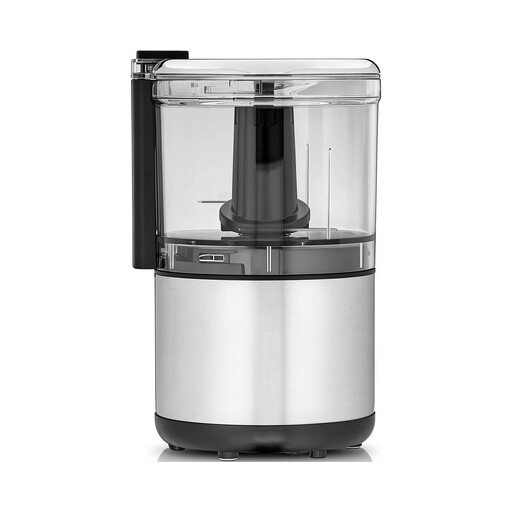
The stated 0.3-litre bowl capacity is a useful detail for small quantities such as herbs and onions.
The motor housing must not be immersed in liquid, and prolonged continuous use should be avoided.
 No image available
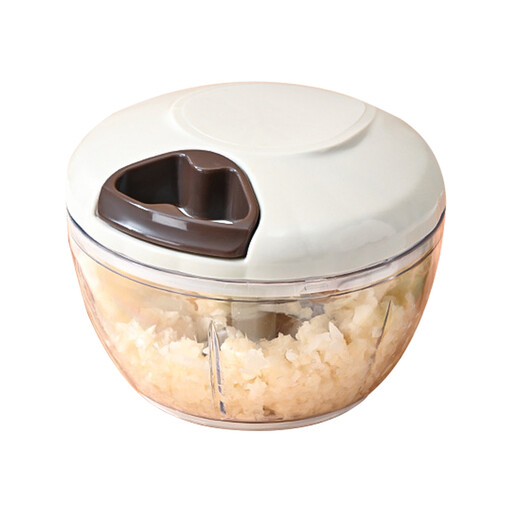
For salsa, you can adjust the texture gradually by pulling the cord repeatedly; the manual mechanism takes some effort.
500-ml bowl and stainless steel blades.
 No image available
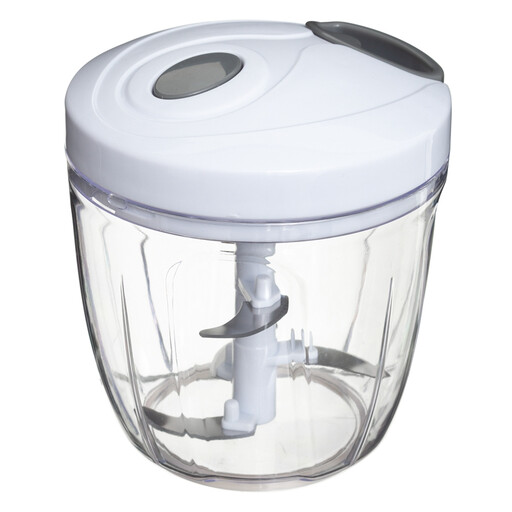
For salsa, the texture can be controlled by pulling the cord; the mixing attachment offers an extra function alongside chopping.
The pull mechanism in the lid must not be immersed or put in the dishwasher.
 No image available
The smaller of the two bowls holds 0.6 l; two speed settings are specified for different ingredients.
The bowls and lids are not heat-resistant or suitable for microwave use.
Chop the ingredients in stages and check the pieces as you go. Tefal says further pulls produce finer pieces in the K13304; Kenwood specifies two speed settings and push-button operation for the CHP61.100WH. This doesn’t guarantee a particular result for every recipe.
No. For the Tefal K13304, Tefal says the bowl and blade are dishwasher-safe, while the lid should be wiped clean. Follow the care instructions for each component.
Don’t leave prepared salsa unrefrigerated for longer than necessary. Germany’s Federal Institute for Risk Assessment notes that contaminants can multiply more easily in pre-cut raw fruit and vegetables; these foods should be kept chilled and eaten promptly. A chopper is no substitute for proper storage.
Statutory warranty rights are claims against the seller; a guarantee is an additional voluntary promise with its own terms. For ordinary movable goods, Section 438 of the German Civil Code generally provides for a two-year limitation period for the specified defect claims, starting when the goods are delivered.
Relevant legal requirements apply to parts intended to come into contact with food. Germany’s Federal Office of Consumer Protection and Food Safety explains that information about food contact, an indication of intended use or a glass-and-fork symbol can help identify suitable products; exceptions to labelling apply to items that are clearly intended for this purpose. According to the European Union, CE marking is required only where applicable harmonised rules require it; it is not an EU product approval issued independently.