What should you look for when buying?
First, check whether the exact model is intended for cooked meat. Then compare the permitted quantity per batch with your needs, and decide whether you want chopped or minced meat.
| What you’re looking for |
What to check before buying |
Who will find this most important? |
| Suitable for cooked meat |
Check the model instructions and look for explicit approval for the ingredient you plan to use. |
If I want to chop cooked meat, I need to know whether this specific appliance is suitable. Around 29% of consumers put suitability first. |
| Quantity and workflow |
Compare the permitted ingredient quantity per batch with the space the appliance takes up. |
If I’m preparing several portions, I want to plan the batches and storage space accordingly. Around 29% of consumers prioritise planning for multiple portions. |
| Texture you want |
Check how the appliance is operated and how it processes food; a blade and a meat mincer work in different ways. |
If chopped pieces matter to me, I want to control the process and avoid a minced result. Around 18% of consumers prioritise texture. |
| Cleaning and storage |
Consider removable parts, the cleaning instructions for each one and the need for separate utensils. |
If I’m preparing cooked portions for later, clean appliance parts and hygienic storage matter to me. Around 24% of consumers prioritise cleaning and hygiene. |
Joybuy products
This selection includes electric choppers, an appliance described as a meat mincer and chopper, and a manual mini food processor. Check that each model is approved for cooked meat; the bowl capacity and general statements about meat don’t replace this check.
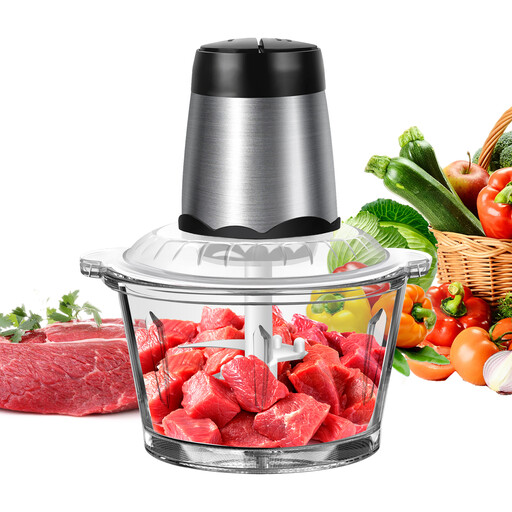 No image available
Electric meat chopper with a 2-l glass bowl
For buyers looking for a glass bowl and controlled processing; the product information doesn’t explicitly confirm suitability for cooked meat.
2-l glass bowl, two speed settings and a pulse function; the capacity doesn’t indicate how much meat can be processed per batch.
View at Joybuy
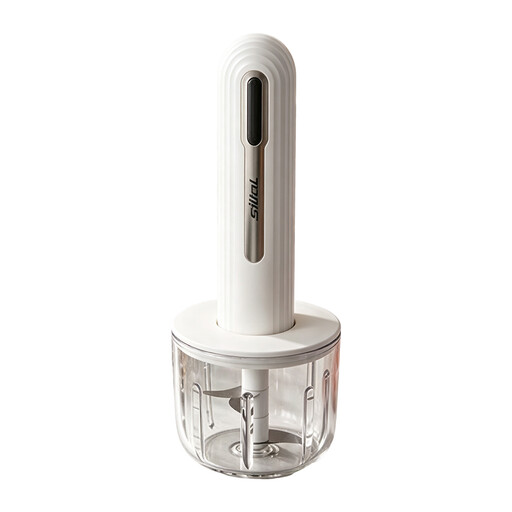 No image available
Cordless mini chopper for boneless meat
For small quantities of boneless meat and cordless use; this doesn’t mean it is explicitly approved for cooked meat.
The product description lists removable parts that need to be washed by hand.
View at Joybuy
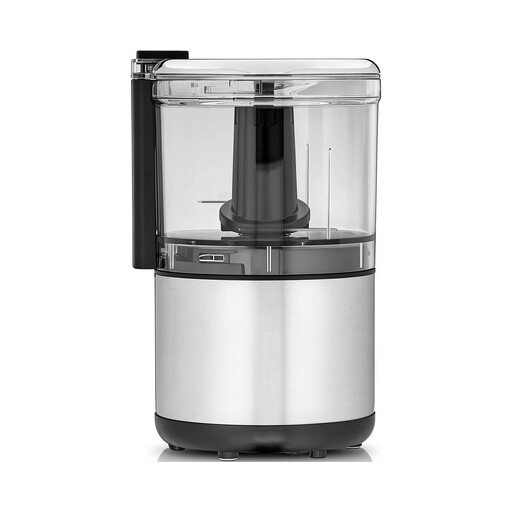 No image available
Electric chopper with a 0.3-l bowl
For compact chopping tasks; before using it with meat or cooked ingredients, check that the exact model is approved for this purpose.
0.3-l bowl, stainless steel blades and removable, dishwasher-safe parts according to the product description.
View at Joybuy
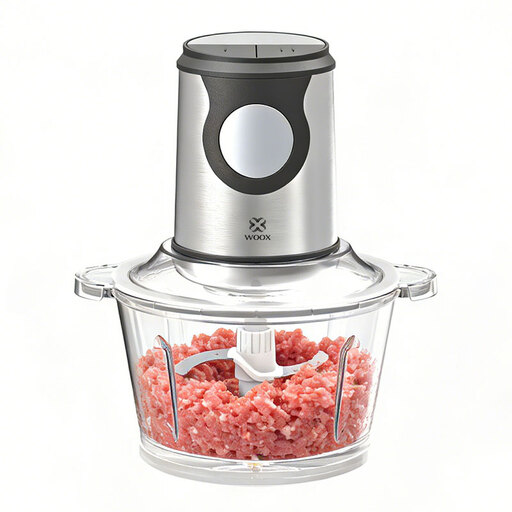 No image available
WOOX meat mincer and chopper with a 1.5-l glass bowl
For buyers interested in an appliance described as a meat mincer and chopper; check the texture you want and whether it can be used with cooked meat before buying.
1.5-l glass bowl and stainless steel blades. The bowl capacity doesn’t tell you how much meat can be processed per batch.
View at Joybuy
 No image available
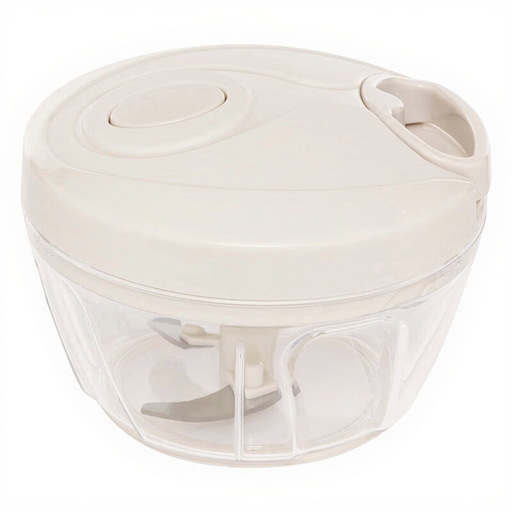
5five mini food processor with pull-cord mechanism
For manual preparation without plugging in; before using it, check whether the appliance is intended for meat and cooked ingredients.
The product description lists a pull-cord mechanism, stainless steel blades and a transparent bowl.
View at Joybuy
Frequently asked questions
Does a bowl capacity of 0.5 l mean I can process 0.5 l of cooked meat at once?
No. The capacity describes the bowl, not necessarily the permitted quantity of ingredients. The WMF instructions point out that not every food can be filled to the maximum mark. The instructions for the exact model will tell you which ingredients and quantities are permitted.
What should I bear in mind when assembling and cleaning it?
Follow the instructions for the appliance and check the cleaning guidance for each part. For the KÜCHENminis model described, WMF says to switch off and unplug the appliance before assembling, disassembling or cleaning it; take care when handling the sharp blades.
How should I store several prepared portions?
For longer-term storage, promptly cool hot food to below 7 °C, and use separate utensils for raw and cooked food. The Federal Institute for Risk Assessment provides this guidance on kitchen hygiene and food storage.
What requirements apply to parts that come into contact with food?
In Germany, materials that come into contact with food must meet requirements set out in, among other legislation, Regulation (EC) No 1935/2004. According to the Federal Office of Consumer Protection and Food Safety, when used normally and as intended, these materials must not release substances into food in quantities that could endanger human health. Check the information for the exact model and its intended use.


