Pesto for one
If you’re only making a small amount, the container should suit the quantity in your recipe. For small portions of pesto, Rommelsbacher recommends the universal container on the EGK 200 rather than one of its larger multi-choppers.


For small portions of pesto, start by comparing capacity and cleaning requirements. A compact electric chopper saves you the effort of chopping by hand, while a suitable small grinder may work well for very small quantities. Rommelsbacher recommends using the universal container on the EGK 200. A pull-cord model doesn’t need a power socket, but does require manual effort. Check the cleaning instructions for every individual part. The German Federal Institute for Risk Assessment (BfR) advises against making and storing homemade herbs in oil for later use in the home.
If you’re only making a small amount, the container should suit the quantity in your recipe. For small portions of pesto, Rommelsbacher recommends the universal container on the EGK 200 rather than one of its larger multi-choppers.
If you share worktops and kitchen utensils, easy-to-reach parts and clear cleaning instructions are useful. WMF and Tescoma each specify which parts of their particular appliances are dishwasher-safe. The BfR recommends using separate kitchen utensils for raw and cooked foods, and for foods that will be eaten without further heating.
If you want to work without a power supply and don’t mind doing things by hand, a pull-cord chopper could be a good option. Tescoma also recommends its HANDY pull-cord chopper for basil pesto.
Suitable if: You want to chop small quantities regularly without pulling a cord, and have a power socket and room to store it. WMF gives the KÜCHENminis a capacity of 0.3 l, while Kenwood lists 500 ml for the Easy Chop CHP61.100WH. Check these against the quantity in your recipe.
The trade-off: The motor and cable take up space. Only the parts specified by the manufacturer are approved for cleaning in the dishwasher.
Suitable if: You want to work without a power socket and control how finely the ingredients are chopped by varying the number of pulls. Tescoma also recommends its HANDY pull-cord chopper for basil pesto.
The trade-off: You’ll need to pull the cord yourself. On Tescoma’s HANDY, the container and blades are dishwasher-safe, but the lid with the pull-cord mechanism is not.
Suitable if: You’re making a very small portion of pesto. Rommelsbacher recommends the EGK 200’s universal container, which has a stated capacity of 70 g per container.
The trade-off: Its small capacity may mean you need to process the ingredients in several batches. For pesto, use the universal container on the EGK 200, not the grinding container for dry ingredients.
Suitable if: You often prepare larger quantities and have space for a large container. Rommelsbacher gives the MZ 500 a capacity of 1.5 l.
The trade-off: For small portions of pesto, Rommelsbacher recommends the smaller EGK 200. A larger appliance needs more space on your worktop and in your cupboard.
| What matters | What to check before buying | Who it matters most to |
|---|---|---|
| Capacity to suit your portion | Compare the usable container capacity with the quantity in your recipe, and check whether the appliance is suitable for small portions of pesto. | If I’m only making a small portion, the container should suit the quantity. Around 31% of consumers say getting the right amount of pesto to prepare is a key consideration. |
| Cleaning after shared use | Check the cleaning instructions for the container, lid and blade individually, and follow the instructions for taking the appliance apart. | If I share appliances and worktops, I want to be able to clean the parts thoroughly after use without putting unsuitable parts in the dishwasher. Around 25% of consumers prioritise ease of cleaning. |
| Control over consistency | Check that the appliance is approved for your ingredients, and compare speed settings or control by the number of pulls. | If I want to chop herbs and nuts to a particular consistency, I look at how the specific model works. Around 25% of consumers prioritise control over consistency. |
| Use without a power socket | Check that the type of drive suits your available worktop and storage space, and consider the manual effort involved. | If I don’t want to occupy a power socket in a shared kitchen, a manual model is one option. Around 19% of consumers prioritise being able to work without using a power socket. |
The Rommelsbacher MZ 500 has a capacity of 1.5 l, but the manufacturer recommends the EGK 200 instead for small portions of pesto. A larger appliance may also take up more worktop and storage space in a shared kitchen.
First, compare your portion size with the recommended working quantity and check that the specific container is suitable for pesto.
The container and blades on the Tescoma HANDY are dishwasher-safe, but the lid with the pull-cord mechanism is not. Cleaning it incorrectly could damage the lid or mean extra hand-washing.
Check the instructions for each individual part, and unplug electric appliances before cleaning them.
The details below refer to the specific product ranges and models mentioned, not to every product from each brand.
The KÜCHENminis is an electric option with a small container, while the Kult X Edition belongs to a different, larger product range.
The Easy Chop CHP61.100WH is an electric option for smaller preparations.
The EGK 200 is designed for very small portions of pesto, while the MZ 500 has a larger container.
The HANDY pull-cord chopper is a manual option that Tescoma also recommends for basil pesto.
The MMR08A1 is an electric alternative that was assessed in a DAS HAUS comparison test in 2024.
The options below include electric choppers with bowls of different sizes, as well as a manual pull-cord chopper. Compare the working capacity, drive and cleaning requirements of each appliance with your recipe and the space you have available.
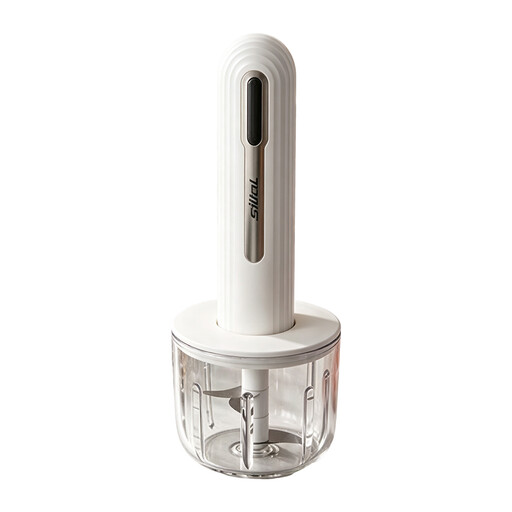 No image available
This cordless model could suit small preparations when you don’t want to use a power socket. Check that it’s suitable for processing herbs and for the quantity of pesto you’re making.
The product name specifies a transparent container. According to the product description, removable parts should be washed by hand.
 No image available
The 0.6 l bowl is the smaller of the two options for smaller preparations. Check that it will hold the quantity of pesto you’re making.
Two glass bowls, with capacities of 2 l and 0.6 l; 300 W.
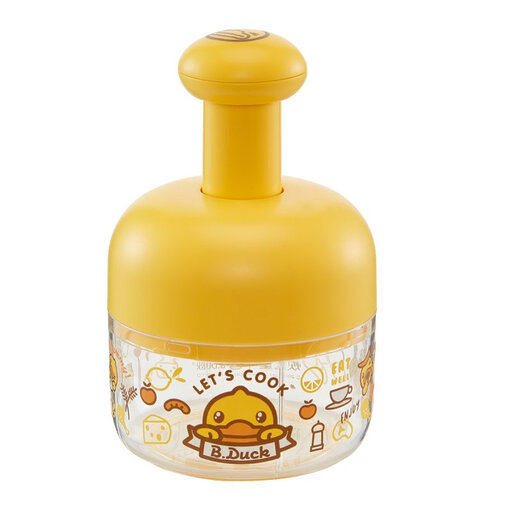 No image available
For chopping herbs and nuts without a power socket. The chopper works by repeatedly pulling the cord, so it requires manual effort.
Container: 220 ml.
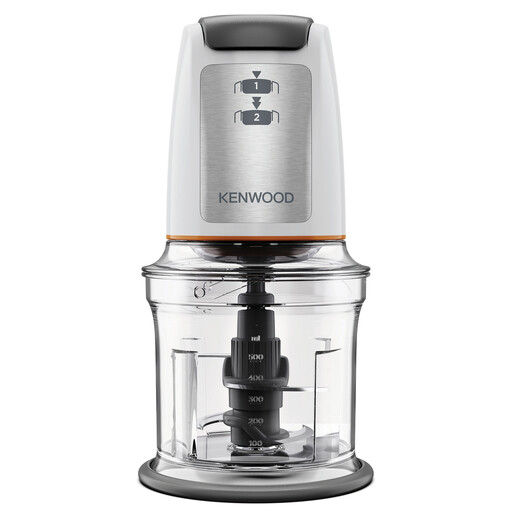 No image available
The 0.5 l bowl is listed as suitable for making pesto. Check that it will hold the quantity in your recipe.
0.5 l bowl, two speed settings and 500 W.
 No image available
The 2 l container may be larger than you need for a very small portion of pesto. Check the working capacity recommended for your recipe.
The product description says not to run the appliance for more than 40 seconds at a time, followed by a break of at least 2 minutes, and to allow it to cool for 15 minutes after three cycles. It also says the appliance isn’t designed for grinding dry ingredients such as coffee or grains.
No. Check that the quantity in your recipe is suitable for the recommended working capacity and that the appliance is approved for your ingredients. For small portions of pesto, Rommelsbacher recommends the universal container on the EGK 200 rather than one of its larger multi-choppers.
It depends on the model. According to the manufacturer, the container and blades on Tescoma’s HANDY pull-cord chopper can go in the dishwasher, but the lid with the pull-cord mechanism cannot. WMF lists the container, lid and blade on the KÜCHENminis as dishwasher-safe. Check the instructions for your specific version.
Unplug the appliance before assembling, taking apart or cleaning it, and follow the instructions for handling sharp blades. These instructions are expressly included in the WMF user manual; for other models, follow the instructions provided with that appliance.
In its 2016 risk assessment, the BfR advises against making and storing homemade herbs-in-oil products for later use in the home. It’s therefore sensible to make fresh pesto with herbs and oil only for eating soon afterwards. This isn’t a shelf-life recommendation for every recipe.
No. For electrical and electronic equipment covered by the relevant harmonised EU rules, the manufacturer uses the CE marking to declare conformity. The European Commission says there is no central EU body that issues a general certificate for this purpose. The mark alone doesn’t replace checking the product’s identity and safety instructions.