Who is a convection oven suitable for in a holiday cottage?

Anyone cooking for a group in one baking dish

If you’re baking for several people in one dish, its width, depth and height, including the handles, must fit inside the usable cooking space. Good Food uses a 25 × 20 × 7 cm dish in one recipe; your dish may have different dimensions.

Holidaymakers with limited kitchen space

With a freestanding oven, you need to consider not only its footprint but also the clearance specified in the instructions for that exact model. Check that the available socket also matches the appliance specifications.

Anyone who wants control over the baking

For a pre-cooked filling topped with mashed potato, you’ll need a convection function you can actually select, a suitable temperature setting and a baking time you can monitor. The cooking time in a recipe isn’t guaranteed to work with a different dish or appliance.

What should you look for when choosing one?

Compact freestanding convection oven

A good fit if: your dish, including its handles, fits inside the oven and you can position the appliance as instructed. Steba publishes the internal dimensions of the KB M19 so you can check.

Consider: A compact design is only helpful if there’s room for both the dish you need and the required clearance.

Larger freestanding convection oven

A good fit if: you need more cooking space for a dish to share and have enough room for the appliance and the required clearance. Rommelsbacher states that the BGE 1580/E has a capacity of 30 l and takes round baking tins up to 29 cm in diameter.

Consider: A larger cooking space means larger external dimensions. A stated diameter for round tins doesn’t confirm that a rectangular dish will fit.

Use an oven that’s already there

A good fit if: the holiday cottage already has an oven that’s safe to use, has a suitable heating mode and has room for your dish.

Consider: You can’t assume it will cost less to run based on wattage or a smaller design alone. The Verbraucherzentrale explains that energy ratings for ovens are based on a defined standard baking cycle.

What matters What to check before buying Who prioritises it?
Dish size and portions Compare the internal width, depth and usable height with the actual dish, including its handles. Don’t treat litres or the stated diameter for round dishes as measurements for a rectangular dish. If I’m baking for several people in one dish, it needs to fit inside the oven. Around 36% of consumers prioritise a dish that fits.
Positioning and connection Check the external dimensions and the positioning instructions for the exact model against the space available; check the connection requirements too. If kitchen space is limited, I need room for both the appliance and the required clearance. Around 29% of consumers prioritise a safe position and a suitable connection.
Heating mode and baking control Check that convection is specifically listed as a selectable setting and see what temperature and time controls the appliance offers. Keep an eye on the bake as it cooks. If I want a nicely browned potato topping, I need to be able to control the heating mode and baking time. Around 21% of consumers prioritise control over baking.
Cleaning and effort Look for a removable crumb tray, easy access for cleaning and any accessories you’ll need. Only compare energy figures when they’re based on the same measurement method. For occasional use, I want to keep cleaning and any extra effort to a minimum. Around 14% of consumers prioritise this.

Which assumptions should you avoid?

  • Assuming capacity tells you whether your dish will fit

    The oven’s capacity and the stated size for round baking tins don’t tell you directly whether a rectangular dish will fit, including its handles and height.

    Measure your dish and compare all three dimensions with the internal measurements or an explicit statement from the manufacturer.

    If the dish doesn’t fit, you may need a smaller one or have to bake in batches.

  • Allowing for the appliance dimensions alone

    The positioning instructions may require extra clearance and a suitable connection.

    Before buying, check the instructions for the exact model and make sure the available space meets the requirements.

    You may need to find another suitable place to position it.

  • Assuming a smaller size or lower wattage will save electricity

    A comparison of power ratings alone doesn’t show how much energy it takes to cook a pie. Energy ratings for ovens are based on a defined standard baking cycle.

    Only compare energy figures that use the same measurement method, and take into account whether the holiday cottage already has a suitable oven.

Which brands and models are worth considering?

Rommelsbacher

The range includes compact convection mini ovens with different cooking capacities.

  • Rommelsbacher states that the BG 1055/E has a capacity of 18 l and takes round tins up to 25 cm in diameter; the BGE 1580/E has a capacity of 30 l and takes round tins up to 29 cm.
  • The stated diameters don’t confirm that a rectangular dish will fit. With the larger model, you’ll also need to consider its external dimensions and where to put it.

Steba

The KB M19 is a compact oven with switchable convection and published internal dimensions.

  • Steba gives the internal dimensions as 23.5 × 31 × 25.5 cm (H × W × D), and lists a 90-minute timer and a removable crumb tray.
  • Your dish must fit inside, including its handles. The internal height doesn’t guarantee that a tall dish will fit on every shelf position.

Caso Design

The freestanding TO 26 SilverStyle combines a 26 l capacity with convection and separately selectable heating modes.

  • Caso states internal dimensions of 35 × 20 × 30 cm (W × H × D), a temperature range of 70–230 °C and a timer of up to 120 minutes; the crumb tray is removable.
  • Check the internal height and external dimensions of 48 × 30 × 40 cm (W × H × D) against the height of your dish and the space available.

Severin

The TO 2068 is a baking and toasting oven with a 20 l capacity and a convection function.

  • Severin states that the top and bottom heating elements and hot-air function can be switched on separately or together.
  • Always follow the instructions for the exact model when positioning and connecting it. Capacity alone doesn’t tell you whether your baking dish will fit.

Joybuy products for baking

The following Joybuy appliances are compact countertop ovens for baking. If you need convection, check that this heating mode is specifically listed for the model you’re considering.
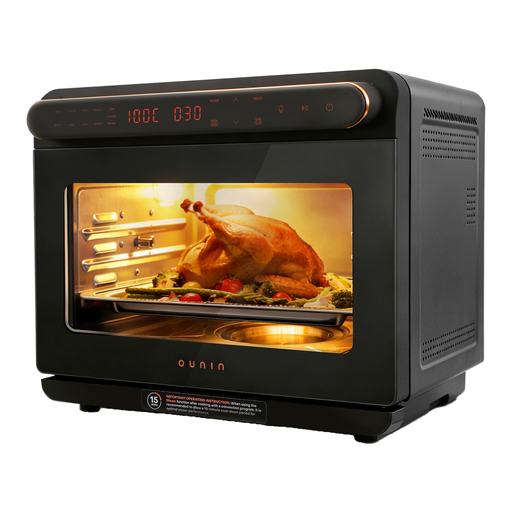
OUNIN 24L Steam Combi Oven, 10-in-1

OUNIN 24L Steam Combi Oven, 10-in-1

An option if you’re looking for a countertop appliance for baking; Steam Bake is mentioned in the product title.

24 l; 1-l water tank; 304 stainless steel interior.

View at Joybuy

WOLTU BF12sz mini oven, 32 l

WOLTU BF12sz mini oven, 32 l

Could be worth considering if you’re looking for a mini oven with a stated temperature range for baking.

32 l; 1,600 W; 100–250 °C; 60-minute timer; crumb tray.

View at Joybuy

WOLTU mini oven, 10 l, with pizza function

WOLTU mini oven, 10 l, with pizza function

A compact option if a small cooking space is enough for your dish; check the heating mode is suitable for your recipe.

10 l; temperature control from 100–230 °C.

View at Joybuy

WOLTU mini convection oven, 28 l

WOLTU mini convection oven, 28 l

Could suit you if you’re specifically looking for a mini oven described as a convection oven; check the dish dimensions against the cooking space.

28 l; temperature control and timer.

View at Joybuy
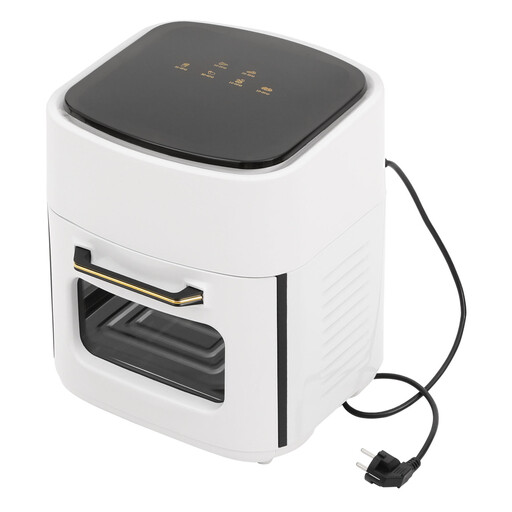
Smart Air Fryer Oven, 15 l, 1,400 W

Smart Air Fryer Oven, 15 l, 1,400 W

An option if you’re looking for a compact countertop appliance for baking; the product description mentions baking and circulating heat.

15 l; 1,400 W; 360° circulating heat.

View at Joybuy

Frequently asked questions

Can I use the oven setting from a recipe as it is?

A Good Food recipe recommends 180 °C on the convection setting for 30–35 minutes in a 25 × 20 × 7 cm dish, until the top is golden and the filling is bubbling. This isn’t a guaranteed cooking time for different quantities, dishes or ovens, so keep an eye on the pie as it bakes.

What should I check before setting up a mini oven in a holiday cottage?

Check the positioning and connection requirements in the instructions for the exact model against the space available. The instructions for the Severin TO 2068 require a properly installed earthed socket and a mains voltage that matches the rating plate. Don’t assume these requirements apply to other appliances without checking.

How should I clean the oven after baking the pie?

For the Severin TO 2068, the instructions say to unplug the appliance and let it cool before cleaning, and not to immerse it in liquid. Follow the cleaning instructions for any other model.

What should I look for to check a product complies with regulations?

For electrical appliances covered by the relevant EU rules, the CE mark is the manufacturer’s declaration of conformity; it isn’t an independent quality mark. The Bundesnetzagentur also advises retailers to check that the required instructions and safety information are provided in German. Check the markings and documents for the specific product listing.

What if the mini oven is faulty?

Your statutory rights against the seller are separate from any voluntary guarantee. If a product is faulty, the first step may be to ask for it to be repaired or replaced. Don’t assume that additional repair rules, which have applied to some product groups since 31 July 2026, also apply to a mini oven without checking.