
Lieferung heute & morgen

Qualitätsgarantie

Willkommens-Angebote freischalten: KOSTENLOSE Lieferung | Bis zu 80 % RABATT | Kostenlose 30-Tage-JoyPlus-Testphase
App herunterladen
Authored by: Joybuy Product Recommendation Officer Date: August 28, 2026
Anyone looking to professionally maintain their vehicle will quickly run into limitations: large polishers are unsuitable for door handle cups, rims, A-pillars, or the intricate edges on a motorcycle. A mini cordless polisher seems like the logical solution. But the market is flooded with tools whose performance claims often don't hold up in practice. Before you make a purchase, it's crucial to understand the common pitfalls that lead to unsatisfactory results and wasted money.
This guide focuses on the objective criteria that define a quality car detailing tool and helps you make an informed choice.
Many users invest in a tool that proves inadequate after a short time. These three problems are especially common:
To avoid these problems, you should check three core aspects before buying. These define the performance and versatility of a cordless polisher.
The heart of any polisher is its drive system. The two fundamental systems have different areas of application:
A high-quality tool for detail work should combine both modes or at least offer a switchable mechanism. This allows you to correct defects with the RO mode and achieve a perfect finish with the DA mode.
A polisher for small areas is only as good as its smallest attachments. Ensure the kit includes backing plates in various sizes relevant for detail work:
Additionally, extension shafts are a key feature for working in deep recesses or behind mounted parts. A complete paint care kit should also include a selection of polishing pads with different grades of firmness for various polishing steps.
With a cordless polisher, the battery system is crucial for an uninterrupted workflow. Relevant parameters are:
Here are some product recommendations tailored to different user profiles and their specific requirements.
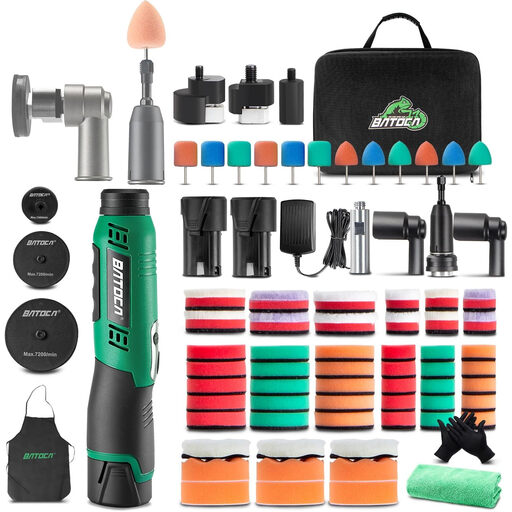
Why This Fits Their Persona: Ideal for professional detailers and ambitious enthusiasts who need a complete solution for precise detail work in hard-to-reach areas. This kit is designed for maximum flexibility.
The kit bypasses all three pitfalls: It offers a switchable DA/RO system, comes with two 12V batteries, and includes a comprehensive accessory package with backing plates (25/50/75 mm), dual-action shafts (3/12 mm throw), and extensions.
The switchable dual-system allows for both aggressive cutting and a safe finish with a single tool. The extensive scope of delivery makes additional purchases unnecessary.
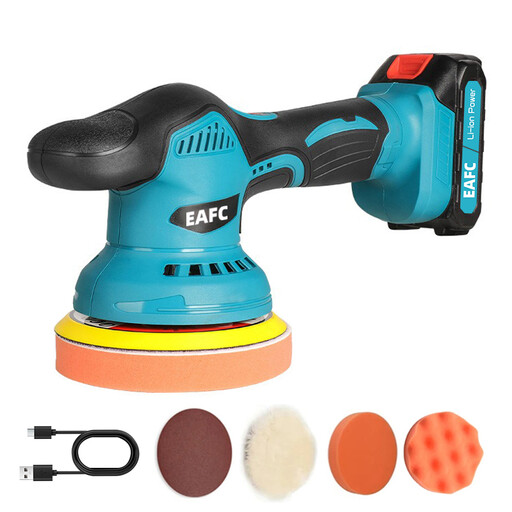
Why This Fits Their Persona: Suitable for users who focus on cordless work on larger surfaces like doors, roofs, or hoods and are looking for a powerful primary tool.
This tool avoids the pitfall of a weak battery by using a 21V system with high capacity (7500mAh according to the manufacturer). The 8-speed control provides good command for various applications.
The large 125 mm backing plate enables efficient work on standard body panels. The high battery capacity ensures long runtimes for polishing and waxing jobs.
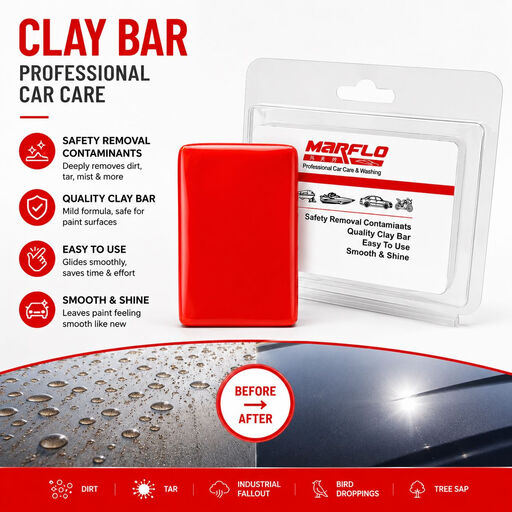
Why This Fits Their Persona: For the user who understands that a polish can only achieve its full potential on a perfectly decontaminated surface. This product is the foundation for any serious detailing project.
It addresses the biggest "hidden" pitfall: inadequate paint preparation. Even the best polisher cannot remove bonded contaminants like industrial fallout or tree sap. The clay bar creates a smooth foundation.
Safely and effectively removes bonded surface contaminants. Restores a glass-smooth paint surface and ensures that polishes and waxes adhere better.
We have compiled a complete, up-to-date list of products that fully meet these strict selection criteria.
1. How long does a mini polisher's battery last in real-world use? The actual runtime heavily depends on the selected speed and the amount of pressure applied. For tools with a 12V 2.0Ah battery, you can expect a runtime of about 25-35 minutes per battery under moderate load. This is why a kit with two batteries is highly recommended for uninterrupted work.
2. Can I polish an entire car with a mini polisher? Theoretically, yes, but it would be extremely time-consuming and inefficient. A mini polisher is a specialized tool designed for small, intricate, and hard-to-reach areas. For large, flat panels like roofs, hoods, or doors, a standard polisher with a larger backing plate (e.g., 125 mm or 150 mm) is a much better choice.
3. Is a dual-action or a rotary polisher better for beginners? For beginners, a dual-action polisher (DA) is clearly the safer choice. The oscillating motion minimises heat build-up on the paint surface, which significantly reduces the risk of paint burn or holograms. Rotary polishers require more practice and a good feel for the tool to avoid causing damage.