
Lieferung heute & morgen

Qualitätsgarantie

Willkommens-Angebote freischalten: KOSTENLOSE Lieferung | Bis zu 80 % RABATT | Kostenlose 30-Tage-JoyPlus-Testphase
App herunterladen
A mini electric air pump can save a lot of space in your glovebox, rucksack or cycling kit. However, compact models differ significantly when it comes to pressure range, air volume, power supply and accessories. If you only focus on a high PSI rating or a large battery capacity, you could end up buying a pump that isn’t suited to your intended use.
This buyer’s guide from the Joybuy product recommendation team explains which technical specifications actually matter and which product features suit different usage scenarios.
The rating in PSI or BAR mainly describes the maximum pressure the pump can reach. For inflating a car tyre, the air volume is also crucial. A model with a high pressure rating can still take longer on a larger tyre if the airflow rate is low.
For bike tyres, balls or quick pressure top-ups, a compact battery-powered air pump is often sufficient. However, if you regularly need to inflate several car tyres, you should also consider battery level, motor power, airflow rate and the permitted operating duration.
Capacity is usually given in mAh. For comparison, voltage is also relevant, as it helps you better estimate the stored energy. In addition, tyre size, starting pressure, target pressure and ambient temperature all affect run time.
An electric air pump can run more slowly or switch off earlier in cold temperatures. For longer jobs, a model with a suitable charging option or additional vehicle power supply makes more sense.
An air pump for air mattresses often works with high air volume and comparatively low pressure. An electric tyre pump, or a small compressor, is designed for higher pressure instead. These two categories of device should not be confused without checking the manufacturer’s specifications.
Even a 12V air pump for a vehicle connection isn’t automatically suitable for lorry, trailer or motorhome tyres. What matters is the stated pressure range, operating duration and intended use.
For car tyres, typical target values according to product specifications often fall in the range of around 2.0 to 3.5 BAR, or 29 to 51 PSI. The actual value is in your owner’s manual or on the vehicle itself, not on the tyre sidewall. For controlled inflation, a tyre inflator with a digital display is practical. Look for switchable units such as PSI, BAR and KPA, as well as automatic shut-off when the set target pressure is reached.
Airflow rate is given, for example, in L/min. A higher figure is especially relevant for air mattresses, inflatable boats or other large-volume items. For tyres, the hose connection, valve compatibility and pressure build-up also matter.
Time figures should always be treated as a guide. They depend on factors including tyre size, starting pressure and temperature. Claims like “30 seconds to top up” are therefore not directly comparable to fully inflating a flat tyre.
A battery-powered air pump is cordless and portable, but needs to be charged in good time. With a wired 12V air pump, there’s no pre-charging required, but you do need a suitable vehicle power socket. Models with a USB-C port can often be charged more flexibly, provided you have a compatible power adapter.
Also check:
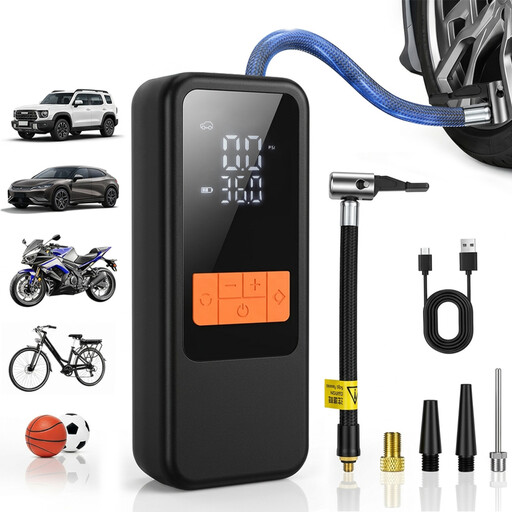
Why this product fits the profile: This model combines five pre-set modes for car, motorcycle, bike, ball and a custom setting. That makes it suitable for households with a variety of small inflation tasks.
The digital pressure detection with a stated accuracy of ±0.01 kg/cm² and the auto shut-off function reduce the risk of setting the target pressure by guesswork alone.
4000 mAh battery, maximum 150 PSI, 26 L/min airflow rate, plus LED light with constant and SOS modes according to product specifications.
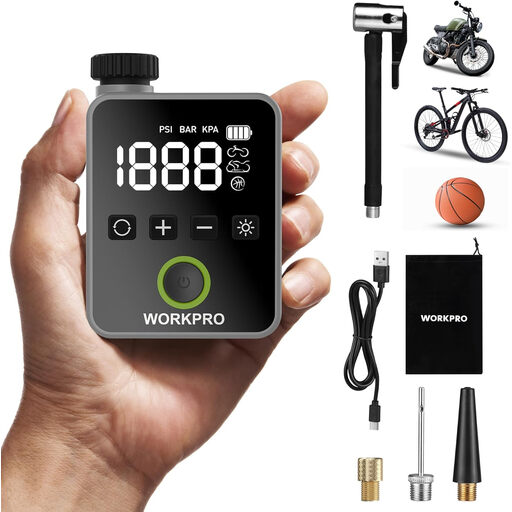
Why this product fits the profile: The compact design weighing 270 g and the digital display appeal to shoppers looking for a small, precisely controllable device for bike, motorcycle and ball use.
The pressure range of 3 to 140 PSI, four inflation modes and automatic shut-off provide concrete adjustment options rather than just a standalone maximum pressure figure.
LED display for pressure, mode and battery level, four nozzles, three pressure units, plus torch, SOS and power bank functions according to the product description.
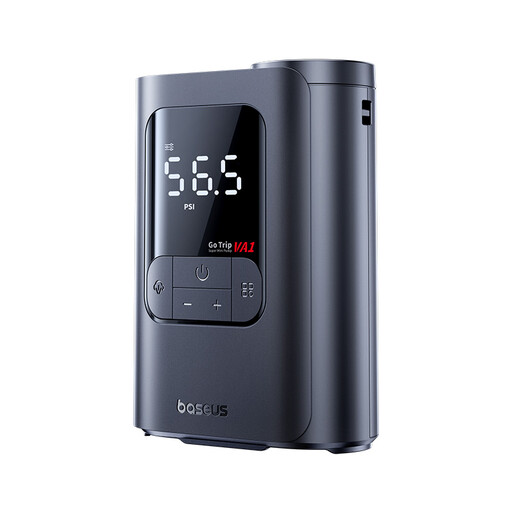
Why this product fits the profile: The cordless design appeals to drivers, motorcyclists and campers who want to inflate tyres, balls or small air mattresses without a fixed power supply.
The product specifications state a pressure range of 3 to 150 PSI, five modes and a pressure accuracy of ±0.05 BAR. Intended use for heavy lorry tyres is expressly not stated.
2500 mAh battery at 7.4 V, USB-C input, air hose and three nozzles; the housing weighs approximately 459 g according to the specifications.
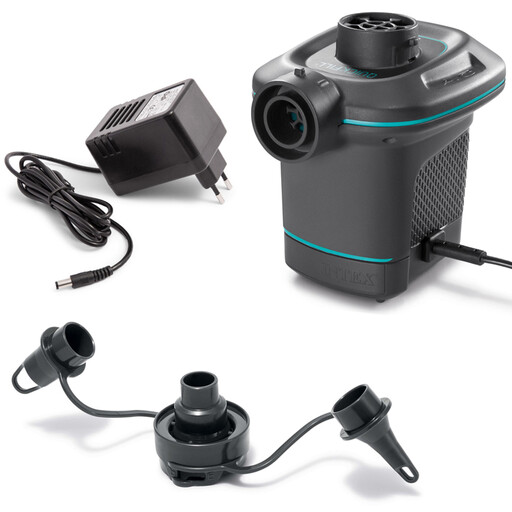
Why this product fits the profile: For campsites, home use and indoors, this mains-powered pump is designed for air mattresses and other large-volume inflatable items.
The selection clearly separates tyre pumps from a pump for large-volume items. The built-in overheat protection is relevant for its intended mains operation.
220–240 V connection, more than 1100 L/min airflow rate, hose, multiple nozzles, plus inflation and deflation function according to the product description.
We’ve put together a full, regularly updated list of products that fully meet these strict selection criteria and the safety regulations in force in the EU.
The run time depends on battery capacity, tyre size, starting pressure and temperature. For the Porbi Q16, a usage time of 25 minutes is stated in the product specifications. Before a longer journey, the pump should be fully charged and the charging port checked.
Yes, provided the model is designed for vehicle tyres and the required tyre pressure falls within the stated range. For regular car tyre inflation, a digital display, automatic shut-off and a suitable valve connection are useful. For lorry or trailer tyres, you must pay particular attention to the manufacturer’s specifications.
With a battery-powered air pump, the main cost is the small amount of electricity for recharging. A wired 12V or 220V pump needs an external power source while in use. For occasional pressure top-ups, the energy consumption is usually modest; for frequent use, run time, charging time and operating breaks are more important than the raw battery size.