
Lieferung heute & morgen

Qualitätsgarantie

Willkommens-Angebote freischalten: KOSTENLOSE Lieferung | Bis zu 80 % RABATT | Kostenlose 30-Tage-JoyPlus-Testphase
App herunterladen
An excavator in the playroom or sandbox is a dream come true for many children. It allows them to recreate the fascination of large construction machines on a smaller scale. However, the selection of toy excavators is vast, and not every model lives up to the promises on its packaging. As a Joybuy Product Recommendation Officer, I'll help you navigate the common pitfalls of purchasing and find a toy that ensures long-lasting enjoyment.
Before you make a decision, you should be aware of the most common issues that often only become apparent after unboxing.
To avoid these problems, you should check three key aspects before buying.
The durability of a toy excavator depends directly on its material. Look for models made from high-quality ABS plastic, often used in Bruder excavators. This material is flexible, impact-resistant, and UV-resistant, making it ideal for use as a sandbox excavator. For collectors and fans of detailed models, Siku excavators are a great option, often featuring a combination of a metal body and plastic parts. Check the excavator arm's joints: are they stable and smooth? Sharp edges or poorly finished seams are a clear red flag.
The manufacturer's age recommendation is more than just a number. A toy excavator for ages 3 and up must meet strict safety standards. It must not contain any small, swallowable parts, and its mechanics must be simple and safe to operate. A single lever to control the shovel is often sufficient here. For older children, around seven and up, things can get more complex. A LEGO excavator, for example, not only encourages role-playing but also develops technical understanding and fine motor skills during assembly. A ride-on excavator, on the other hand, is designed for active outdoor use and must have a stable construction and a sufficient weight capacity.
Does your child want to build an entire construction site? Then scale is crucial. Most Bruder excavators are made to a 1:16 scale and can be perfectly combined with other vehicles and figures from the brand. Siku excavators are often produced in smaller 1:50 or 1:87 scales, which pair well with model railways or other Siku vehicles. You can usually find this information on the packaging or in the product description.
Here are some models that represent a considered choice for different needs and age groups, based on objective features.

Why it's a great fit: Ideal for toddlers who are getting their first experience on the construction site. The simple yet effective lever mechanism is easy to understand and promotes hand-eye coordination without being overwhelming.
The excavator is made of robust plastic and has no small parts. It is explicitly designed for the sandbox, thus avoiding the pitfall of poor durability. The controls are reduced to the essentials, preventing frustration in young children.
Made in the EU and equipped with a simple, durable mechanism. Includes a matching play figure that can be integrated into play immediately.
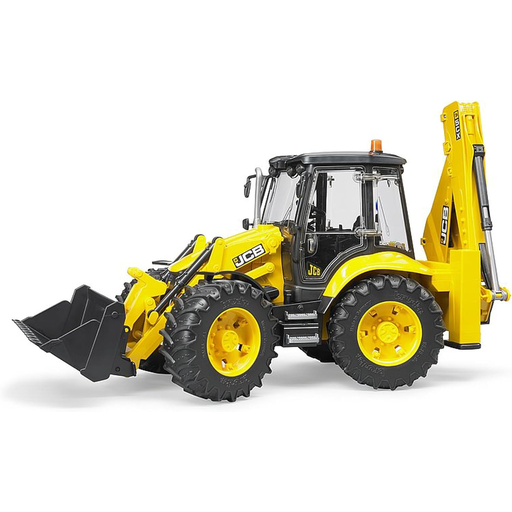
Why it's a great fit: For children who want more functions and details. This toy backhoe loader combines a front loader and a rear excavator, has a rotating driver's seat, and extendable support legs for an authentic play experience.
The complex functions are designed for children aged 4 and up and are intuitive to control thanks to the one-handed operation. The 1:16 scale ensures compatibility with the extensive Bruder play world, thus avoiding the trap of incompatible toys.
Four-wheel steering for a tight turning radius and an all-terrain pendulum axle. Made in Germany from high-quality ABS plastic.
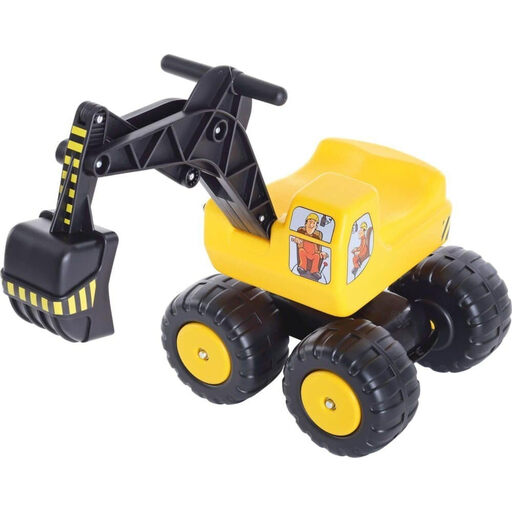
Why it's a great fit: This ride-on excavator allows children to become the excavator operator themselves. It's made for active use in the garden or sandbox and promotes movement and coordination through the manual control of the excavator arm.
With a load capacity of up to 100 kg, this model is extremely robust and durable. The construction is designed to withstand the stresses of riding and digging, thus avoiding the pitfall of toys that break easily.
The excavator attachment swivels to the side, enabling realistic play. The two-lever control system is intuitive and promotes motor skills.
We have compiled a complete, up-to-date list of products that fully meet these strict selection criteria and relevant safety standards.
1. What material is suitable for a sandbox excavator? For outdoor use, and especially in the sandbox, UV and weather-resistant plastic like ABS (Acrylonitrile Butadiene Styrene) is the right choice. It is robust enough to withstand sand and moisture without becoming brittle or fading. Models made purely of metal can rust if not dried carefully.
2. How can I identify a safe toy excavator for toddlers? Look for the age recommendation (e.g., for ages 3 and up), the absence of small, detachable parts, and rounded edges. Official safety seals like the German GS mark (Geprüfte Sicherheit - Tested Safety) provide additional assurance, as they confirm that the product complies with the requirements of the German Product Safety Act (ProdSG).
3. Are excavators from Bruder, LEGO, and Siku compatible with each other? No, generally not directly. The brands use different scales and systems. Bruder focuses on the large 1:16 scale, which allows for detailed play. Siku uses smaller scales like 1:50 or 1:87, which are more suited for collecting and model worlds. LEGO has its own system of building blocks. Combining them is only possible with a lot of creativity, but for a cohesive play world, it is advisable to stick to one brand and one scale.