
Lieferung heute & morgen

Qualitätsgarantie

Willkommens-Angebote freischalten: KOSTENLOSE Lieferung | Bis zu 80 % RABATT | Kostenlose 30-Tage-JoyPlus-Testphase
App herunterladen
A mini food chopper can prepare onions, garlic, herbs, nuts and vegetables in next to no time. However, not every appliance is right for every household. Singles generally need a smaller capacity, while families and meal-prep enthusiasts benefit from multiple speed settings and a larger bowl.
As a Joybuy Product Recommendation Officer, I filter the relevant product data and show you which details really matter when buying. After all, some common marketing claims can leave an appliance barely used after only a short time.
A high wattage alone does not indicate how evenly an electric food chopper will work. The blade arrangement, bowl size, pulse control and permitted ingredients are also important. An appliance with 450 watts may be suitable for herbs and onions, but that does not automatically mean it is designed for hard nuts or large quantities of meat.
Even a mini food processor has its limits. Check the instruction manual, maximum filling level and recommended operating time before buying.
A 0.7-litre container does not necessarily provide 0.7 litres of usable space. Ingredients need room to move around so that the blades can reach them. If the bowl is overfilled, you will often end up with coarse pieces at the top and very finely chopped ingredients at the bottom.
A small container is sufficient for a single portion of herbs or garlic. Families, sauces and meal prep benefit from around 0.6 to 2 litres, depending on whether small and larger quantities need to be processed separately.
A lid that is difficult to access or permanently attached blades increase the cleaning effort. With a dishwasher-safe food chopper, you should also check which parts can actually go in the dishwasher. The motor unit must never be immersed in water.
A food chopper with a glass bowl is transparent and may retain odours less permanently than some plastic containers. However, glass is heavier and, depending on the product specifications, must not be exposed to sudden, significant changes in temperature.
A manual food chopper is usually operated with a pull cord or lever. It does not require a socket, makes no motor noise during use and is suitable for small quantities. The fineness of the result depends on the number of pulls and how the ingredients are distributed. For camping, small kitchens or occasional food preparation, this type of vegetable chopper can be a practical choice.
An electric kitchen chopper works at the press of a button and is more convenient for repeated tasks. However, you also need to consider the power connection, cable, noise level and safety lock.
Wattage is a useful guide, but it is not the sole indicator of quality. The following features are particularly important in practice:
A container of around 0.2 to 0.7 litres is sufficient for small quantities. If you regularly process several portions, meat or nuts, you should choose a larger working capacity. Removable blades make emptying and washing easier.
The manufacturer's instructions are particularly important for glass containers. According to the product specifications, the glass bowls of the Bear Chopper QSJ-D03Q1 are not heat-resistant or microwave-safe; sudden temperature changes of more than 50 °C should be avoided. The bowl and blades of the Haier HCH5B1 011 are listed as dishwasher-safe.
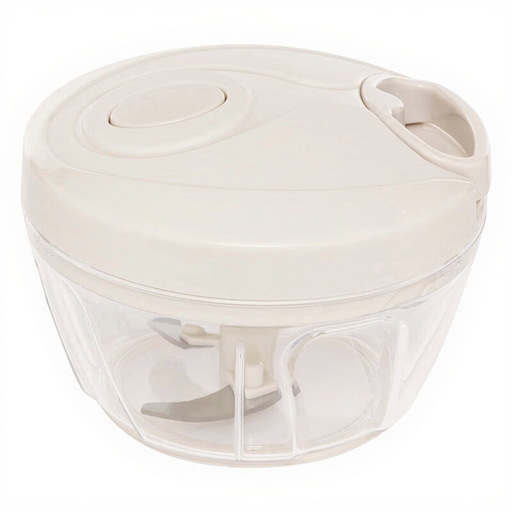
Why this product suits this profile: This manual mini food processor works without electricity or a cable. It is designed for small kitchens, occasional preparation and ingredients such as herbs, garlic, onions, nuts and salsa.
The product details specify a transparent, BPA-free container and manual operation. This eliminates the need for a power connection and the need to choose a motor power that may only appear sufficient.
No socket required; the transparent bowl and stainless steel blades make it easier to monitor and handle the ingredients.

Why this product suits this profile: Two glass bowls with capacities of 0.6 and 2 litres, together with two sets of stainless steel blades, cover both small and larger preparation tasks. The two speed settings distinguish between softer and harder ingredients.
According to the product description, the separate bowls prevent flavours from mixing. The safety lock only allows operation to start when the appliance has been assembled correctly.
300 watts, two glass containers, two blade sets and dishwasher-safe glass bowls according to the product specifications.
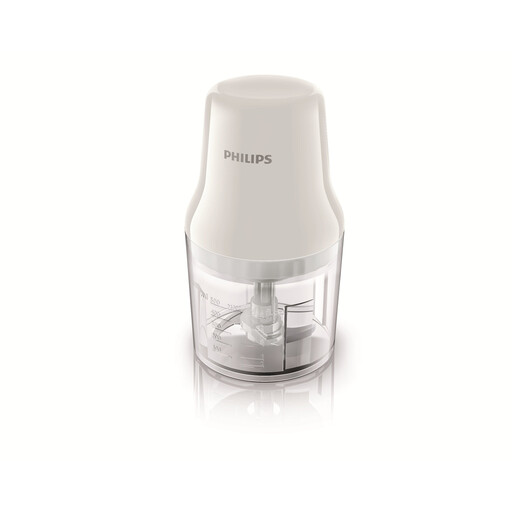
Why this product suits this profile: This electric food chopper has 450 watts of power, a 0.7-litre bowl and one-button operation. It is suitable for households that regularly prepare vegetables, herbs, nuts, meat or ingredients for baby food.
The transparent bowl makes it easier to monitor the ingredients. The instructions recommend short pulses and explicitly highlight the maximum filling level, sharp blades and the need to cool hot ingredients.
450 watts, 0.7-litre capacity and dishwasher-safe removable parts according to the product description.
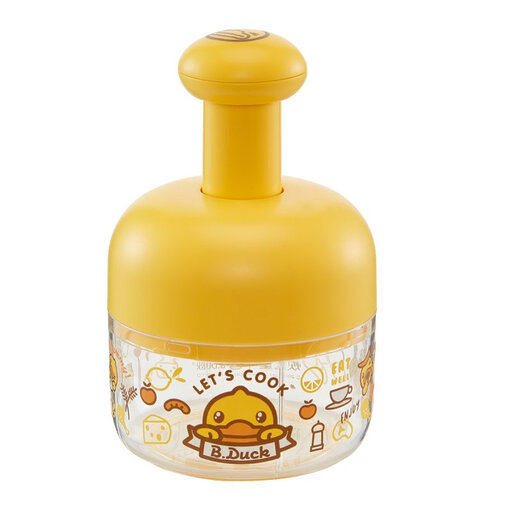
Why this product suits this profile: With a container capacity of 220 ml, this manual food chopper is designed for small portions, such as garlic, onions, ginger, herbs, fruit or nuts.
The clearly defined small capacity reduces the temptation to process large quantities in an unsuitable container. The manual design requires no electrical power.
Compact 220-ml format and pull-cord operation for individual ingredients and small quantities.
We have put together a complete, regularly updated list of products that fully meet these strict selection criteria and the safety regulations applicable in the EU.
For herbs, garlic and individual onions, 220 to 500 ml is usually sufficient. Singles and people with small kitchens can often manage with 0.5 to 0.7 litres. For families, sauces or meal prep, larger containers from around 0.6 litres are more practical. The bowl should never be filled right to the brim.
A manual food chopper does not rely on electricity and is suitable for small quantities. An electric model reduces physical effort when used frequently and processes ingredients at the press of a button. If you regularly prepare hard foods, meat or larger portions, pay particular attention to motor power, blade design and safety features.
Its lifespan depends on how it is used, how it is cleaned and whether the manufacturer's instructions are followed. Overfilling, excessively long operating times and unsuitable hard ingredients can put strain on the motor and blades. After each use, the blades should be cleaned carefully, dried thoroughly and moving parts checked for damage. On electric appliances, clean the motor unit with a damp cloth only.