
Lieferung heute & morgen

Qualitätsgarantie

Willkommens-Angebote freischalten: KOSTENLOSE Lieferung | Bis zu 80 % RABATT | Kostenlose 30-Tage-JoyPlus-Testphase
App herunterladen
As a Joybuy Product Recommendation Officer, I see the vast number of options on the market for compact cooling solutions every day. A mini fridge might seem like a simple purchase, but the details determine whether you get a useful appliance or a loud, power-hungry box. Before you make a decision, you should know the three most common pitfalls that lead to disappointment.
To avoid a bad purchase, focus on three verifiable metrics. These will give you an objective basis for your decision, whether you're looking for a small fridge for the office, the gaming room, or a student dorm.
The choice of technology is the most important decision and depends directly on your use case.
Since 2021, the new EU energy label with classes from A (very efficient) to G (less efficient) has been in effect. Many affordable mini fridges fall into energy efficiency class E or F. This isn't a deal-breaker, but you should check the annual consumption (stated in kWh/annum). A Class E model with about 80 kWh/year will incur electricity costs of around €32 per year (at €0.40/kWh). An inefficient unit can easily double these costs.
This value is crucial for use in living and working spaces.
Here are some models that are suitable for specific use profiles based on their objective specifications.
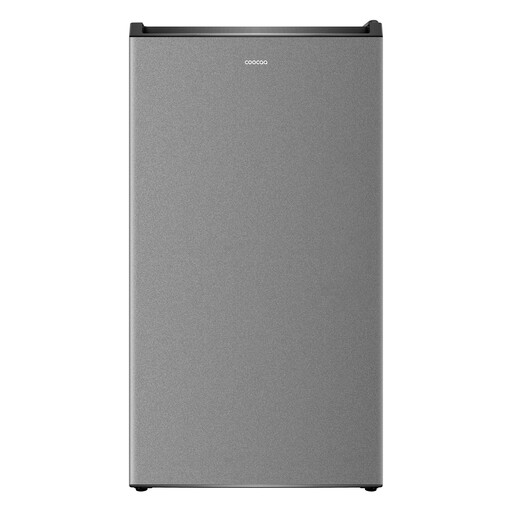
Why it's a good fit: With 83 litres of usable capacity, this classic countertop fridge strikes a good balance between a compact size and enough space for drinks, snacks, and lunch. It's a pragmatic solution for small apartments or as a secondary appliance for the office.
The unit uses compressor cooling for stable temperatures and, at 41 dB, is on the edge of being audible in quiet rooms, but is generally not an issue for a busy office or a student dorm. The capacity is clearly stated.
Precise temperature control, adjustable feet for stability on uneven floors, and an antibacterial door seal.
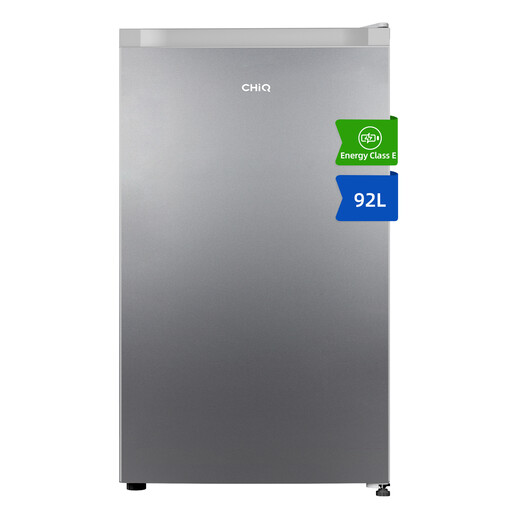
Why it's a good fit: With its slim 47 cm width, this beverage cooler fits perfectly next to a desk. The dedicated chiller drawer is ideal for quickly bringing drinks down to a very cool temperature for the next gaming session.
This model offers a specific function with its chiller drawer that goes beyond simple storage, providing real added value for its intended purpose. The energy efficiency class E is a solid standard for an appliance of this size and price range.
Slim design (47 cm), separate chiller drawer, 7-level temperature control, and a reversible door hinge.

Why it's a good fit: This cooler is designed for mobile use. It runs on 12V/24V DC power from a vehicle, is shock-resistant, and offers cooling performance down to -20°C thanks to its compressor technology. The integrated battery protection prevents it from draining the vehicle's battery.
It avoids the "Technology Lottery" by relying on powerful compressor technology. This guarantees reliable cooling and freezing performance even in high ambient temperatures—a crucial advantage over thermoelectric coolers when travelling.
True freezing function (down to -20°C), 3-stage battery protection for vehicle use, and a shock-resistant design for operation on rough roads.
Storing cosmetics often requires even more compact and quieter appliances. We have curated a selection of products designed specifically for this purpose.
Electricity consumption depends heavily on the size, set temperature, frequency of use, and, most importantly, the energy efficiency class. A typical small fridge in energy efficiency class E with about 45 litres of capacity consumes around 80 kWh per year. At an electricity price of €0.40/kWh, this corresponds to annual costs of about €32. Always check the energy label to find the exact value for your desired model.
A mini fridge with a freezer compartment can be practical for storing ice cubes, ice cream, or small frozen items. However, keep in mind that these compartments are often very small (usually 4-5 litres) and their cooling performance is not comparable to that of a separate freezer. Additionally, they usually need to be defrosted manually and can slightly worsen the overall energy efficiency of the appliance. It's a good addition for occasional use, but unsuitable for long-term storage of frozen goods.