
Lieferung heute & morgen

Qualitätsgarantie

Willkommens-Angebote freischalten: KOSTENLOSE Lieferung | Bis zu 80 % RABATT | Kostenlose 30-Tage-JoyPlus-Testphase
App herunterladen
A mini-fridge is a practical solution for many situations: in a dorm room, the office, as a secondary appliance in the basement, or for the garden shed. But the market is overwhelming and full of tempting offers that can later turn out to be poor investments. Before you decide on a small refrigerator, it's crucial to understand the common pitfalls that often lead to disappointment and unnecessary expense.
As your Joybuy Product Recommendation Officer, I'm here to help you separate fact from marketing fiction. Here are the most common problems and how to avoid them:
To avoid a bad purchase, you should focus on three objective core parameters. These will help you to objectively evaluate a model's performance and suitability for your needs.
The stated volume in litres is just a starting point. What's crucial is how that space is organised. Pay attention to the following points:
The noise level is a critical factor if the tabletop fridge will be placed in a living or working area. A quiet mini-fridge is essential for these environments.
The EU energy label provides information on annual electricity consumption in kilowatt-hours (kWh). Since 2021, the scale ranges from A (very efficient) to G (less efficient). Most current compact appliances are found in classes E or F. A class E appliance is preferable to a class F one, as it consumes less power for the same performance.
Also, pay attention to the defrosting system. Manual defrosting is time-consuming and must be done regularly to maintain the appliance's efficiency. Some models offer technologies like "MinFrost," which reduce ice build-up.
Here are some models that represent a considered choice based on objective criteria for specific user profiles.

Why This Fits Their Persona: Ideal for users who need a compact, stylish, and straightforward cooling solution for drinks and snacks. The retro fridge design fits well visually in modern offices or dorm rooms.
It avoids the wasted space trap by forgoing a freezer compartment and focusing purely on refrigeration. Its noise emission of 41 dB is an acceptable trade-off for an office or a live-in kitchen.
Compact dimensions (48x45x51 cm) and an adjustable thermostat (1°C to 10°C). The removable shelf provides flexibility.
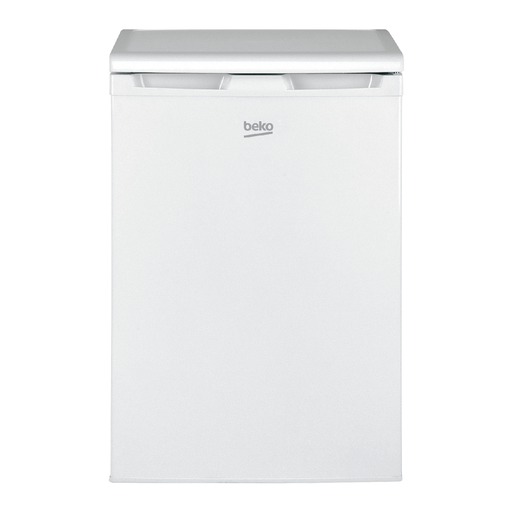
Why This Fits Their Persona: Perfect for users who need a full-featured yet compact fridge-freezer. It's suitable as the main refrigerator in a single-person apartment or as a supplementary unit for families.
It solves the noise trap with a very quiet operation of just 36 dB. The 4-star freezer compartment (13L) is fully functional for long-term storage and not just a token feature. The MinFrost technology reduces the effort of manual defrosting.
Very quiet operation, a proper freezer compartment, and sturdy safety glass shelves that can hold up to 25 kg according to the manufacturer. The reversible door hinge offers flexibility in placement.
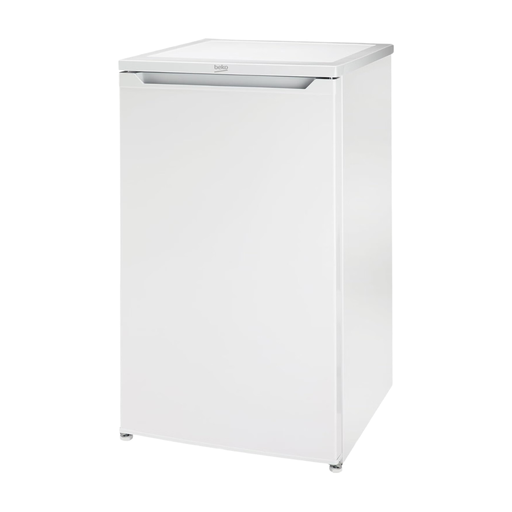
Why This Fits Their Persona: For anyone who needs maximum refrigerator space for drinks and food without sacrificing room to a freezer compartment. Ideal for parties, as a secondary appliance, or in a shared kitchen.
It bypasses the wasted capacity trap by offering 88 litres of pure refrigerator space. The automatic defrost function prevents efficiency loss from ice build-up and saves manual labour.
Spacious and flexible interior with three glass shelves and a vegetable drawer. At 38 dB, it is also pleasantly quiet during operation.
We have compiled a complete, up-to-date list of products that fully meet these strict selection criteria and rigorous safety standards.
Power consumption depends heavily on the energy efficiency class, size, and usage. A modern tabletop fridge in class E with about 90 litres of capacity consumes approximately 85-140 kWh per year. To estimate the annual cost, multiply the kWh value from the energy label by your current electricity price per kWh. Be sure not to leave the door open unnecessarily long and avoid placing the unit next to heat sources like radiators or ovens.
Adequate ventilation is crucial for the appliance's efficiency and lifespan. A clearance of at least 5-10 cm should be maintained at the back and sides from walls or furniture to allow the compressor's waste heat to dissipate. Also, place the unit on a level, stable surface to minimise vibrations and loud operating noises.
In a small fridge, organisation is everything. Use stackable, rectangular food storage containers for the fridge to make the most of the space. Models like the Mepal Multi Bowl Cirqula are well-suited for this, as they are airtight, leak-proof, and often microwave-safe. This keeps food fresh longer and makes efficient use of the limited space. Stainless steel containers like the Maxcook 3-piece set are also a robust and durable option.