
Lieferung heute & morgen

Qualitätsgarantie

Willkommens-Angebote freischalten: KOSTENLOSE Lieferung | Bis zu 80 % RABATT | Kostenlose 30-Tage-JoyPlus-Testphase
App herunterladen
A mini-fridge might seem like a simple purchase, but choosing the right model can have unexpected pitfalls. Whether it's for the office, a dorm room, as a quiet fridge in the bedroom, or a specialised cosmetics fridge – the requirements are diverse. Many buyers are swayed by marketing claims that later prove impractical. This guide will help you avoid common purchasing traps and make an informed decision.
The two most common problems when selecting a compact fridge are misleading noise level specifications and an inefficient interior layout. A unit advertised as "quiet" can be disruptive in the silent environment of a bedroom, and an externally compact fridge often offers surprisingly little usable storage space.
To avoid a poor investment, you should carefully examine three core technical parameters. These are the key determinants of your appliance's day-to-day usability.
The noise level is especially important if the small fridge will be placed in a living or working area. Manufacturer specifications in decibels are the most objective measure here.
Make sure you are considering a compressor model. While they are briefly audible during the cooling cycle, they are silent most of the time and more energy-efficient than thermoelectric models, which often produce a constant, low hum.
The external dimensions alone are not a reliable indicator. What matters is the usable capacity in litres and how it is organised. A countertop fridge with 90 litres might offer less space for bottles than a well-designed fridge without a freezer compartment with 87 litres, due to an awkwardly placed freezer or fixed shelves. Check the following points:
The type of cooling technology affects performance, energy consumption, and the intended use case.
Instead of making a one-size-fits-all recommendation, we have identified models that are tailored to specific user profiles and avoid the common pitfalls mentioned.
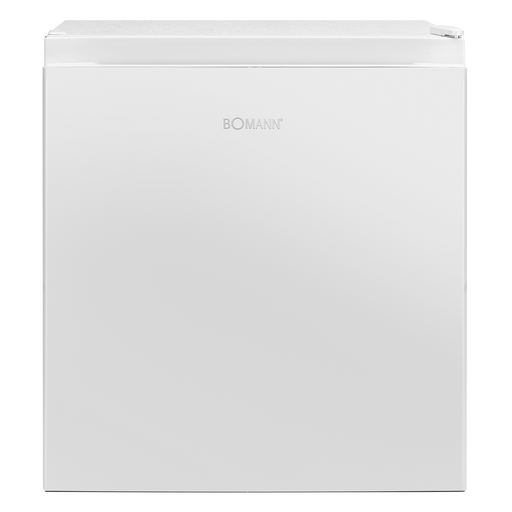
Why This Fits Their Persona: Ideal for environments where silence is a priority. Perfect as a minibar in a guest room or for drinks in the bedroom without disturbing your sleep.
Directly addresses the trap of misleading noise claims with a verifiably low operating noise of just 39 dB.
Very quiet operation; reversible door hinge and adjustable feet for maximum placement flexibility.
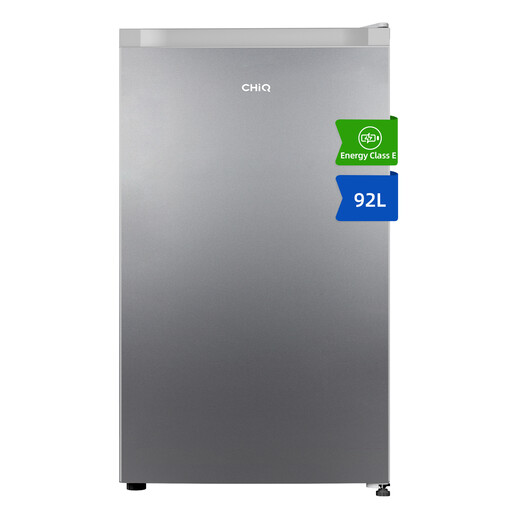
Why This Fits Their Persona: Offers a generous 92 litres of storage in a small footprint. The slim 47 cm width makes it ideal for small kitchens, offices, or shared apartments where every inch counts.
Avoids the "hidden space-waster" trap through high space utilisation. The design maximises usable capacity with a minimal width and offers a flexible interior layout.
Generous 92-litre net capacity; separate chill drawer for delicate foods; adjustable glass shelves.
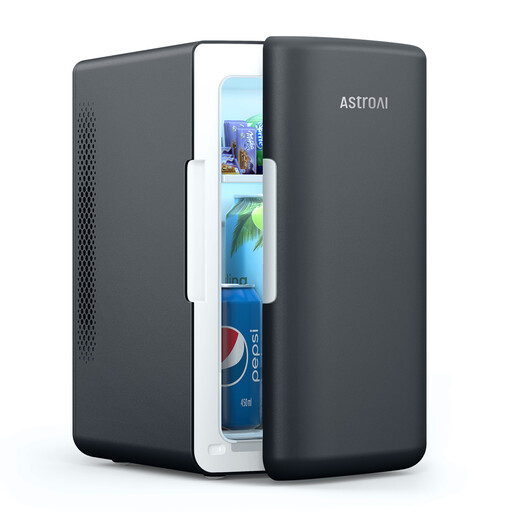
Why This Fits Their Persona: Specifically designed for storing skincare products or for portable use in a car. The thermoelectric cooling is vibration-free, which is beneficial for cosmetics.
Is transparent about its cooling performance (18-22 °C below ambient temperature). This manages expectations correctly and prevents it from being mistaken for a food-grade refrigerator.
Very compact and portable; includes AC and DC power cords for use at home and in the car; also features a warming function.
If you're specifically looking for a compact fridge that offers maximum cooling space without an unnecessary freezer compartment, we've put together a curated selection for you.
Power consumption depends on the energy efficiency class, size, and usage. A model like the Bomann VS 7255 with 87 litres of usable capacity and energy efficiency class E has a stated annual consumption of 85 kWh. Assuming an electricity price of €0.30/kWh, this results in annual operating costs of approximately €25.50. Always check the EU energy label for the exact annual consumption (kWh/annum).
An operating noise level below 40 dB is considered non-disruptive in most living and working environments. This is roughly equivalent to the ambient noise in a quiet library. Note that compressor models will audibly turn on for short periods to cool and are completely silent afterwards, whereas thermoelectric models often emit a constant but very low hum.
Generally, no. Most mini-fridges are freestanding units that require sufficient air circulation on the sides and back to dissipate the heat they generate. Installing one without adequate ventilation can lead to overheating, reduced cooling performance, and, in the worst case, a defective appliance. Always follow the manufacturer's installation instructions regarding the required minimum clearances.