
Lieferung heute & morgen

Qualitätsgarantie

Willkommens-Angebote freischalten: KOSTENLOSE Lieferung | Bis zu 80 % RABATT | Kostenlose 30-Tage-JoyPlus-Testphase
App herunterladen
A mini fridge can be a practical addition to a small flat, office, bedroom, motorhome or car. However, appliances vary considerably in terms of cooling technology, usable capacity, noise levels and power supply. If you only focus on the low purchase price or particularly compact design, you may later discover that the appliance does not fit under the worktop, cools drinks too slowly or does not provide a suitable compartment for frozen food.
This guide explains which specifications really matter before buying a small fridge and which model is best suited to each type of use.
A compact cabinet does not automatically mean efficient use of space. Door compartments, evaporator plates and a small freezer compartment can significantly reduce the interior space actually available. As well as checking the total capacity, you should therefore also look at how it is divided between the fridge compartment and freezer compartment.
For a bedroom or office, 6 to 45 litres is often sufficient. For a single-person or studio flat, however, models with around 80 to 90 litres are more practical. If you plan to use the mini fridge as your main appliance, you will usually need even more storage space.
A portable fridge with thermoelectric cooling is often suitable for keeping drinks cool during a journey. However, its performance depends heavily on the ambient temperature. A compressor cooler, on the other hand, can reach temperatures below 0°C depending on the model and may also be used as a freezer.
Check the stated temperature range and whether the manufacturer explicitly specifies use as a freezer compartment or freezer box. A car cool box is not automatically suitable for the permanent storage of perishable food.
The EU energy-efficiency scale ranges from A to G. An appliance with energy class E or D can be assessed using the official label, but without knowing the annual consumption in kWh, this says little about the actual cost. For a rough estimate, multiply the annual consumption by your electricity price per kilowatt-hour.
Mobile appliances involve other factors too, including the connection type, ECO mode, compressor performance and whether the appliance is powered by a vehicle battery. Any stated daily consumption only applies under the manufacturer’s specified conditions.
Measure the available space, including the area required to open the door. An under-counter fridge also needs sufficient clearance from the wall and unobstructed heat dissipation. Compare the stated width × depth × height with the space where you intend to place the appliance.
A reversible door hinge is useful if the appliance is positioned next to a wall or beneath a worktop. Adjustable feet make it easier to ensure a secure, stable position on slightly uneven floors.
A fridge with a freezer compartment should clearly state the size of the freezer area and the temperature it can reach. A small drinks-cooling compartment should not be confused with a fully fledged freezer compartment.
For use in a bedroom or home office, the decibel rating is important. Depending on the room acoustics, levels between around 38 and 42 dB may be perceived differently. Also look out for:
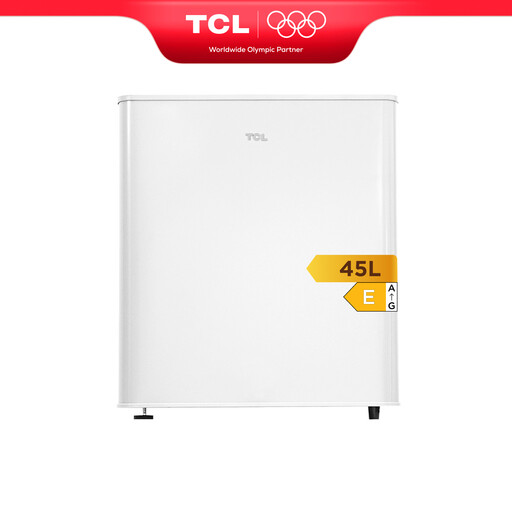
Why this product suits this profile: This compact tabletop fridge offers a total capacity of 45 litres, a 3-litre freezer compartment and dimensions of 449 × 485 × 512 mm. This makes it suitable for students, small rooms, offices or additional drinks cooling.
The product specifications list the fridge and freezer capacities separately. A mechanical thermostat and removable glass shelf make everyday use straightforward.
Energy efficiency class E, a temperature range of 0 to 10°C in the fridge compartment and a stated noise level of 40 dB.
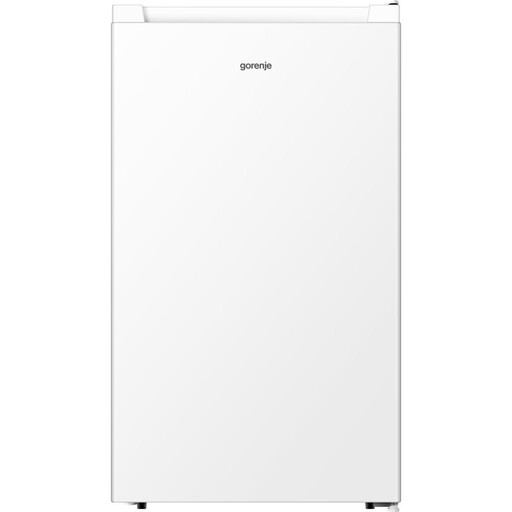
Why this product suits this profile: With a total capacity of 82 litres, a 75-litre fridge compartment and a 7-litre freezer compartment, this appliance is designed for small households or as additional refrigeration.
The dimensions of 84.2 × 47.5 × 44.8 cm and the separately stated usable capacities make it easier to plan the available space and storage.
LED lighting, digital temperature control, vegetable drawer, reversible door and a stated noise level of 38 dB(A).
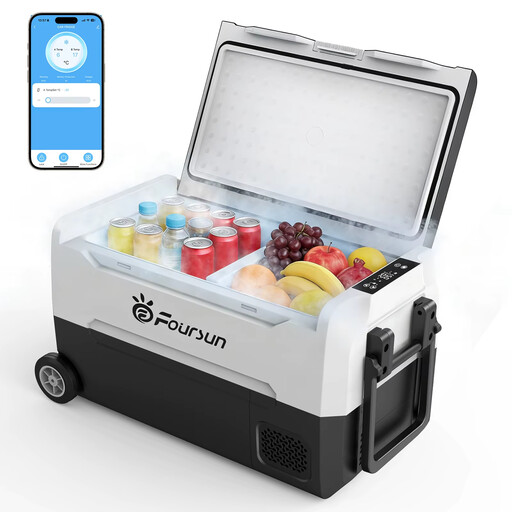
Why this product suits this profile: This portable cooler is designed for use in cars, while camping and when travelling. It operates with 12/24-volt DC and 100–240-volt AC and offers a temperature range of -20 to +20°C.
The compressor technology and stated temperature range clearly distinguish this appliance from simple thermoelectric drinks coolers.
35-litre capacity, app control, ECO mode and multiple power sources; dimensions are 691 × 390 × 370 mm.
We have put together a complete, regularly updated list of products that fully meet these strict selection criteria and the safety regulations applicable in the EU.
Place a mini fridge on a level, dry and stable surface. Follow the ventilation clearances specified in the instruction manual and do not position the appliance directly next to radiators or in strong sunlight. After transportation, the fridge should be left upright for the period stated by the manufacturer before it is connected to the power supply.
A car fridge requires suitable protection for the vehicle battery. Check whether 12/24 V DC is available and whether a mains adapter for 230 V is included. Food should only be placed inside once the appliance has reached the intended temperature. The door seal and ventilation areas should be checked and cleaned regularly.
This depends on the design, energy efficiency class, ambient temperature and usage. The key figure is the stated annual consumption in kWh on the EU energy label. For mobile compressor coolers, manufacturers may also state consumption per day or power consumption in watts. These figures cannot be directly compared with the annual consumption of a household fridge.
Yes, provided the noise level, ventilation and available space are suitable. Models with a stated noise level of around 38 to 42 dB may be suitable for a bedroom or office. Leaving sufficient clearance from the wall helps prevent additional vibrations and supports heat dissipation.
Its size alone cannot be used to determine a fixed service life. Factors including the compressor, seals, ventilation, transportation and maintenance all have an influence. Correct installation, regular cleaning and following the instruction manual can help ensure reliable operation. If you notice unusual noises, a lack of cooling or a damaged cable, disconnect the appliance from the power supply and contact the manufacturer or an authorised service provider.