A mini fridge promises chilled drinks in the office, fresh snacks in a dorm room, or safe food storage while camping. But the market is overwhelming, and many buyers fall into traps that lead to disappointment and unnecessary expense. Before you make a decision, it's crucial to distinguish between typical marketing promises and actual product features.
This guide will help you identify the three most common pitfalls and understand the technical specifications that truly matter for your needs.
- The Noise Trap: Many models advertised as "quiet" produce a constant, disruptive hum that is unbearable in bedrooms or offices. A simple decibel rating without the context of the cooling technology is often misleading.
- Misleading Capacity Claims: A high litre rating doesn't guarantee usable storage space. Poorly placed cooling elements or inflexible shelves can drastically reduce the effective capacity, making it impossible to fit even standard bottles.
- The Wrong Cooling Technology: The choice between an inexpensive thermoelectric model and a high-performance compressor cooler is critical. A device designed for chilling drinks at your desk will fail during a summer camping trip.
Key Buying Criteria: What Really Matters
To avoid a bad purchase, you should focus on objective, technical parameters. These three factors determine the performance and suitability of a mini fridge for your specific use case.
Cooling Technology: Compressor vs. Thermoelectric Cooling
The type of cooling is the most important technical feature.
- Thermoelectric Coolers: These devices, often found as a cosmetic fridge or a basic 12V car cooler, use the Peltier effect. They are lightweight, affordable, and can often also heat. Their critical disadvantage: cooling performance is directly dependent on the ambient temperature. They typically only cool to 18–22°C below the outside temperature. On a hot summer day with 30°C in the car, they will only reach about 8–12°C inside, which is not sufficient for perishable foods.
- Compressor Fridges: These models work like a conventional household refrigerator. They reach and maintain a set temperature regardless of the outside temperature and can often deep-freeze. A compressor cooler is the reliable choice for a camping fridge, for truck drivers, or as a fully-fledged tabletop fridge. They are heavier and more expensive but offer consistently high cooling performance.
Operating Noise in Decibels (dB)
The noise level is particularly relevant if the device will be placed in living areas or bedrooms. A quiet fridge for the bedroom should not exceed 40 dB.
- Below 38 dB: Considered very quiet, comparable to a whisper or a quiet library. Ideal for bedrooms.
- 39–41 dB: A typical value for modern, small refrigerators. Barely noticeable in an office or living room, but potentially audible to sensitive individuals in a bedroom.
- Above 42 dB: Can be perceived as disruptive in quiet environments.
Note: Compressor units only turn on when needed and are then audible for a short time. Thermoelectric models often run with a quieter but constant fan noise.
Usable Volume and Interior Layout
The specification in litres describes the gross volume. However, the usable volume and the flexibility of the interior design are what count. Before buying, check:
- Adjustable Shelves: Allow for storing items of different heights.
- Door Compartments: Are they deep enough for large bottles? A good beverage fridge should offer sufficient space here.
- Freezer Compartment: A small fridge with a freezer compartment offers more flexibility but reduces the available cooling space. Check if the compartment is sufficient for your purposes (e.g., ice cubes).
Models for Varying Requirements
Here are some recommendations tailored to specific user profiles that avoid the pitfalls mentioned.
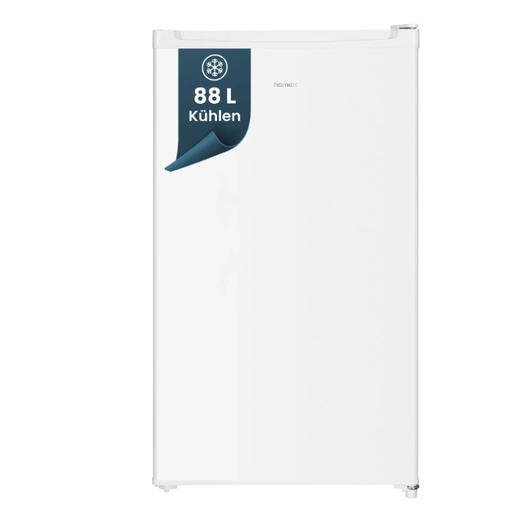
MATCH FOR: The Organized Everyday
Why This Fits Their Persona: Ideal for students or office workers who need a reliable, quiet, and spacious cooling solution for a fixed location. It serves as the perfect tabletop fridge for drinks and food.
How It Avoids the Trap
At 39 dB, it's quiet enough for living and working spaces. The well-structured 88-litre interior with adjustable shelves and door compartments maximises usable storage space, sidestepping the capacity trap.
Key Advantage & Pros
Reliable compressor technology ensures consistent cooling. The reversible door hinge and compact dimensions offer high flexibility in placement.
MATCH FOR: Demanding Outdoor Use
Why This Fits Their Persona: Designed for campers, boat owners, and truck drivers who need a powerful, mobile, and off-grid cooling solution that can also function as a freezer.
How It Avoids the Trap
The compressor technology delivers cooling performance down to -20°C, independent of ambient temperature, avoiding the trap of weak thermoelectric models. Despite its high power, the noise level is only 38 dB according to the manufacturer.
Key Advantage & Pros
Offers dual-zone cooling (refrigerate and freeze simultaneously) and flexible power options via AC, 12V/24V DC, and optional solar. An optional battery provides up to 39 hours of off-grid operation.
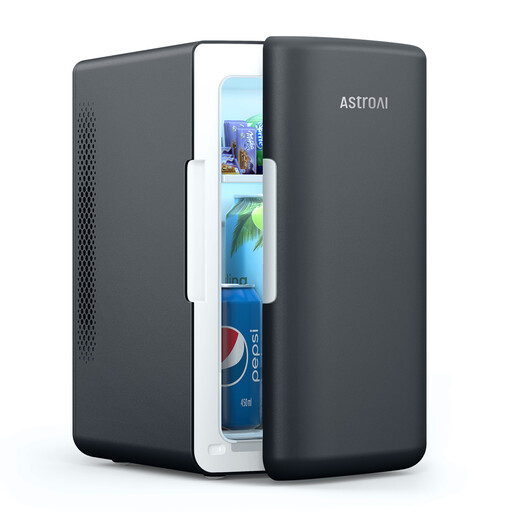
MATCH FOR: Cosmetics and The Desktop
Why This Fits Their Persona: Perfect for beauty enthusiasts storing skincare products or as a personal, portable cooler for drink cans at the workspace. Its compact design fits on any desk or in the bathroom.
How It Avoids the Trap
This model is transparent about its thermoelectric technology. It's not intended for storing perishable food, but for moderately cooling cosmetics and beverages, for which its performance is sufficient.
Key Advantage & Pros
Extremely compact and lightweight, with AC and 12V DC plugs for use at home and in the car. The additional warming function increases the device's versatility.
Looking for more options?
We have compiled a complete, up-to-date list of products that fully meet these strict selection criteria and German safety regulations.
Frequently Asked Questions (FAQ)
How much electricity does a mini fridge use?
Power consumption depends heavily on the technology, size, and energy efficiency class.
- Thermoelectric Models (approx. 5–15 litres): Consume about 40–60 watts in continuous operation. Since they often run non-stop, the annual consumption can be higher than expected.
- Compressor Models (approx. 40–100 litres): Modern units with energy efficiency class E or F typically consume between 80 and 120 kWh per year. The compressor only runs when needed, which reduces consumption. You can find the exact details on the EU energy label of the respective product.
Does a mini fridge require special ventilation?
Yes, adequate ventilation is essential for safe and efficient operation. Both thermoelectric and compressor models generate waste heat at the back or sides.
- Rule of thumb: Maintain a clearance of at least 5–10 cm from the wall or furniture on the sides and back of the unit.
- Prohibition: Never operate a mini fridge in a completely enclosed cabinet without ventilation slots. Heat buildup can drastically reduce cooling performance, increase power consumption, and, in the worst case, damage the device.
What is the difference between a compressor and a thermoelectric cooler?
In summary, the main difference lies in the cooling performance and intended use.
- A thermoelectric cooler is a simple, lightweight solution for keeping drinks or snacks cool for a short period. Its performance is dependent on the outside temperature.
- A compressor cooler is a mobile version of a real refrigerator. It reliably cools to a set temperature, even in high ambient temperatures, and is therefore suitable for the safe storage of food during travel or camping.