A mini fridge offers a compact cooling solution for specific use cases where a standard-sized refrigerator would be impractical or oversized. Choosing the right model depends on technical parameters such as cooling technology, capacity, energy efficiency, and noise level. This article analyses the key criteria and presents a selection of appliances for various scenarios.
Technical Selection Criteria for a Mini Fridge
The decision for a particular model should be based on an objective evaluation of its technical specifications. The following factors are relevant for your selection.
1. Cooling Technology: Compressor vs. Thermoelectric
The type of cooling is the most fundamental distinguishing feature and impacts performance, noise level, and application.
- Compressor Refrigerators: These units operate on the same principle as conventional household refrigerators. A refrigerant is compressed and expanded in a closed-loop system to dissipate heat. They can reach low temperatures, often below 0°C, making them suitable for models with a freezer compartment. Their cooling performance is largely independent of the ambient temperature. However, the compressor's operation generates periodic noise.
- Thermoelectric Refrigerators (Peltier Coolers): These use the Peltier effect, where an electric current passing through a semiconductor element creates a temperature difference. One side becomes cold while the other becomes hot. This technology allows for very quiet, vibration-free operation, often making the units lighter and more portable. However, their cooling performance is limited and highly dependent on the ambient temperature (typically cooling to approx. 18–22°C below the surrounding temperature). They are ideal as a cosmetics fridge or for use in a car.
2. Capacity and Dimensions
Capacity is specified in litres (L) and determines how much food or drink can be stored.
- Up to 10 Litres: Ultra-compact units, often thermoelectric. Suitable for a few drink cans, medications, or cosmetic products.
- 15 to 50 Litres: The most common size for a small fridge in an office, hotel room (minibar), or as a beverage cooler. Offers space for bottles, snacks, and small containers.
- Over 50 Litres: Larger models that can serve as a fully-fledged secondary refrigerator in a household or shared living space.
3. Energy Efficiency and Noise Emissions
- Energy Efficiency Class: The EU energy efficiency scale ranges from A (very efficient) to G (less efficient). A unit with a class E or F rating may still have low absolute power consumption due to its small volume. The annual consumption in kilowatt-hours (kWh/a) is a more precise metric for comparison.
- Noise Emissions: Specified in decibels (dB). For use in a bedroom or office, a mini fridge should be quiet. Values below 40 dB are considered very quiet, comparable to the noise level in a library. Thermoelectric models often have an advantage here.
4. Additional Features
- Freezer Compartment: An integrated freezer compartment expands functionality but is usually only found in compressor models.
- 12V Connection: Enables operation in a car via the cigarette lighter socket. This feature is typical for portable, thermoelectric units.
- Adjustable Shelves: Provide flexibility in organising the interior space.
- Interior Lighting: Enhances convenience but is not standard on all ultra-compact models.
Our Top Mini Fridge Picks for 2026
Based on the aforementioned technical criteria, we present three models with different specifications for various use cases.
TCL RF60DWE0 45L Compact Tabletop Refrigerator
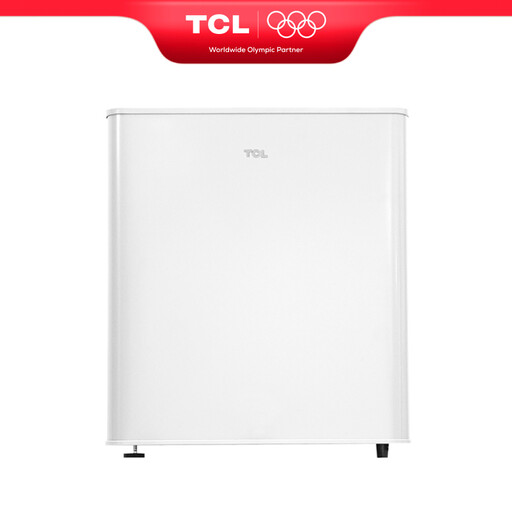
Why We Recommend This Product The TCL RF60DWE0 is a classic compressor mini fridge with a total capacity of 45 litres, divided into a 42-litre refrigeration section and a 3-litre freezer compartment. The mechanical temperature control allows for adjustment from 0–10°C in the fridge section and 5–-5°C in the freezer. With a noise emission of 40 dB, it is designed for use in living and work environments.
- Pros:
- Separate freezer compartment for ice cubes or small frozen items.
- Adjustable feet for stabilisation on uneven floors and for reducing vibrations.
- Sturdy shelf made of tempered glass that is easy to clean.
- Large door compartment for storing beverage bottles.
- Who It's For:
- Users looking for a reliable small fridge for the office, a student dorm, or as a secondary unit for drinks and snacks.
AstroAI Mini Fridge 2.0 Gen, 6 Litre
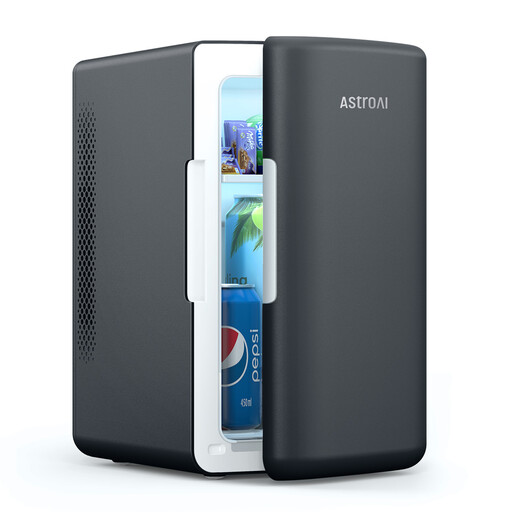
Why We Recommend This Product This 6-litre model from AstroAI uses thermoelectric cooling technology, making it exceptionally quiet and portable. It offers both cooling and warming functions. According to the manufacturer, the cooling performance reaches 18–22°C below the ambient temperature, while the warming function can heat contents up to 66°C. Thanks to the included 12V DC cable, it is suitable for use in a car.
- Pros:
- Cooling and warming functions in one unit.
- Very quiet operation due to a thermoelectric system without a compressor.
- Portable thanks to its compact dimensions and connectivity for both 220-240V AC (household) and 12V DC (vehicle).
- Removable shelf for a flexible interior layout.
- Who It's For:
- Individuals who need a beauty fridge for storing skincare products.
- Travellers and commuters who want to cool or warm drinks and snacks in their vehicle.
- As a personal fridge on a desk in the office.
Comfee by Midea RCD93WH2EURT(E) 93 Litre Retro Mini Fridge
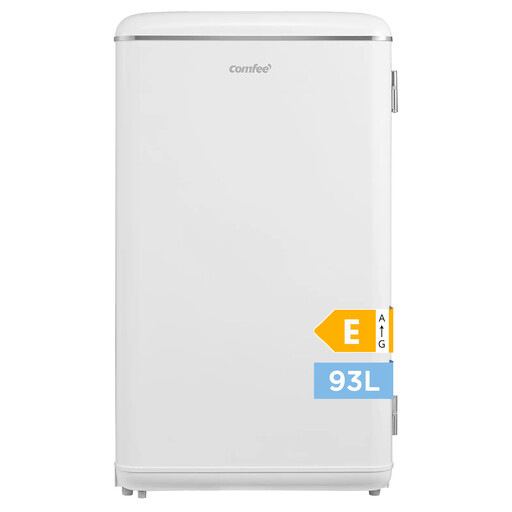
Why We Recommend This Product With a 93-litre capacity, this model from Comfee is positioned at the higher end of the mini fridge segment. Its retro-style design combines a classic aesthetic with modern compressor technology. The unit features an adjustable thermostat and removable shelves for flexible storage. A small, internal chiller compartment is designed for rapidly chilling food items.
- Pros:
- Large 93-litre capacity, suitable as a main refrigerator for single-person households or as a spacious secondary fridge.
- Eye-catching retro design with a stylish door handle.
- Flexible interior with adjustable shelves.
- Energy Efficiency Class E.
- Who It's For:
- Households looking for a small fridge that is both functional and decorative.
- Ideal for holiday homes, garden sheds, or larger offices.
Other Options for Specific Needs
For users specifically looking for a solution to store skincare products, a specialised product category exists. A dedicated beauty fridge often offers optimised temperature ranges and compact designs tailored to the needs of serums, creams, and masks. You can find an overview of suitable models in our selection of beauty fridges.
Frequently Asked Questions (FAQ)
1. How quiet is a mini fridge for the bedroom? The noise level depends on the cooling technology. Thermoelectric models are virtually silent as they operate without moving parts like a compressor. Compressor fridges produce a periodic humming sound, but modern units often operate below 40 dB, which is considered very quiet. For noise-sensitive individuals, a thermoelectric unit or a compressor model with a noise emission below 38 dB is recommended for the bedroom.
2. Can any mini fridge be used in a car? No. For operation in a car, a 12V direct current (DC) connection that plugs into the cigarette lighter socket is required. This feature is typically found on portable, thermoelectric mini fridges. Compressor models are generally designed for stationary use with a 230V alternating current (AC) power source and cannot be operated in a car without a special voltage converter.
3. What is the difference between a mini fridge and a minibar? Technically, there is no fundamental difference. The term minibar is primarily used in the hospitality industry for a small refrigerator installed in a hotel room, stocked with drinks and snacks. For personal use, the terms mini fridge and beverage cooler are often used interchangeably. The underlying technology (compressor or thermoelectric) is the same for both.

