
Lieferung heute & morgen

Qualitätsgarantie

Willkommens-Angebote freischalten: KOSTENLOSE Lieferung | Bis zu 80 % RABATT | Kostenlose 30-Tage-JoyPlus-Testphase
App herunterladen
A mini fridge takes up very little space, but it is not automatically suitable for every situation. Different criteria matter in a small kitchen than in a motorhome, office or gaming room. Unclear information about usable capacity, noise levels or power supply often leads to unsuitable purchases.
These are the three most common pitfalls:
A tabletop fridge or small fridge with a capacity of around 40 to 50 litres is suitable for drinks, snacks and limited food supplies. Models with a freezer compartment are practical if you occasionally want to store ice, frozen vegetables or individual frozen portions.
An under-counter fridge with around 80 to 90 litres provides more organised storage for a small kitchen, studio flat or office. Before buying, check the dimensions of the recess, the door opening and ventilation requirements. A model with a reversible door can be positioned more flexibly.
For camping, motorhomes, boats or cars, a stationary 230-volt mini fridge is often unsuitable. A portable fridge, electric cool box or compressor cool box may be a better choice. Key considerations include suitable connections such as 12V, 24V and 100–240V, temperature control and sufficient clearance around the ventilation openings.
Look at the internal layout rather than focusing solely on the litre capacity. The Severin KB 8878, for example, is described as having a total capacity of 45 litres and a 5-litre freezer compartment. The Alpicool NLS35 has around 23.3 litres divided between two separately adjustable compartments. Details like these show whether a model is primarily designed for drinks, food or frozen goods.
With a fridge with freezer compartment, you should also check whether the compartment has its own temperature control and whether it is intended only for short-term storage. A drinks fridge, on the other hand, mainly needs practical door shelves and sufficient internal height for bottles.
Under the current EU energy label, efficiency classes range from A to G. However, the class alone is not enough for comparing costs. The stated annual consumption in kilowatt hours is also important. You can estimate the annual electricity cost as follows:
Annual consumption in kWh × your electricity price per kWh = estimated annual cost
The Bomann KB 7245 is listed with annual consumption of 80 kWh and energy efficiency class E. The Bomann VS 7255 is listed with annual consumption of 85 kWh and a usable capacity of 87 litres. As a result, a larger fridge can have a similar annual consumption to a smaller model despite offering more storage space. When choosing an energy-efficient fridge, always consider usable capacity, annual consumption and how long you intend to use it together.
With a mobile compressor cool box, consumption also depends on the outside temperature, the selected temperature, ventilation and how often the lid is opened. The power consumption of the 40-litre Alpicool model is stated as a maximum of 60 watts, or 45 watts in ECO mode.
For bedrooms, offices and gaming areas, it is worth checking the stated noise level. The Severin KB 8878 is described as operating at 39 dB, the TCL RF60DWE0 at 40 dB and various Alpicool models at less than 45 dB. These are manufacturer specifications and may vary depending on positioning and operating phase.
A stationary mini fridge needs a level, dry surface and sufficient air circulation. Do not cover the ventilation openings. After transport, leave the appliance standing upright in accordance with the operating instructions before connecting it to the power supply.
For vehicles, the connection is more important than cooling performance alone. A 12V fridge or 24V fridge function should be compatible with the vehicle’s existing electrical system. An integrated battery protection feature, as specified for several Alpicool models, can help prevent the vehicle battery from being heavily discharged. An additional power station or solar panel is not automatically included in the delivery.
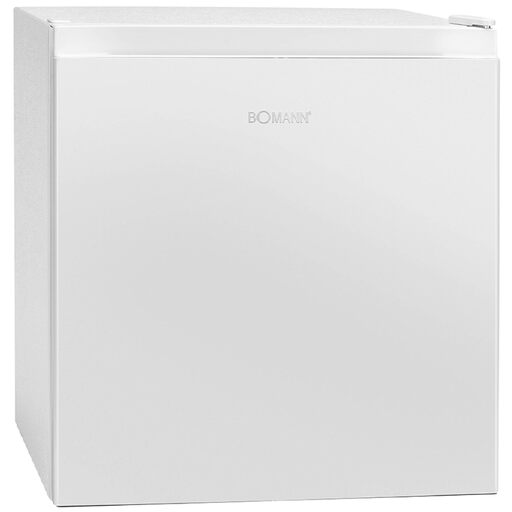
Why this product suits this profile: This compact tabletop fridge offers 45 litres of net capacity, a 4-litre freezer compartment and adjustable temperature control for snacks, drinks and small amounts of frozen food.
The product details clearly state the net capacity, freezer compartment size and annual consumption of 80 kWh. This makes it easier to assess the space available more realistically.
45 litres of net capacity, reversible door, removable glass shelf and a temperature range of 0 to 8 °C.
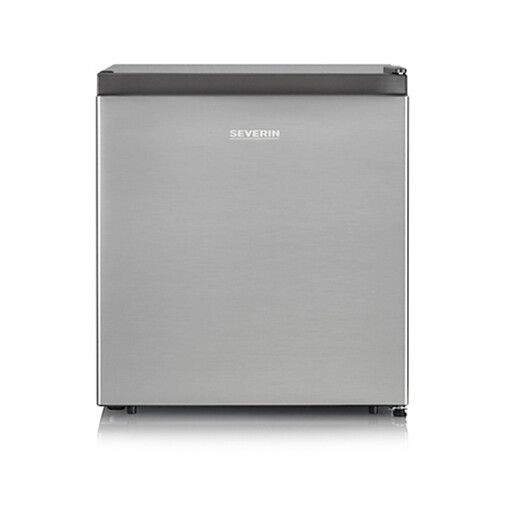
Why this product suits this profile: For bedrooms, offices or small households, 45 litres, a 5-litre freezer compartment and a stated noise level of 39 dB are useful points of comparison.
The specifications distinguish between fridge and freezer capacity and state energy efficiency class E together with annual consumption of 80 kWh.
Operating noise of 39 dB according to the product description, automatic defrosting, LED interior lighting and a reversible door.
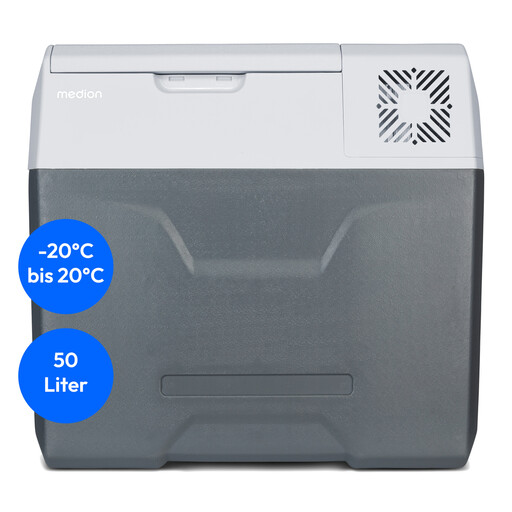
Why this product suits this profile: This mobile compressor cool box is designed for cars, caravans, boats, camping and gardens, combining 47 litres of usable capacity with cooling and freezing functions.
Rather than leaving vehicle use unclear, the product specifies connections for 230V, 12V and 24V, as well as the ventilation required.
Temperature range from -20 to 20 °C, 47 litres of usable capacity, USB connection and supplied 230V, 12V and 24V adapters.
We have put together a complete, regularly updated list of products that fully meet these strict selection criteria and the safety regulations applicable in the EU.
Consumption depends on the size, energy efficiency class, room temperature and how the fridge is used. Specific product data includes annual consumption of 80 kWh for certain 45-litre models and 85 kWh per year for an 87-litre fridge. For your personal calculation, multiply the annual consumption by your electricity price.
After being transported on its side or at a sharp angle, the appliance should initially be left standing upright. The exact waiting time is stated in the operating instructions; several of the models described specify a minimum of two hours. Only then should you connect it to a suitable earthed socket.
Yes, provided that the voltage and connection are compatible. Check whether the model is designed for 12V or 24V, whether a suitable adapter is included and whether battery protection is available. A compressor cool box should also not be operated directly in a blocked-off or poorly ventilated position.