
Lieferung heute & morgen

Qualitätsgarantie

Willkommens-Angebote freischalten: KOSTENLOSE Lieferung | Bis zu 80 % RABATT | Kostenlose 30-Tage-JoyPlus-Testphase
App herunterladen
A mini fridge can be useful in a small flat, office, student accommodation or as an additional drinks fridge. However, compact appliances vary considerably in terms of cooling technology, noise levels, power supply and storage capacity. A low purchase price alone says little about whether a model will suit your daily routine in the long term.
With a small fridge using thermoelectric cooling, the achievable internal temperature depends heavily on the ambient temperature. Claims such as “up to 18–22 °C below ambient temperature” therefore do not indicate a fixed target temperature. In a warm room, the interior may remain considerably warmer than that of a compressor appliance.
A compressor mini fridge, on the other hand, uses an active refrigeration cycle and is generally better suited to consistently controlled cooling. A thermoelectric model may be sufficient for drinks, snacks and cosmetics. For fresh food or longer-term storage, check the manufacturer’s information on temperature range and storage duration carefully.
A tabletop fridge with a capacity of 5 or 6 litres is easy to accommodate, but only has room for a few cans or small containers. A 43- to 46-litre appliance is considerably more versatile for one person, but requires more floor or worktop space. Before buying, consider the external dimensions, door opening direction and ventilation clearances.
A reversible door can be particularly useful for a fridge in a bedroom or office. For under-counter appliances, you should also check whether the height, depth and air circulation are suitable for the intended alcove.
The energy efficiency class is a standardised comparison feature, but it does not replace checking the actual consumption. For example, a Comfee model with a capacity of 43 litres is listed as using 110 kWh per year. The Bomann KB 7245 states 80 kWh per year. Actual consumption depends, among other things, on room temperature, temperature setting, how full the fridge is and how often it is opened.
For a portable fridge with 12V and 220V, you should also check whether a mains adaptor is included. Some appliances are supplied only with a 12V cable, meaning a suitable AC adaptor must be purchased separately.
For individual drinks or personal care products, 5 to 6 litres is often sufficient. A small fridge of around 15 litres offers more flexibility for snacks, lunch boxes and bottles. Models between 43 and 46 litres are more suitable as a permanent addition to the household. If you want to store fresh food, drinks and small frozen items together, look for a mini fridge with a freezer compartment.
Do not just consider the number of litres. Also look for:
An energy-efficient mini fridge with a compressor may be more suitable for regular use and more perishable food. A compressor cool box is also worth considering for camping, motorhomes, boats or longer car journeys, as some models can reach a lower internal temperature even when outdoor temperatures are higher.
Thermoelectric appliances are usually lighter and can often also provide heating. However, their cooling performance is generally stated as a difference from the ambient temperature. Precise temperature control, as found in a household fridge, is not automatically available.
For a bedroom, gaming room or home office, pay attention to the stated noise level. Some models in the selection list figures of 39 to 41 dB. This is a technical guideline; perceived noise can vary depending on the floor, distance from the wall and compressor operation.
Place the appliance on a stable, dry surface and maintain the ventilation clearances specified by the manufacturer. Do not cover the ventilation slots. Appliances using R600a refrigerant must not have their refrigeration circuit damaged, as the refrigerant is flammable. Unplug the appliance before cleaning or maintenance.
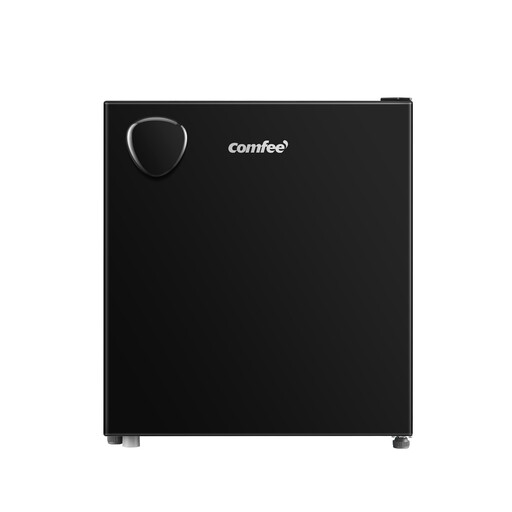
Why this product suits the profile: With a compact width of 44.5 cm, this appliance is designed for single-person households, small kitchens and student accommodation. Three temperature settings, height-adjustable shelves and a salad drawer support versatile everyday use.
The stated annual energy consumption of 110 kWh makes ongoing running costs easier to assess than a general marketing claim such as “energy-saving”.
43-litre capacity, three temperature levels and a separate cooling compartment for drinks.
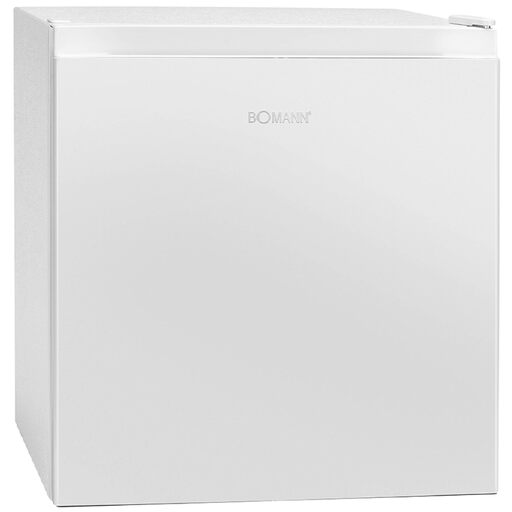
Why this product suits the profile: This model combines 45 litres of usable capacity with a 4-litre freezer compartment, adjustable temperature control and a reversible door hinge.
The freezer compartment is clearly identified as a separate section, so it is not mistaken for a full-size freezer when it is simply a small cooling compartment.
Stated annual energy consumption of 80 kWh and a specified noise level of 39 dB.
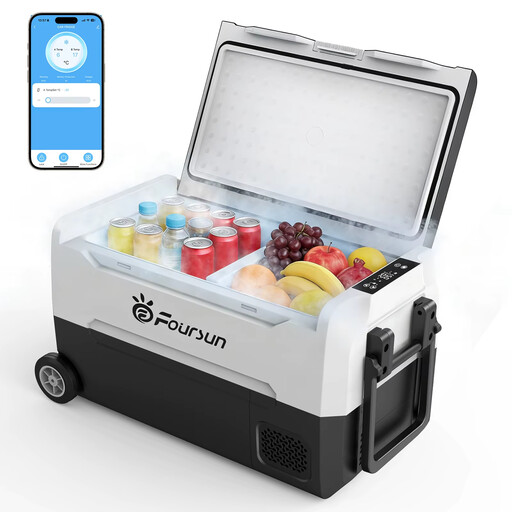
Why this product suits the profile: This portable fridge is designed for cars, camping, motorhomes and travel. It operates with 12/24V DC and 100–240V AC. The stated temperature range is -20 °C to +20 °C.
The compressor technology and multiple power sources set this appliance apart from thermoelectric car cool boxes, whose performance is more heavily affected by the ambient temperature.
35-litre capacity, app control and compatibility with AC, DC and solar systems according to the product description.
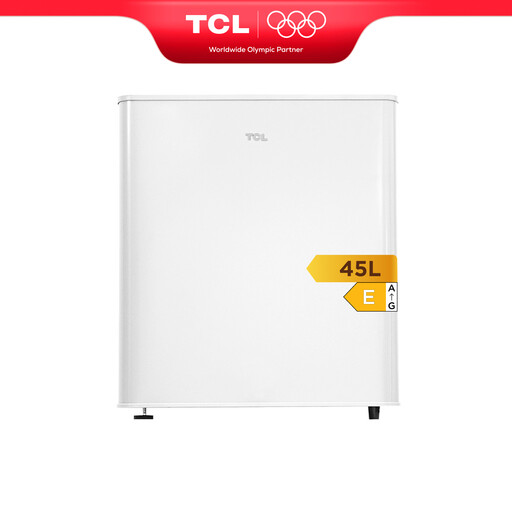
Why this product suits the profile: This 45-litre appliance is suitable for home offices, offices, bedrooms, kitchens and student accommodation. Its dimensions are 449 × 485 × 512 mm, and it has an integrated 3-litre freezer compartment.
The temperature range of 0–10 °C in the fridge compartment and 5 to -5 °C in the freezer compartment is specified clearly, rather than being marketed simply as “powerful cooling”.
Adjustable glass shelf, mechanical thermostat, stated noise level of 40 dB and energy efficiency class E.
We have put together a complete, regularly updated list of products that fully meet these strict selection criteria and the safety regulations applicable in the EU.
Consumption depends on the size, cooling technology, ambient temperature and usage. The manufacturer’s information in kWh per year or per day provides a useful guide. For a realistic comparison, compare appliances with a similar capacity and the same energy efficiency class.
It can be, provided the noise level and positioning are suitable. Models with around 39 to 41 dB are described as quiet in product specifications. Nevertheless, compressor start-up or vibrations may be audible. A level, stable surface and sufficient distance from the wall can reduce potential operating noise.
A compressor cool box is generally more suitable for longer use and lower temperatures, but it requires more weight, space and energy. A thermoelectric camping fridge is lighter and is often also suitable for keeping items warm. When choosing, consider the power source, desired temperature, journey duration and available ventilation.