
Lieferung heute & morgen

Qualitätsgarantie

Willkommens-Angebote freischalten: KOSTENLOSE Lieferung | Bis zu 80 % RABATT | Kostenlose 30-Tage-JoyPlus-Testphase
App herunterladen
A mini fridge can be handy in an office, student accommodation, bedroom, campervan or as a second appliance in a small flat. However, models vary considerably in their cooling technology, capacity and energy consumption. If you focus only on compact dimensions or a low price, you could end up with an appliance that cannot be properly ventilated in its intended spot, is too noisy or does not offer enough usable space for your needs.
With a thermoelectric fridge, the achievable internal temperature depends on the ambient temperature. For example, according to the product details, the AstroAI Mini Fridge 2.0 Gen cools to 18 to 22 °C below the ambient temperature. In a warm room, this does not mean it will maintain a consistent fridge temperature. These appliances are therefore better suited to drinks, snacks or cosmetics than to products that require precise temperature control.
A fridge for a small room still needs space around it, away from walls and furniture. If the ventilation grilles are blocked, cooling performance may fall and the compressor or cooling system may have to work harder. Before buying, check the space available and the recommended clearance. For many appliances, it is advisable to leave around 5 to 10 cm of clearance at the sides and back; always follow the relevant instruction manual.
The EU energy efficiency scale runs from A to G. The annual consumption in kWh is also important when calculating costs. A simple guide is:
Annual consumption in kWh × electricity price per kWh = estimated annual electricity costs
Actual consumption depends on factors including room temperature, how full the fridge is, how often the door is opened and the temperature setting. The way you use a glass-door drinks fridge can also make a difference.
For a few drinks or cosmetics, a skincare fridge with a capacity of 4 to 15 litres is often enough. According to the manufacturer, a 6-litre model can hold up to eight 355 ml cans. For food in an office or student accommodation, 40 to 90 litres is usually more versatile, as shelves, door compartments and salad drawers make it easier to organise the contents.
If you’re looking for a full-sized second fridge for your household, consider a capacity of 100 litres or more. At 242 litres, a model such as the homeX CS2421E-W is no longer comparable to a traditional tabletop fridge. It is a larger option for a kitchen, flat or utility room.
A fridge without a freezer compartment uses all its interior space for chilled food. It’s a good choice if you already have a freezer or mainly need space for drinks and fresh food. Look for:
Some product descriptions may contain conflicting information. So before you buy, check the technical specifications and product images, particularly to confirm whether the appliance actually has a freezer compartment.
Noise levels in dB(A) are worth checking if you’re buying a fridge for the bedroom or a home office. Many people find models rated at around 38 to 41 dB(A) reasonably quiet for everyday use, although how noticeable they are depends on the room’s acoustics and the fridge’s operating cycles.
For camping, cars or lorries, you’ll need a 12V fridge. With an AC/DC model, check whether both a 220–240-volt mains connection and a 12-volt cable are included. When using one in a vehicle, avoid running it for long periods with the engine off, as it could drain the starter battery.
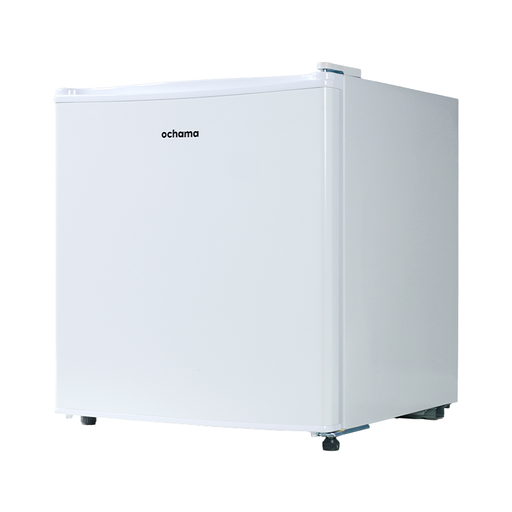
Why it suits this profile: With a compact 46-litre capacity, this model is ideal for students, small flats and offices where you want to keep drinks and everyday food separate from the main fridge.
The product details state a daily consumption of 0.35 kWh, temperature control from 2 to 8 °C and a noise level of up to 41 dB.
46 litres of usable capacity, an adjustable glass shelf, door compartments and an E energy efficiency rating.
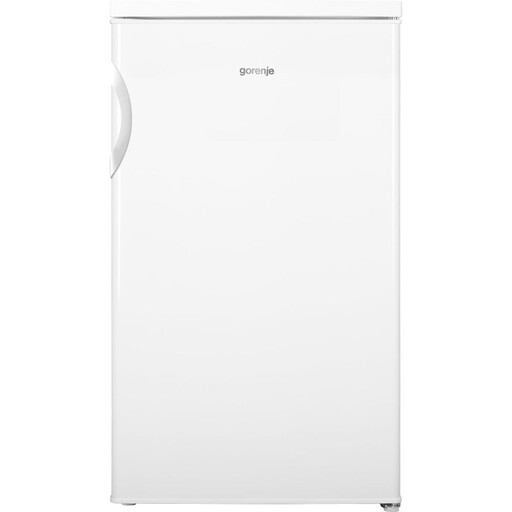
Why it suits this profile: This freestanding model is aimed at households and people living in smaller flats who need more organised storage than a typical mini fridge can offer.
With 133 litres of capacity, adjustable glass shelves and a salad drawer, the interior is designed for everyday groceries, not just cans.
D energy efficiency rating, EcoMode, annual consumption of 72 kWh and a maximum noise level of 39 dB(A), according to the product details.
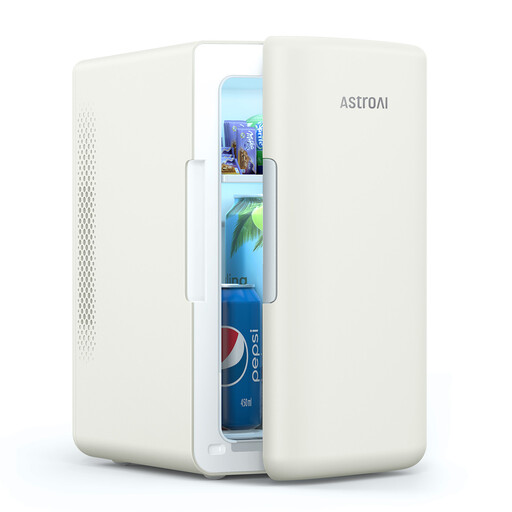
Why it suits this profile: This portable mini fridge is designed for cosmetics, drinks, offices, bedrooms, travel and use in vehicles.
The product description specifically highlights temperature-dependent cooling, condensation and the need for ventilation.
6 litres of capacity, a removable shelf and 220–240 V AC and 12 V DC power options.
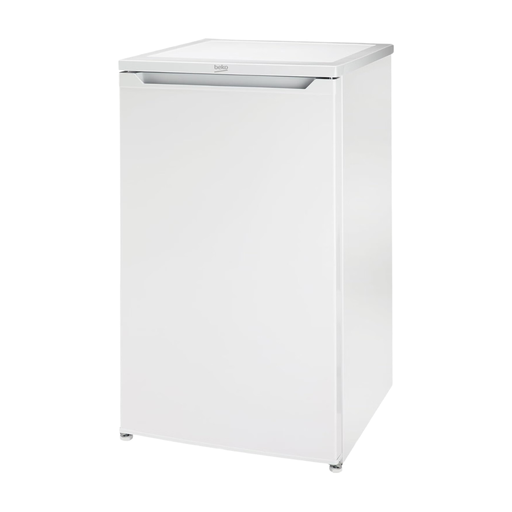
Why it suits this profile: As a fridge without a freezer compartment, it offers more storage than a tabletop fridge for an office, bedroom or small kitchen, while remaining compact.
The stated 38 dB noise level, automatic defrosting and reversible door address common needs for convenience and flexible positioning.
88 litres of usable capacity, three glass shelves, a salad drawer, LED lighting and an E energy efficiency rating.
We’ve put together a complete, regularly updated list of products that meet these strict selection criteria and fully comply with the safety regulations in force in the EU.
Place every compact fridge on a stable, level, dry surface. Direct sunlight, radiators and poorly ventilated cupboards put extra strain on the cooling system. Before switching on an appliance for the first time, leave it upright after transport for the period recommended by the manufacturer.
When cleaning:
A mini fridge is not suitable for medicines, vaccines or other temperature-sensitive medical products unless it is specifically approved for that purpose.
It depends on the model, cooling technology and how you use it. Compare the stated annual consumption in kWh rather than looking only at the energy efficiency class. Frequent opening, warm rooms and a high temperature setting can increase consumption.
That depends on the noise level and your personal sensitivity to it. Models rated at around 38 to 41 dB(A) may be suitable for many rooms. Also check whether the operating noise, vibrations and required ventilation clearances are right for your bedroom.
Only if the power supply is designed for it. With the engine switched off, the fridge could drain the vehicle battery. If the vehicle is parked for a long time, disconnect the fridge from the 12-volt socket or use a suitable separate power source.