
Lieferung heute & morgen

Qualitätsgarantie

Willkommens-Angebote freischalten: KOSTENLOSE Lieferung | Bis zu 80 % RABATT | Kostenlose 30-Tage-JoyPlus-Testphase
App herunterladen
A mini fridge promises chilled drinks and fresh snacks right where you need them—whether in the office, a student dorm, on a camping trip, or as a dedicated cosmetics fridge. However, the market is crowded, and many models fail to live up to their advertising claims. Before you make a decision, it's crucial to understand the common pitfalls that often lead to disappointment and buyer's remorse.
As your Joybuy Product Recommendation Officer, I'm here to help you separate the wheat from the chaff. We'll focus on the facts and technical specifications that truly matter.
The 3 Most Common Traps When Buying a Mini Fridge:
To find the right mini fridge, you should focus on three core aspects. These determine the performance, flexibility, and suitability for your specific use case.
The type of cooling is the most important factor. There are two fundamentally different systems:
Think carefully about where you want to use the fridge. The connection options are crucial.
The size is stated in litres, but don't be fooled by the number alone. Pay attention to the internal layout and usable dimensions. A 40-litre model is ideal for a weekend trip, while a 6-litre unit is sufficient for a few cans or skincare products. The energy efficiency class (e.g., Class E) indicates the annual power consumption and is particularly relevant for units that run continuously.
Here are some recommendations tailored to specific use cases that avoid the pitfalls mentioned above.

Why This Fits Their Persona: With a 42-litre capacity, a powerful compressor, and universal connections (12V/24V DC & 100-240V AC), this model is designed for long journeys, family trips, or use in a truck.
The compressor technology ensures reliable cooling down to -18°C, regardless of the outside temperature. This bypasses the performance trap of thermoelectric devices.
A three-stage battery protection system prevents draining the vehicle's battery. The ECO mode and quiet operation (<45 dB) are further advantages for continuous use.
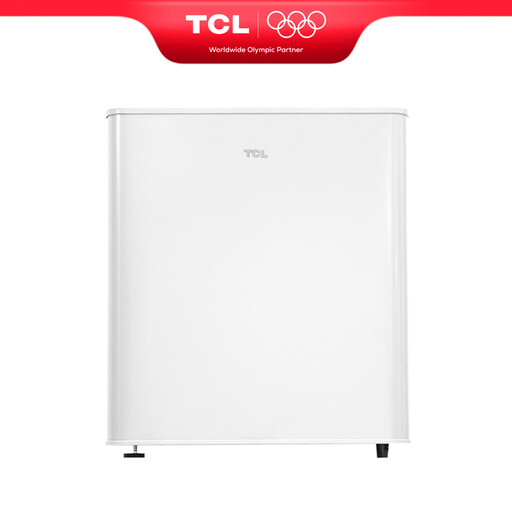
Why This Fits Their Persona: This countertop model is designed for stationary use. With 45 litres, it offers enough space for drinks and snacks in an office, guest room, or student dorm. The integrated freezer compartment is a handy extra.
With an operating noise of 40 dB, this model is suitable for living and working spaces, avoiding the trap of devices misleadingly advertised as "quiet" but are actually loud.
The separate 3-litre freezer compartment (down to -5°C) is a clear advantage over simple drinks fridges. Adjustable glass shelves provide flexibility.
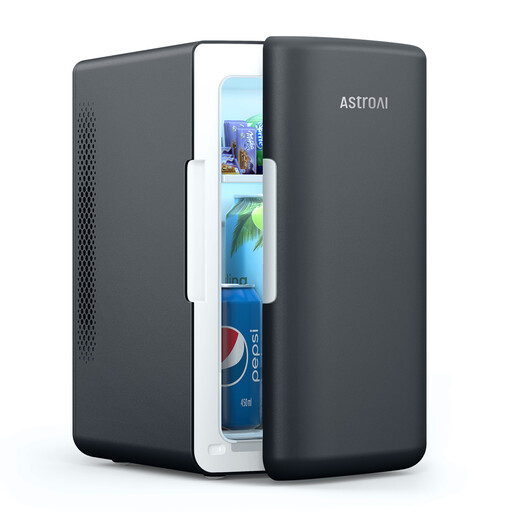
Why This Fits Their Persona: This compact 6-litre unit is ideal for storing skincare products in the bedroom or for a few drinks in the car. Its quiet, thermoelectric operation and dual power supply make it highly flexible.
It's honest about its function: A thermoelectric cooler for moderate cooling, not deep-freeze performance. The dual AC/DC connection prevents the trap of having a mismatched power supply.
The unit features both a cooling and a warming function. The removable shelf allows for flexible organisation of the small interior space.
We have compiled a complete, real-time list of products that fully satisfy these strict selection criteria and UK safety regulations.
The noise level is measured in decibels (dB). For a bedroom or office, the value should ideally be below 40 dB. Thermoelectric models are often quieter by design than compressor units. Look for the exact specification on the product data sheet and don't rely on generic descriptions like "quiet".
Yes, if it's run on the 12V connection for an extended period while the engine is off. High-quality mobile compressor coolers therefore feature an integrated, multi-stage battery protection system. This monitors the car battery's voltage and automatically shuts off the fridge before the battery is drained to a point where the vehicle won't start.
A compressor fridge works like your refrigerator at home: it can reach and maintain a set temperature (e.g., 4°C or -15°C) regardless of the outside temperature. A thermoelectric cooler (also called a Peltier cooler) can only lower the internal temperature by a specific amount (e.g., 18°C) below the ambient temperature. It is less suitable for extreme heat but is lighter and quieter.