Preparing dressing in advance
If you make dressing in batches, you’ll need space for sealed containers. Proper refrigeration is important for perishable ingredients; the BfR recommends storing them at between 2 °C and 7 °C.


If sealed containers of dressing fit in your existing fridge and you can keep perishable ingredients sufficiently cold there, you don’t need a second appliance. If space is tight, compare compact fridges by how well they cool in the intended location and how much usable space they offer for your containers. Dimensions, energy use and noise are also worth considering. The German Federal Institute for Risk Assessment (BfR) recommends storing perishable foods at between 2 °C and 7 °C. A model’s stated temperature does not guarantee that this temperature will be maintained in every part of the appliance.
If you make dressing in batches, you’ll need space for sealed containers. Proper refrigeration is important for perishable ingredients; the BfR recommends storing them at between 2 °C and 7 °C.
If floor space or the area beneath a wall cupboard is limited, check the appliance dimensions, door clearance and space for your containers together. Product specifications from Exquisit and Severin show that external dimensions vary by model.
If you’re thinking of putting a second appliance near your living area, compare its noise rating and annual energy consumption on the EU energy label. The Verbraucherzentrale and European Commission recommend using these figures as a guide when comparing fridges.
A good fit if: sealed containers fit inside and you can keep perishable ingredients sufficiently cold there.
Trade-off: You won’t need another appliance, but you’ll have to make do with the space and shelf height available in your existing fridge.
A good fit if: you need extra fridge space and the appliance, including its open door, will fit in your kitchen. Removable or adjustable shelves can help accommodate taller jars.
Trade-off: The appliance takes up space and uses extra electricity; its stated capacity won’t tell you whether your containers will fit.
A good fit if: the layout works for your containers and you can check that the appliance will maintain the required temperature for the ingredients at its intended location.
Trade-off: A layout designed for bottles and cans won’t necessarily work well for jars of dressing.
For perishable ingredients, the BfR recommends storing them in a fridge at between 2 °C and 7 °C. Check the temperature where the sealed container will actually be kept.
| Buying priority | What to look for | Who is it particularly important for? |
|---|---|---|
| Cooling | Check the ingredients and storage instructions. If your dressing contains perishable ingredients, check the temperature in the part of the fridge you’ll use. | If my dressing contains perishable ingredients, I want to know whether it will stay cold enough in the place I intend to store it. Around 36% of consumers prioritise reliable cooling. |
| Space for the appliance | Compare its width, depth and height with the available space, and allow for the door opening and installation requirements. | In a small kitchen, the appliance needs to fit with its door open. Around 29% of consumers prioritise whether it will fit in the intended space. |
| Space for containers | Measure your jars and check the internal layout, door shelves and removable shelves. | If I want to store several jars of dressing, usable internal space matters more than the stated capacity alone. Around 21% of consumers prioritise space and a layout that suits their containers. |
| Energy use and noise | Compare the annual kWh figure and dB(A) rating on the EU energy label for the specific model. | If the appliance is near my living area or runs continuously, I want to consider its energy use and noise. Around 14% of consumers prioritise these operating characteristics. |
A layout designed for bottles and cans won’t tell you whether jars of dressing will fit or whether the appliance can reach the temperature needed for your ingredients.
Measure your containers and check the layout of the specific appliance. If you’re storing perishable ingredients, check the temperature in the part of the fridge you’ll use.
Bomann lists a 4-litre freezer compartment for the KB 7245, while the EU product information sheet specifies a 45-litre fresh-food compartment and no star-rated compartment. This does not establish that the appliance is suitable for freezing.
If you need freezer space, check the classification on the product information sheet for the exact variant. For jars of dressing, the internal dimensions matter too.
An extra fridge can use electricity continuously. The cost will depend, among other things, on the appliance’s energy consumption and your electricity tariff.
First check whether your existing fridge is enough. If not, compare the annual consumption in kWh and the noise rating on the EU energy label.
An additional appliance that runs continuously will use electricity, so factor this into your kitchen plans along with the space it needs.
The KB05-V-040E is a compact, freestanding model to consider if space is limited.
According to the manufacturer, the KB 8878 combines a food storage compartment with a separately described cold compartment.
The KB 7245 is a compact model with adjustable cooling and a removable glass shelf.
The Beersafe M is a drinks fridge, making it different from a compact appliance designed for storing food.
The Joybuy products below offer extra fridge space for food. Before choosing, check that the external dimensions, door clearance and internal layout suit your kitchen and your containers.
 No image available
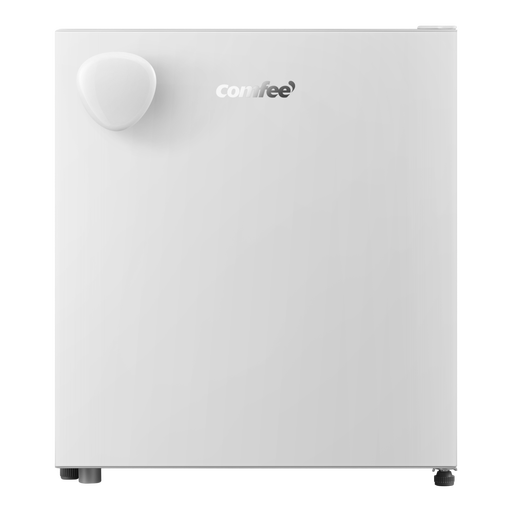
Could suit you if you’re looking for extra food storage in a narrow fridge; check that your containers will fit.
Joybuy lists a usable capacity of 43 l, a width of 44.5 cm and three temperature settings. The product name also specifies a right-hand door hinge and energy efficiency class E.
 No image available
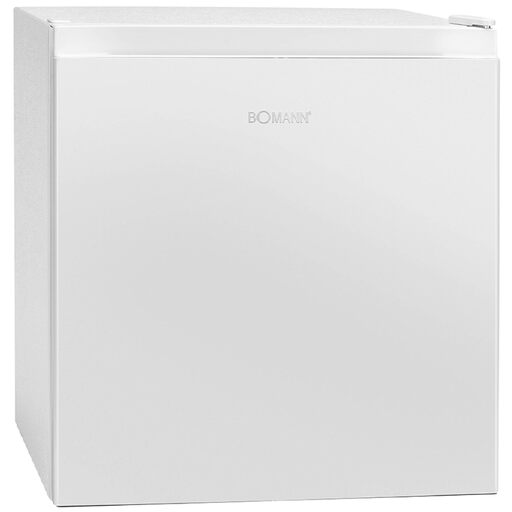
An option for extra fridge space if the dimensions and internal layout suit your dressing containers.
Bomann lists a capacity of 45 l and dimensions of 44.5 × 50 × 46.8 cm (W × H × D) for this model. The product information includes adjustable temperature control and a reversible door. The information about the freezer compartment is conflicting: the EU product information sheet does not show a star-rated compartment. Don’t assume that it is suitable for freezing.
 No image available
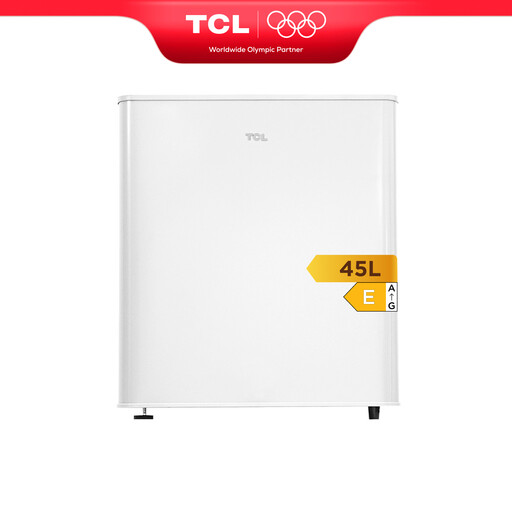
Could be worth considering for extra fridge space if its tabletop format, footprint and internal layout suit your jars.
Joybuy’s product information lists a capacity of 45 l, adjustable feet and a tempered glass shelf. The product name specifies energy efficiency class E.
 No image available
A larger option if you need more extra fridge space and have enough room for the appliance.
The product name lists a capacity of 90 l, a cold compartment, adjustable feet and shelves. Check the external dimensions and internal layout to make sure they suit your containers.
 No image available
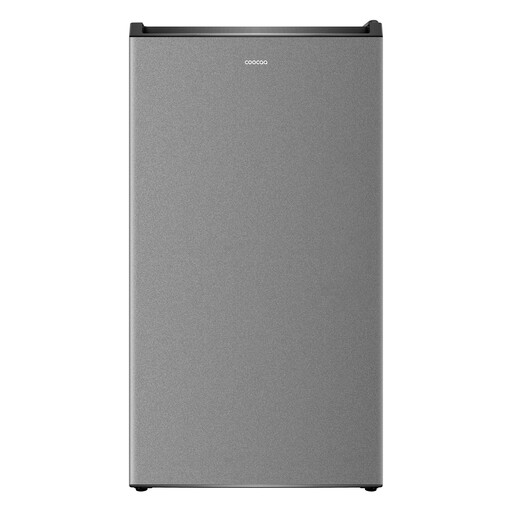
Could suit you if you’re looking for an additional single-door fridge and have enough space for this model.
The product name lists a capacity of 83 l and adjustable feet. Measure the intended space and check that the internal layout works for your containers.
The BfR recommends keeping perishable foods in the fridge at between 2 °C and 7 °C. Check the temperature where the sealed container will actually be kept. This doesn’t establish a general shelf life for every homemade dressing.
Compare the external dimensions with the available space, and allow for the door opening and the installation instructions for the specific model. A reversible door can help if space is restricted on one side.
The EU energy label includes figures such as annual energy consumption in kWh and noise emissions. The Verbraucherzentrale and European Commission recommend using these figures as a guide when comparing appliances; the stated annual consumption is not a guarantee of the energy use you’ll see in your kitchen.
No. The BfR highlights the risk of pathogens in or on raw eggs and the importance of preparing food hygienically. Without knowing the exact ingredients and preparation method, it isn’t possible to give a safe storage time for your dressing.