
Lieferung heute & morgen

Qualitätsgarantie

Willkommens-Angebote freischalten: KOSTENLOSE Lieferung | Bis zu 80 % RABATT | Kostenlose 30-Tage-JoyPlus-Testphase
App herunterladen
A mini fridge offers a flexible, space-saving solution for keeping drinks and food cool—whether in the office, a shared flat, or a garden shed. However, the market is crowded, and many models fail to live up to their promises. Before making a decision, it's crucial to understand the common pitfalls that often lead to disappointment and unnecessary expense.
As your Joybuy Product Recommendation Officer, I'm here to help you define objective criteria for your selection and distinguish marketing hype from genuine performance features.
Many buyers are swayed by attractive product images or supposed bargains, only to discover later that the appliance is unsuitable for their needs. Pay close attention to these three points:
To avoid buyer's remorse, you should base your decision on objective data. The following three parameters are essential for selecting a suitable model.
Measure your available space carefully before choosing a model. Check whether you need a freestanding small fridge or an under-counter fridge that must fit beneath a worktop. The net capacity, specified in litres, indicates how much storage space is actually available.
Since 2021, the new EU energy label has been in effect, with classes from A (very efficient) to G (less efficient). An appliance in class E consumes significantly less electricity than a comparable model in class F or G. The investment in a more efficient appliance often pays for itself through electricity savings. The exact annual consumption in kilowatt-hours (kWh/annum) is stated on the energy label and allows for a direct comparison.
The noise level of a refrigerator is measured in decibels (dB). For use in quiet environments like a bedroom or as an office fridge, the value should be as low as possible.
Instead of general recommendations, we present models tailored to specific use cases that purposefully avoid the pitfalls mentioned.
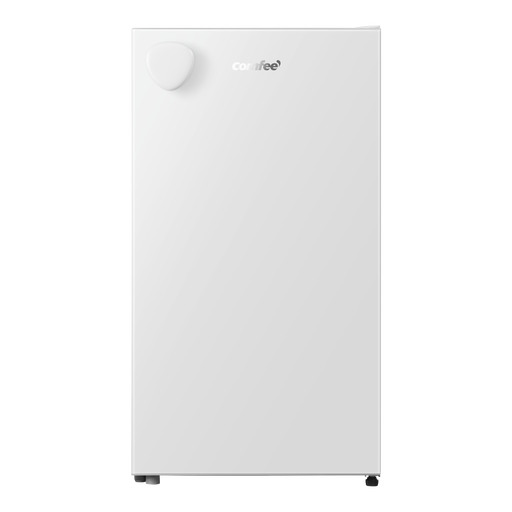
Why This Fits Their Persona: With 88 litres of net capacity, this model offers ample space for personal use in a shared flat or a small student apartment. Its compact dimensions allow it to be placed under a counter.
The stated net capacity of 88 litres is accurate, and the layout with a crisper drawer and a chiller compartment is practical, not misleading. The Class E energy rating is transparent and reasonable for this price point.
A dedicated chiller compartment for drinks and a crisper drawer to keep fruit and vegetables fresh for longer. The door hinge is reversible, offering flexibility in placement.
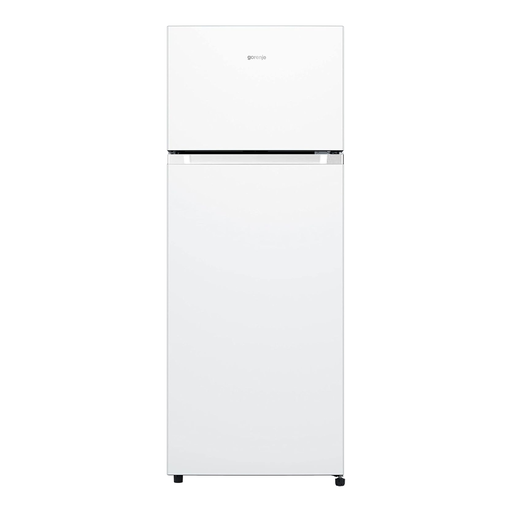
Why This Fits Their Persona: Anyone looking to do more than just cool drinks will benefit from the separate 41-litre freezer compartment. It's ideal for offices to freeze lunches or for a hobby room to store supplies.
This model offers a true 4-star freezer compartment, not just a chiller section. The capacity specifications for the fridge (165L) and freezer (41L) are clearly separated. Its 40 dB noise emission is well-suited for communal areas like offices or break rooms.
The clear separation of the fridge and freezer sections prevents odour transfer and allows for freezing food at temperatures of -18 °C and below.
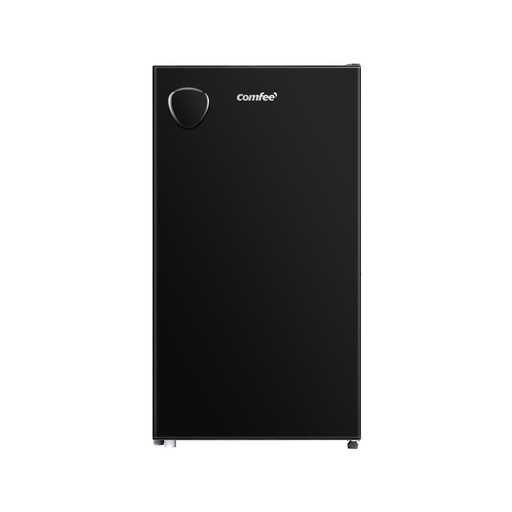
Why This Fits Their Persona: For modern studio apartments or design-conscious offices where aesthetics matter. The sleek black design and removable handle allow for seamless integration into any living concept.
This model solves the problem of bulky, fixed handles that can be obstructive in tight niches. The removable handle ensures a smooth front and maximum installation flexibility.
The removable handle allows for a clean, minimalist look. Combined with the reversible door hinge and adjustable feet, the appliance adapts to any room layout.
We have compiled a complete, real-time list of products that fully satisfy these strict selection criteria and UK safety regulations.
Power consumption depends heavily on the size, insulation, and especially the energy efficiency class. A modern Class E appliance with an approximate 88-litre capacity typically consumes between 80 and 100 kWh per year. Older or less efficient models can consume double that amount. Always check the energy label for the exact value (kWh/annum).
Yes, as long as you choose a model with a low noise emission level. Look for a value below 38 dB. Appliances with thermoelectric cooling (Peltier element) are often quieter than those with compressor technology, but they usually offer lower cooling performance and are less energy-efficient. For most use cases, a quiet compressor fridge is the more balanced choice.
A fridge with a chiller compartment (often called a "Cool Zone" or "Chiller Box") reaches temperatures around freezing (approx. 0 °C to -3 °C). It is intended for the short-term storage of delicate foods or for rapidly cooling drinks. A true freezer compartment, identifiable by its 4-star rating (****), reaches temperatures of -18 °C and colder. Only in such a compartment can food be safely frozen and stored for months.