
Lieferung heute & morgen

Qualitätsgarantie

Willkommens-Angebote freischalten: KOSTENLOSE Lieferung | Bis zu 80 % RABATT | Kostenlose 30-Tage-JoyPlus-Testphase
App herunterladen
A mini fridge can provide extra storage space in a small flat, office or when camping. However, compact cooling appliances vary considerably. A 6-litre model cannot be compared with an 82-litre table-top fridge, while a portable cool box works differently from a compressor appliance.
If you only look at the colour, capacity or a low purchase price, you can easily overlook important details. Three common purchasing and marketing pitfalls are particularly relevant:
A small fridge with 6 litres is sufficient for individual drinks, cosmetics or snacks. An appliance of this size fits on a desk or in a vehicle, but usually has no separate freezer compartment and only limited storage options.
A 45-litre fridge is more suitable for an office, student bedroom or small kitchen. Check whether the capacity includes a freezer compartment. For example, the Bomann KB 7245 is specified as having 45 litres of usable capacity and a 4-litre freezer compartment. A fridge with 80 litres, or a model with 82 or 88 litres, offers more room for food, bottles and a vegetable drawer.
Also look out for:
A conventional small fridge for an office or bedroom often uses a compressor. These appliances reach defined cooling ranges and are better suited to storing food over longer periods than many portable thermoelectric models.
A cool box with a keep-warm function or a portable fridge, on the other hand, often uses a thermoelectric system. These appliances can be powered flexibly via 12 V in the car, 220–240 V at home or, in some cases, USB. However, the temperature depends on the ambient conditions. With a 6-litre appliance offering a cooling performance of 18 to 22 °C below ambient temperature, you should not expect freezer operation.
If you are looking for a fridge with a freezer compartment, you should therefore pay attention to the compartment’s size and technical design. A small interior compartment may be suitable for ice cubes or goods that need to be frozen for a short time, but it does not automatically replace a separate freezer.
A quiet mini fridge is particularly important for a bedroom, home office or gaming room. The manufacturer’s dB(A) rating should be compared directly. In the product data available here, the figures range from 38 dB(A) for the Gorenje RB39EPW4 to 40 dB(A) for several compact appliances.
For an energy-efficient fridge, the stated annual consumption is what matters. The Bomann KB 7245 is specified at 80 kWh per year, while the Gorenje RB39EPW4 is rated at 125 kWh per year. Actual electricity consumption depends, among other things, on the room temperature, load, temperature setting and how often the door is opened.
Practical placement guidelines:
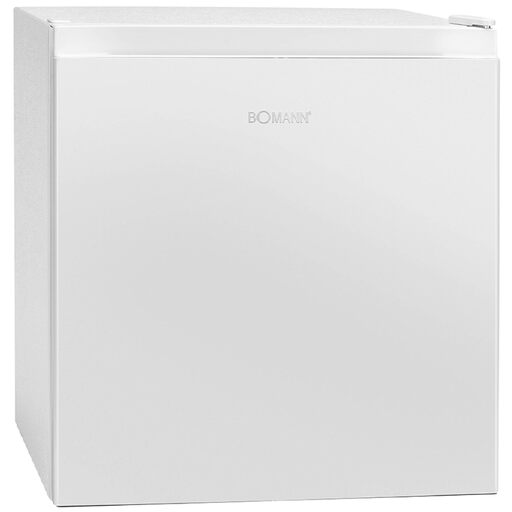
Why this product suits this profile: This appliance combines 45 litres of usable capacity with a 4-litre freezer compartment, making it suitable for an office, kitchen, gaming room or camping with a fixed power supply.
Usable capacity, freezer compartment size and temperature range are all specified clearly. The reversible door makes it easier to adapt the appliance to its location.
4-litre freezer compartment, adjustable cooling range of 0 to +8 °C, 39 dB(A) and annual consumption of 80 kWh according to the product specifications.
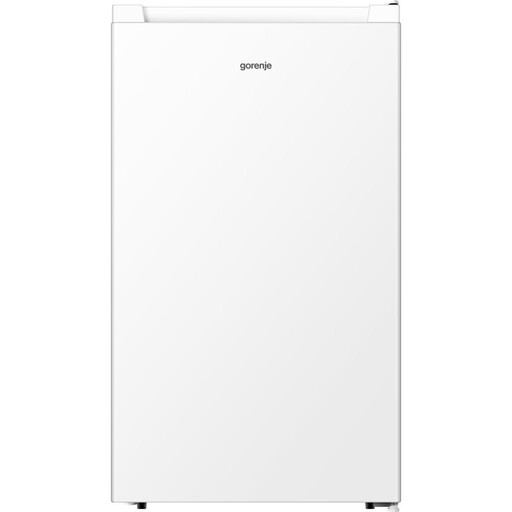
Why this product suits this profile: With 75 litres of fridge space, a 7-litre freezer compartment, LED lighting and digital temperature control, this model is aimed at households with regular storage needs.
The specifications clearly distinguish between fridge and freezer capacity. The door can be reversed, giving you greater flexibility when planning where to place the appliance.
38 dB(A), energy efficiency class E, annual consumption of 125 kWh, a vegetable drawer and automatic defrosting in the fridge compartment.
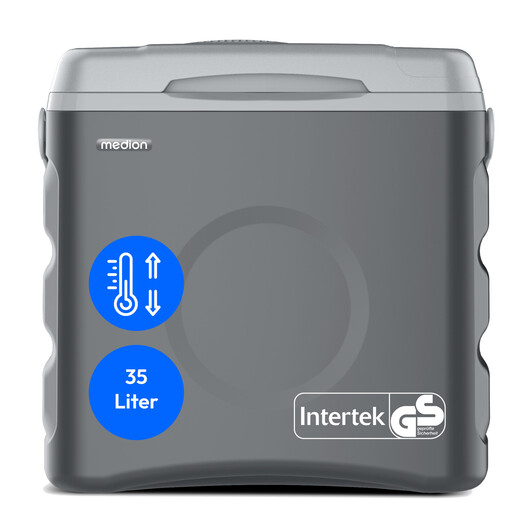
Why this product suits this profile: This cool box is designed for travelling, motorhomes, camping and days out. It can be powered via 12 V, 230 V or USB.
The power supply options for a vehicle, mains socket and USB are listed separately. The cooling and keep-warm functions are clearly distinguished.
35 litres gross capacity or 30 litres net capacity, thermoelectric cooling, plus cooling and keep-warm functions.
We have put together a complete, regularly updated list of products that fully meet these strict selection criteria and the safety regulations applicable in the EU.
Consumption depends on the size, cooling technology, room temperature and how the appliance is used. For a direct comparison, the stated annual consumption in kWh is the key figure. An appliance using 80 kWh per year would cost around 28 euros in electricity at an electricity price of, for example, 0.35 euros per kWh. The actual figure may vary.
This mainly depends on the noise level and where it is placed. According to the product specifications, values of around 38 to 40 dB(A) provide a comparable benchmark within this selection. The appliance should also stand level and have sufficient clearance for heat dissipation. For continuous use in a bedroom, compressor appliances with a clearly stated dB(A) rating are generally more predictable than small thermoelectric cool boxes.
A 12V car fridge is suitable for drinks, snacks and short trips. With thermoelectric models, cooling performance depends on the ambient temperature. The appliance should be pre-cooled before loading. These appliances are not suitable for sensitive or medical products unless precise temperature control and the appropriate approval are specified.