Styling your ends when storage space is limited
You only want to smooth out wavy ends, then put the appliance away in a small drawer. Check its overall length, and separately consider how easily it can grip small sections of hair.


If you mainly want to style individual wavy ends or short sections, check the plate width and the shape of the appliance. If storage space is limited, the appliance’s overall length and storage options matter too. An especially short appliance doesn’t necessarily offer an adjustable temperature, so temperature control may be more important than the smallest size if you use it often or have delicate hair.
You only want to smooth out wavy ends, then put the appliance away in a small drawer. Check its overall length, and separately consider how easily it can grip small sections of hair.
You style specific sections rather than straightening your entire length, and want to adjust the heat to suit your routine. The smallest appliance may not be the right choice for you.
You want to touch up your ends while you’re out from time to time, and can plan around charging time and limited battery life.
First decide what matters most to you: styling your ends precisely, taking up little space, adjustable temperature or cordless styling.
| What you’re looking for | What to check before buying | Who is it important to? |
|---|---|---|
| Easy storage in a small space | Check the overall length and whether it comes with a protective cap or pouch. | If I want to keep the appliance in a small drawer, its overall length matters more to me than just the plate width. Around 31% of consumers prioritise storage space. |
| Styling only the wavy ends | Check the plate width and the shape of the edges on the specific model. | If I want to style individual wavy ends precisely, I look at how easily the appliance can grip short sections. Around 31% of consumers prioritise precision. |
| Choosing the right temperature | Check whether the temperature is adjustable; don’t assume it is based on coating information alone. | If I’m styling specific sections rather than my entire length, I want to be able to choose a suitable heat setting. Around 25% of consumers prioritise temperature control. |
| Styling without a plug socket | Check the battery life and charging time for the specific model. | If I want to touch up my hair while I’m out and away from a plug socket, the battery life needs to suit how I use it. Around 13% of consumers prioritise cordless styling. |
A plate width of 15 mm describes the styling surface, while the 15 cm length given for the Remington S2880 refers to the entire appliance. These are different measurements when you’re looking for something to fit in a small drawer.
Check the plate width and overall dimensions separately.
Beurer states that the HS 20 offers up to 30 minutes of cordless use and takes around two hours to charge.
Choose a cordless model if you really do style your hair away from a plug socket, and factor in the charging time.
Even a small hair straightener uses heat; its size or coating doesn’t guarantee damage-free styling. The American Academy of Dermatology recommends using straighteners on dry hair at a low or medium heat setting, and no more often than every other day.
Style dry hair, choose a suitable temperature setting and limit how often you use the appliance.
The S2880 is worth considering if a short overall length is important for storage.
According to the manufacturer, the ghd mini is designed for short sections of hair that need precise styling.
The HS 20 is a compact cordless option; the HS 100 is a mains-powered alternative with a wider temperature range.
The HS 2030 is part of Grundig’s mini styler range for straightening and shaping small sections.
This selection includes compact straightening brushes and hair straighteners, including cordless models. If you only want to style individual ends, check that the brush shape and dimensions suit the way you plan to use it.
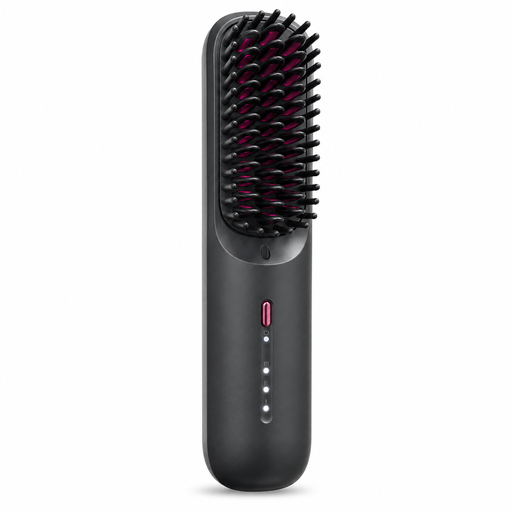 No image available
This cordless mini brush is an option if you want to touch up your hair away from a plug socket.
The product name mentions a ceramic coating and three temperature settings ranging from 160 to 200 °C. According to the product details, the appliance can’t be used while it’s charging.
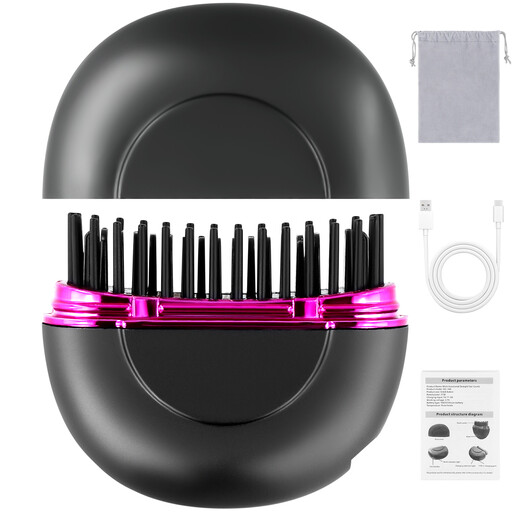 No image available
This mini brush design could suit you if you’re looking for a compact appliance to straighten your hair.
The product name mentions a ceramic coating, adjustable temperature settings and fast heating. Before buying, check that the dimensions and settings suit your storage space and routine.
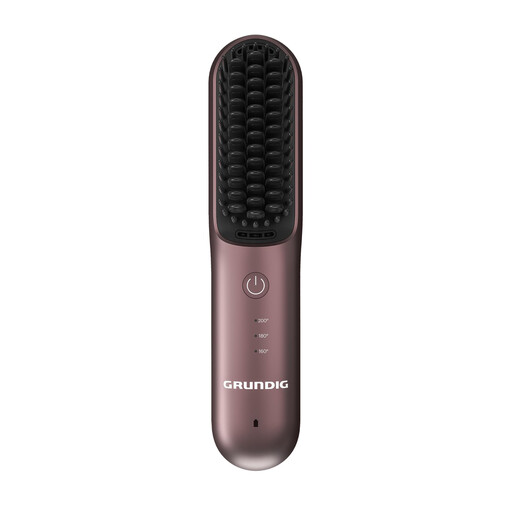 No image available
This cordless brush is an option if you want to touch up your hair away from a plug socket from time to time.
The product name mentions three temperature settings. According to the product details, use the appliance on dry hair only.
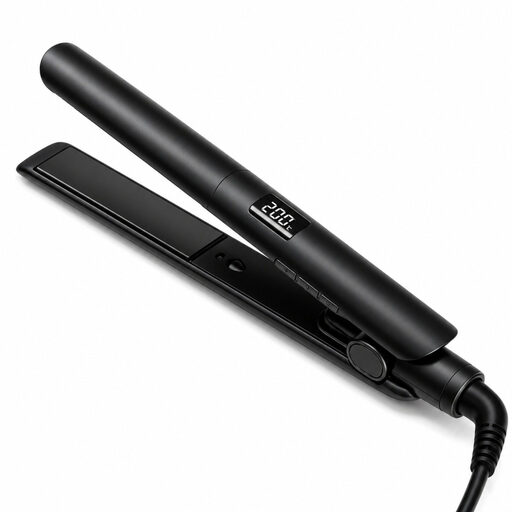 No image available
This hair straightener could suit you if you’d prefer several temperature settings to a brush design.
The product name mentions an LCD display, four temperature settings, a ceramic coating, automatic shut-off, a 360° swivel cord and a compact design. Check the dimensions if drawer space is limited.
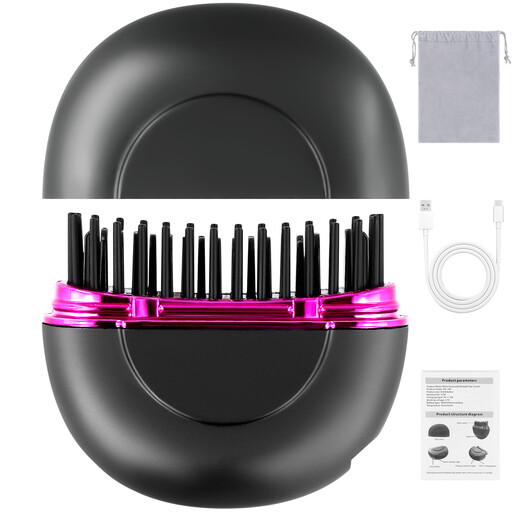 No image available
This cordless mini brush is an option if you want a compact way to touch up your hair without a plug socket.
The product name mentions PTC heating, a lithium-ion battery and heat-resistant bristles. Check the dimensions and temperature settings of the specific model if these are important to your choice.
No. For a standard hair straightener, the American Academy of Dermatology recommends using low or medium heat on dry hair. Check your model’s instructions too; a product name alone doesn’t mean it’s suitable for damp hair.
Switch off the appliance and follow the cooling and storage instructions in its manual. Grundig’s HS 2030 manual warns against covering the appliance while it’s operating or placing it on flammable surfaces; a pouch or cap doesn’t automatically mean every appliance can be put away while hot.
When you buy from a trader in the EU, you’re generally entitled to a minimum two-year legal guarantee from the date you receive the goods. Your Europe points out that an additional manufacturer’s guarantee doesn’t replace your rights against the seller.
No. For products that must carry a CE mark, the manufacturer uses it to declare that the product meets the applicable requirements. Your Europe explains that there is no central EU body that grants blanket approval; for a specific electrical appliance, also check the manufacturer’s information and warnings.