Watching during the day, with light from windows
You want to watch art documentaries without having to darken the room every time. So first check how the specific model handles reflections in the spot where you plan to put your TV.


If you often watch TV in daylight, a Mini LED LCD with independently verified anti-reflection performance for the specific model is a natural option to consider. OLED may be a better fit if you can control the room lighting and deep blacks are especially important to you. Also compare colour reproduction in the appropriate picture mode, the view from your usual seats and the power consumption of the model you’re considering.
You want to watch art documentaries without having to darken the room every time. So first check how the specific model handles reflections in the spot where you plan to put your TV.
You pay attention to how paintings, photographs and dark exhibition spaces look on screen. Compare the picture modes and picture quality of the TV you’re considering.
If you won’t all be sitting directly in front of the TV, the picture should also look good from your usual seats. Consider both reflections and how the picture looks from the side.
A better fit if: you often watch in daylight and there’s evidence that the specific model can handle reflections.
Keep in mind: Brightness or a matte screen alone doesn’t prove that a TV handles reflections well or that it will show dark scenes effectively.
A better fit if: you can block out light from windows, or you often watch in the evening and prioritise dark areas of the picture.
Keep in mind: Even with OLED, check for reflections where you plan to place the TV and compare the power consumption of the specific model.
| What matters | What to check before buying | Who it matters most to |
|---|---|---|
| Daylight and reflections | Look at independent reflection tests for the specific model and, if possible, assess the picture in similar room lighting. | If I watch during the day with light coming through the windows, reflections shouldn’t obscure the picture. Around 36 % of consumers are likely to have this as their main concern. |
| Colours and picture detail | Check the colour accuracy of the specific TV and try an appropriate Film or Filmmaker Mode; consider SDR and HDR separately. | When I watch paintings and dark exhibition spaces, believable colours and visible detail matter more to me than an eye-catching demo mode. Around 29 % of consumers are likely to prioritise this. |
| Seating positions and screen size | Check how the picture looks from the seats you actually use, as well as the dimensions and energy label for the size you’ve chosen. | When we watch together, I want to be able to judge the picture from the seats at the side, too. Around 21 % of consumers are likely to prioritise multiple seating positions and the right screen size. |
| Power consumption | Compare the energy label and stated consumption of the specific model. The German Environment Agency notes that larger screens can use more electricity. | If I use the TV often, I want to factor its power consumption into my running costs alongside the screen size. Around 14 % of consumers are likely to prioritise this. |
Reflections and the way dark scenes are shown aren’t determined by the screen surface alone. A manufacturer’s peak HDR brightness figure also doesn’t automatically tell you how bright an entire documentary scene will look.
Check reflection tests for the exact model and, if possible, assess the picture in lighting similar to your living room.
The picture mode you choose affects how colours look. So especially vivid colours in demo mode aren’t a reliable guide to how art documentaries will appear.
Look for colour accuracy tests of the specific TV and try a suitable picture mode for the content you watch.
A larger screen takes up more space and can use more electricity. Screen size alone doesn’t tell you how much power a specific model uses.
Compare the dimensions and energy labels of the TVs that would suit your space.
The QN90F is a Mini LED LCD option to consider if reflections are a concern in a bright room. Samsung lists Glare Free as a feature of the GQ55QN90FATXZG.
The 55C8L is an SQD Mini LED model to consider when comparing bright LCD TVs.
The OLED55G59LS is an OLED option to consider when weighing dark areas of the picture and a suitable Film mode against daytime viewing performance.
The BRAVIA 5 range is another Mini LED option to consider when comparing backlighting and streaming features on specific models.
The 55U7DS Pro is a specific model to include when comparing Mini LED TVs.
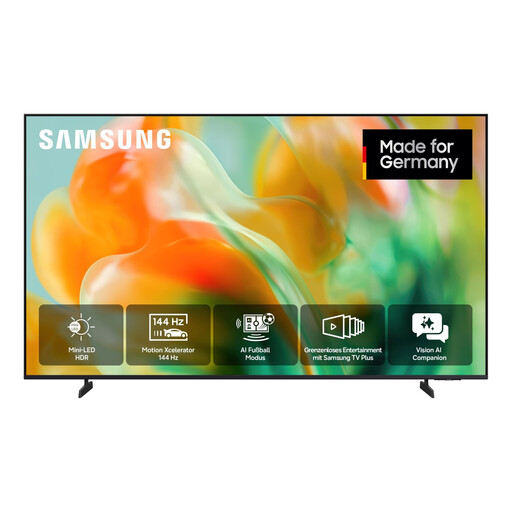
A Joybuy product option to consider when comparing Mini LED LCD TVs for your living room.
 No image available
As a 55-inch Mini LED TV, this model is worth considering alongside other LCD TVs for your living room. Be sure to check how it handles reflections in the spot where you plan to put it.
55 inches; Mini LED; 4K UHD; Smart TV.
No, a matte screen alone isn’t enough to prove that a TV handles reflections well. Results vary between models, so check the specific TV in relation to your window positions and seating.
Start with a suitable Film or Filmmaker picture mode and check the apps and inputs you actually use. Settings may differ for SDR and HDR content; accurate calibration requires measuring equipment.
Compare the EU energy labels for the specific models. To work out your own costs, you’ll also need to know how long you use the TV for and your electricity tariff.
According to consumer information from the European Union, faulty goods are covered by a legal guarantee of at least two years from the date you receive them. Your point of contact is the seller. This is separate from any additional manufacturer’s warranty offered.
Old appliances should be disposed of separately. The German Environment Agency lists local collection points and take-back options when you buy a new appliance; Germany’s Federal Ministry for the Environment explains online retailers’ take-back obligations and the conditions that apply. Check the specific return arrangements during checkout.