What should you look for when buying?
First check that the tin fits the appliance and that you can position it safely; it’s easier to assess the heating method and costs once you’ve done that. Dr. Oetker gives an example of a 27 × 26 cm tin for a flapjack recipe, while Steba lists internal dimensions of 31 × 25,5 × 23,5 cm (W × D × H) for the KB M19. Rommelsbacher’s measurement of up to 29 cm applies to round tins.
| What matters |
What to check when buying |
Who is it most relevant to? |
| Will my bar tin fit? |
Compare its external dimensions, including handles, with the usable internal space, shelf and opening. |
If I want to keep using a tin I already own, its dimensions need to fit the cooking cavity. Around 36% of consumers put fit first. |
| Is there enough space to position it safely? |
Allow for the appliance dimensions, clearance from walls and ventilation requirements in the instructions. |
When worktop space is limited, I also need to allow for the clearance specified in the instructions. Around 29% of consumers prioritise a safe space for the appliance. |
| Is the appliance suitable for small batches? |
Compare the heating methods, suitable tins and accessories specifically listed for the model. |
If I bake small amounts and want to use the appliance for a range of dishes, I need a suitable tin and the right functions. Around 21% of consumers prioritise this kind of use. |
| What will the total cost be? |
Factor in any tin or accessories you need and compare consumption for similar baking quantities. |
When I consider the purchase price, accessories and electricity together, consumption for the amount actually baked matters. Around 14% of consumers focus primarily on these overall costs. |
Joybuy products
The options below include compact appliances with a stated baking function and mini ovens. For each model, check separately whether your bar tin will fit and whether your chosen spot allows for the required clearances.
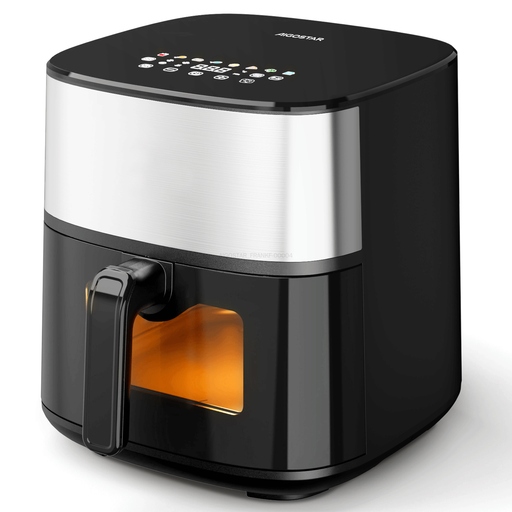 Image unavailable
AvaPro baking appliance, 8 l, 2000 W, top-and-bottom heat
An option for smaller batches if you’re looking for an appliance with a stated baking function. Check first that your tin will fit.
- Capacity: 8 l
- 2000 W
- Top and bottom heat
- 60-minute timer and viewing window
Place the appliance on a stable, heat-resistant surface; the appliance and basket get hot.
Joybuy
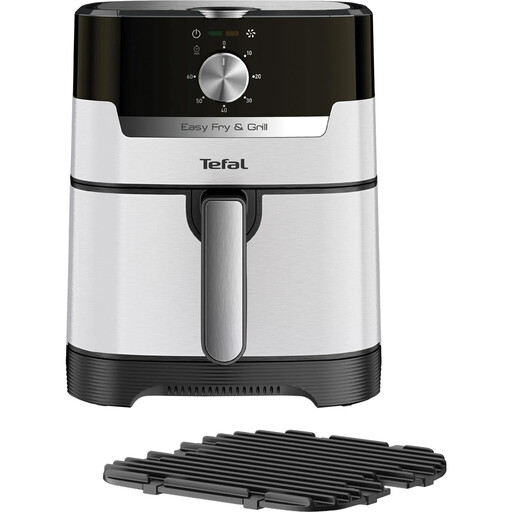 Image unavailable
Tefal EY501A Easy Fry, 4,2 l
If you’re considering an air fryer for baking, check first whether a tin suitable for your bars will fit inside the specific model.
The outer surfaces and air outlet get hot during and after use. According to the product information, only handle the appliance by its handle.
Joybuy
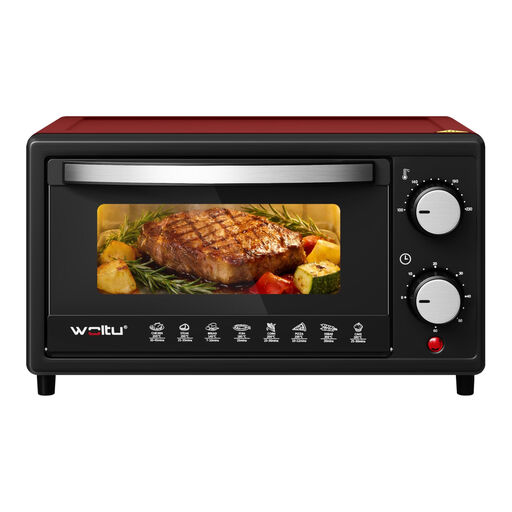 Image unavailable
WOLTU mini oven with pizza function, 10 l, red
A compact mini oven for smaller batches of bars. Measure the space available and check your tin’s dimensions against the specific appliance.
- Capacity: 10 l
- Temperature range: 100–230 °C
- 60-minute timer
Joybuy
 Image unavailable
WOLTU mini fan oven, 28 l, with temperature control and timer
If you’re looking for a mini oven for bars and other baking tasks, check your tin against the model’s usable internal space.
- Capacity: 28 l
- Temperature range: 100–230 °C
- Temperature control and timer
Joybuy
 Image unavailable
WOLTU BF12sz mini oven, 32 l, 1600 W
This larger mini oven could suit you if you’re planning to bake and grill other dishes as well as bars, and have enough space for it.
- Capacity: 32 l
- 1600 W
- Temperature range: 100–250 °C
- Timer and crumb tray
The appliance measures 52,3 × 36 × 32,2 cm. Check that you have enough space to position it.
Joybuy
Frequently asked questions
Can I use the temperature from my bar recipe with any compact appliance?
Not as a general rule. Dr. Oetker’s flapjack recipe recommends around 180 °C with top-and-bottom heat or 160 °C fan-assisted for its specified tin and quantity, for about 25 minutes. Follow the recipe and the instructions for your specific appliance, and check whether the bars are done if the tin or batch size is different.
Where can I put a mini oven in a small kitchen?
Only place it somewhere that meets the requirements in its own instructions and where the ventilation openings can remain clear. For example, Steba requires 10 cm of clearance between the back of the KB M19 and the kitchen wall, and says it must not be used as a built-in oven. These requirements don’t automatically apply to other models.
Who is responsible for the statutory guarantee if something is faulty?
For a consumer purchase in Germany, the seller is generally responsible. The Verbraucherzentrale explains that retailers must cover faults in new goods for two years if those faults were already present when the goods were handed over. Any additional manufacturer’s guarantee is separate and subject to its own terms.
Does every small mini oven need an energy label?
You shouldn’t assume that every small mini oven needs an energy label: the European Commission lists small ovens as outside the scope of the relevant ecodesign regulation for domestic ovens. This doesn’t in itself tell you how much electricity an appliance actually uses; compare consumption figures only when they’re based on the same calculation method and a similar quantity of food.
What requirements apply to a new electric baking appliance in Germany?
The relevant requirements apply to new electrical equipment within the scope of Germany’s 1. ProdSV, including appliances with a rated voltage of 50 to 1.000 V AC. According to the European Union, CE marking is a declaration by the manufacturer, not an independent quality mark. Before buying, check the marking and product documentation for the specific appliance.


