Baking batches of bread rolls for a group
If you want to bake as many rolls as possible at a time, start by comparing the usable tray area with the size of your rolls. Make sure you have enough space for the appliance, too.


When baking bread rolls for a group, the usable tray area and the number of rolls you want to bake at a time matter more than the oven’s capacity alone. If you’re making your own dough, the heating mode needs to suit the recipe; for part-baked rolls, follow the instructions on the packet. Also check the space available, including the clearances specified in the manual, and make sure the voltage and frequency match those of the specific appliance. Electrical appliances intended for the EU market must meet CE requirements (EUR-Lex).
If you want to bake as many rolls as possible at a time, start by comparing the usable tray area with the size of your rolls. Make sure you have enough space for the appliance, too.
If you’re making the dough yourself, the heating mode and temperature settings should suit the recipe. Instructions for part-baked rolls are no substitute for a recipe’s baking instructions.
If worktop space is limited, check the safety clearances for the specific model as well as its external dimensions. A space that fits the appliance itself may still be too small once you allow for the required clearances.
| Buying priority | What to check | Who it matters most to |
|---|---|---|
| Usable tray area | Check the dimensions of the supplied tray and the size of your rolls. The capacity in litres alone won’t tell you how many rolls will fit. | If you want to bake as many rolls as possible at a time for a group, usable tray area is key. Around 36% of consumers put batch size first. |
| Heating modes and baking controls | Check whether the heating mode suits your recipe, and compare the temperature range and timer on the specific model. | If you’re baking homemade rolls to a recipe, you’ll need suitable heating modes and a baking time you can control. Around 29% of consumers prioritise baking controls. |
| Space and electrical connection | Allow for the safety clearances specified for the model and check that the voltage and frequency match the intended connection. | If you’re using a dedicated spot in a small kitchen, both the appliance and the required clearance need to fit. Around 21% of consumers check the available space and electrical connection first. |
| Cleaning and effort | Check whether the crumb tray can be removed, and look up the cleaning instructions and spare parts for the exact model. | If you’ll be using the oven for several batches, you’ll want to be able to clear away crumbs easily and plan for cleaning. Around 14% of consumers put cleaning and day-to-day effort first. |
The oven’s capacity doesn’t tell you how many rolls will actually fit on the supplied tray. The tray area and the size of the rolls matter, too.
Check the tray dimensions for the specific model and plan your batches around your recipe.
Severin offers mini ovens and toaster ovens in a range of sizes. The TO 2068 is an example of a 20-l model, while the TO 2052 is a 9-l model without a fan-assisted setting.
The Rommelsbacher BG 1805/E is a countertop oven with a stated capacity of 42 l.
The Clatronic MBG 3727 is a 25-l multi-function oven, sitting between compact and larger countertop models.
The Caso TO 26 SilverStyle is a 26-l model with top/bottom heat and fan-assisted cooking.
The Steba KB 27 U.2 is a 20-l grill oven with separately selectable heating settings.
The products below range from compact mini ovens to air fryer ovens with a baking function. Before using any model in its intended spot, check the details for the specific electrical connection and the required safety clearances.
 No image available
If you need both a baking tray and a wire rack for baking rolls for a group, the product description lists both as included accessories.
Specifications include a 32 l capacity, 1600 W, a temperature range of 100 to 250 °C and a 60-minute timer. A removable crumb tray is also listed.
 No image available
This compact 10-l model is worth considering for small kitchens and smaller batches. Check that its usable area meets your tray requirements.
Features include top and bottom heat, a temperature range of 100 to 230 °C, a programmable 60-minute timer, a baking tray and a wire rack.
 No image available
For baking several batches, the description lists baking trays and multiple shelf positions. Check which tray area you can actually use for your rolls.
Specifications include a 28 l capacity, three heating modes, three shelf positions, a temperature range of 100 to 230 °C and a 60-minute timer. Top heat, bottom heat and combined operation are listed as heating modes.
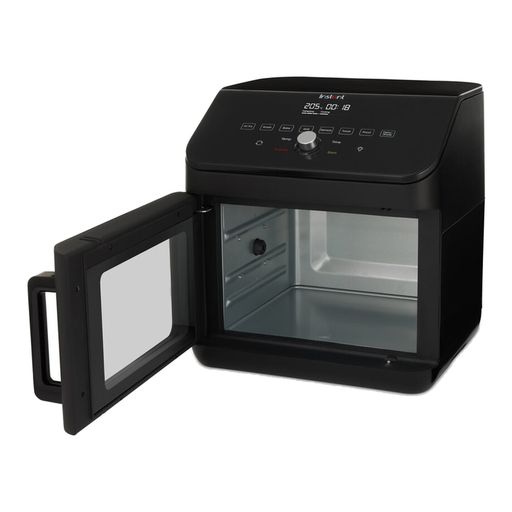 No image available
The product description lists a baking function and a programme for proving dough. Check that the settings suit your recipe.
Specifications include a 13 l capacity, nine programmes, air circulation and two baking trays.
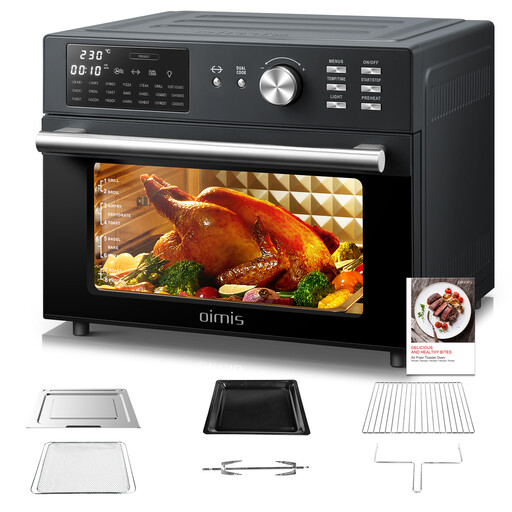 No image available
A baking function is listed as a preset. Compare the actual tray area and controls with how you plan to use the oven.
Specifications include a 30 l capacity, 21 presets, 360° air circulation and 1800 W. The product name also lists a rotisserie and dehydrating function.
Follow the recipe you’re using. A Verbraucherzentrale recipe for small raisin rolls specifies 200 °C with top/bottom heat for 15–20 minutes. This is an example, not a setting that will work for every dough or mini oven.
Not necessarily. Follow the instructions on the packet and the manual for your oven. For part-baked rolls in the BG 1805/E, Rommelsbacher recommends briefly preheating the oven and gives 180 °C as an example.
Only if the manual for your specific model allows it and you leave the required clearance. For the BG 1805/E, Rommelsbacher refers users to the safety clearances in the instruction manual.
Check the input voltage and frequency on the specific appliance. German households typically use 230 V and 50 Hz (VDE). For an electrical appliance intended for the EU market, you should also check that it has the required CE marking and complies with the relevant requirements (EUR-Lex).
No. The rated power alone doesn’t show how much energy a complete baking session will use. For a meaningful comparison, you need consumption figures measured per baking cycle under comparable conditions.