
Lieferung heute & morgen

Qualitätsgarantie

Willkommens-Angebote freischalten: KOSTENLOSE Lieferung | Bis zu 80 % RABATT | Kostenlose 30-Tage-JoyPlus-Testphase
App herunterladen
A conventional built-in oven isn't always the right solution. Whether for a small city apartment, as a supplement to the family kitchen, or as an energy-efficient alternative for daily use—a mini oven offers flexibility and performance in a small footprint. However, the selection is vast and the features are diverse. This guide will help you understand the technical specifications and find an appliance that is perfectly tailored to your needs.
Before you make a decision, three central criteria should be considered: the interior capacity, the available functions, and the power consumption. These factors determine how well the countertop oven will fit into your daily life.
The volume of a mini oven is specified in litres and is a crucial indicator of its potential uses.
Before purchasing, measure the intended space precisely, taking into account the necessary clearance from walls and other appliances for ventilation.
Modern mini ovens are far more than just small heating boxes. The right selection of features makes all the difference.
The power, specified in watts, affects the preheat time and the oven's ability to maintain high temperatures consistently. Models with 1,200 to 1,800 watts generally offer a good balance of performance and efficiency. A key advantage of the mini oven is its lower energy consumption compared to a large built-in oven, as a smaller space needs to be heated. This makes it an economical choice for preparing small to medium-sized portions.
Here we present three models that cover different user profiles through their distinct specialities.
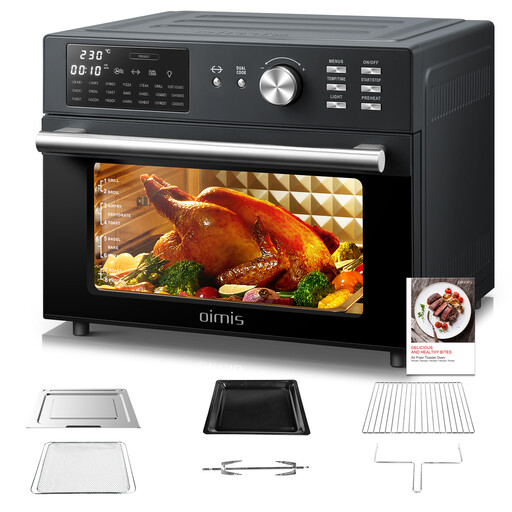
Why this model stands out: The OIMIS oven is a multifunctional powerhouse. With a 30-litre capacity and 1800 watts of power, it combines the functions of an oven, an air fryer, and a dehydrator. The 360° air circulation technology ensures even heat distribution and crispy results.
Pros:
Who it's for: This model is ideal for families and home cooks looking for a versatile appliance that can replace several kitchen gadgets. Its high capacity makes it a full-fledged alternative to a conventional oven.
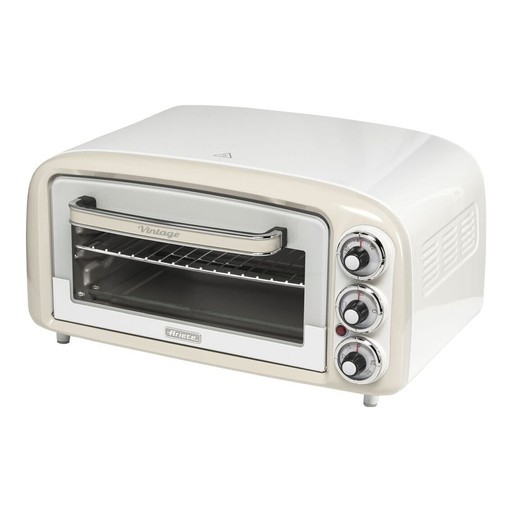
Why this model stands out: The Ariete Vintage oven combines functionality with a distinctive retro design. Its compact form and pastel finish make it an eye-catcher in any kitchen, without compromising on core features.
Pros:
Who it's for: Perfect for design-conscious users, singles, or couples who want a functional yet aesthetically pleasing small oven for daily use in kitchens with limited counter space.
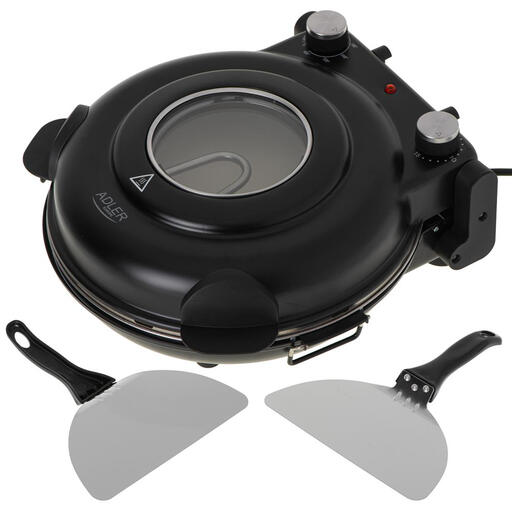
Why this model stands out: This electric pizza oven is a specialist for the perfect pizza. It reaches temperatures of up to 400°C, which are essential for an authentically crispy crust. The integrated ceramic pizza stone stores heat and transfers it evenly to the dough.
Pros:
Who it's for: This appliance is aimed at all pizza lovers who refuse to compromise on the quality of their homemade pizza and are looking for a specialised device that a conventional oven cannot replace.
Didn't find the right model for you? The world of compact baking solutions is diverse. Discover more options and find the perfect appliance for your kitchen in our comprehensive Ovens category.
1. Can a mini oven replace a conventional oven? For many households, especially for singles, couples, or small families, a mini oven with sufficient capacity (30 litres and up) and a convection function can completely replace a conventional oven. For very large households or ambitious bakers who often need multiple trays at once, it serves more as a practical and energy-efficient supplement.
2. How much electricity does a mini oven use? A mini oven typically consumes significantly less electricity than a large built-in oven because the volume to be heated is smaller. The exact consumption depends on the power (wattage) and duration of use. A 1500-watt model running for half an hour uses about 0.75 kilowatt-hours (kWh), making it an economical choice for daily meal preparation.
3. What is the advantage of a mini oven with a convection function? The convection function uses a fan to ensure even circulation of hot air inside the cooking chamber. This leads to more uniform cooking and baking results by preventing hot spots. Additionally, dishes can often be cooked at slightly lower temperatures or in less time, which saves even more energy.