
Lieferung heute & morgen

Qualitätsgarantie

Willkommens-Angebote freischalten: KOSTENLOSE Lieferung | Bis zu 80 % RABATT | Kostenlose 30-Tage-JoyPlus-Testphase
App herunterladen
A mini oven can save a great deal of space in small kitchens, student accommodation or the homes of singles and couples. At the same time, countertop ovens, electric mini ovens and compact pizza ovens vary considerably in capacity, temperature range and features. If you focus only on wattage or eye-catching design, you may end up with an appliance that is too small for your intended use or does not bake evenly enough.
A higher power rating initially only means that the appliance draws more electrical power. What matters is how that power is used: can the top and bottom heating elements be switched on separately? Is there a fan-assisted function? How accurately can the temperature be set?
A 1,380-watt appliance may be suitable for baking rolls, toast, small casseroles and pizzas up to around 30 cm. However, the usable interior space may still be insufficient for multiple shelves or larger baking tins.
The specification “18 litres” says little about whether a particular baking tin will fit inside. You should also check:
A countertop oven may look compact, but during operation it still needs sufficient clearance for ventilation and heat protection.
An oven with a maximum temperature of 230°C is suitable for many everyday dishes, cakes, gratins and frozen pizzas. A pizza oven reaching up to 400°C, on the other hand, is designed for short baking times and high temperatures. It is not automatically the better choice for bread, cakes or slow-cooked dishes.
A 60-minute timer is also practical, but it does not replace an automatic shut-off unless this is expressly stated by the manufacturer.
For one person, a capacity of approximately 18 to 25 litres is often sufficient. Couples or frequent users can benefit from 30 to 40 litres, provided there is enough space to position the appliance. A multifunction oven with several shelf levels can offer greater flexibility, but it requires more space and may have a higher power consumption.
Depending on the model, the package may include a baking tray, wire rack, pizza stone or pizza peel. Accessories should be suitable for the size of the interior. For example, a 30 cm pizza plate requires a baking chamber with a suitable shape.
For everyday use, top heat, bottom heat and combined heat are important basic functions. An oven with fan assistance distributes warm air throughout the cooking chamber and can be helpful when using several shelf levels. However, its actual suitability depends on the design, how full the oven is and the selected temperature.
Look for a clearly marked thermostat scale, easy-to-reach rotary controls and an operating indicator. In a pizza oven that reaches very high temperatures, heat-resistant handles and a stable housing are particularly important.
An electric mini oven is generally operated from a suitable 220- to 240-volt socket. Power consumption can vary considerably depending on the model. Check whether the circuit is designed to support the simultaneous use of other small kitchen appliances.
The position should:
Before cleaning, the appliance must be disconnected from the mains and allowed to cool down completely. The manufacturer’s operating instructions and safety information take priority.

Why this product suits this profile: This 18-litre appliance is designed for small portions, toast, casseroles and pizzas up to 30 cm. Its compact dimensions of 47.5 × 40 × 24.5 cm make it suitable for limited worktop space.
The product details specify the interior capacity, maximum temperature, timer and pizza diameter. This makes it possible to check before buying whether the cooking chamber is suitable for your own cookware.
Top and bottom heat can be selected separately or together. Other features include a 60-minute timer, three shelf levels, a baking tray and a wire rack.
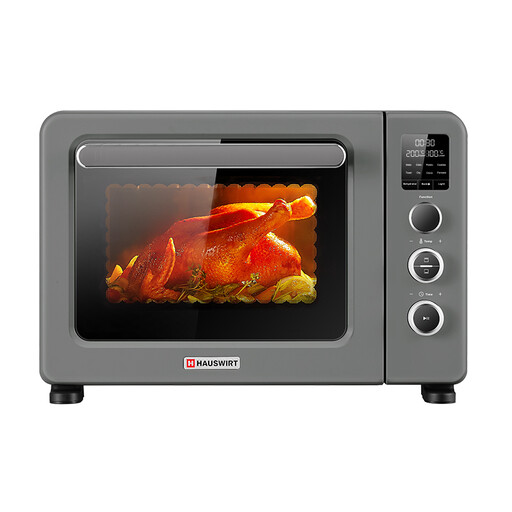
Why this product suits this profile: The larger 35-litre capacity, thermometer, LED display and four shelf levels appeal to users who want to bake more frequently and prepare a wider variety of dishes.
The features go beyond simply stating the maximum temperature. Interior capacity, temperature control and multiple shelf levels are clear, practical criteria for choosing the right appliance.
35-litre cooking chamber, fan-assisted function, integrated thermometer, LED display and four shelf levels, according to the product name.
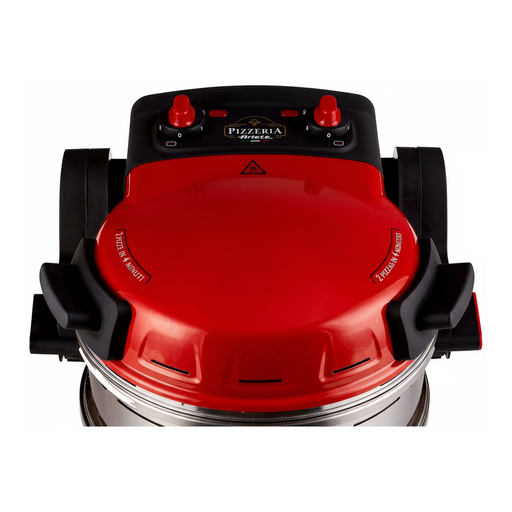
Why this product suits this profile: Pizza lovers get an appliance with two fireproof plates, five cooking settings and a stated maximum temperature of 400°C. The diameter is specified as 32 cm.
The high temperature is accompanied by specific details about the plate size, diameter and heating settings. This makes it easier to assess whether the appliance is designed for pizza rather than simply general reheating.
2,300 watts, two thermostats, five cooking settings, two wooden pizza peels and fireproof plates, according to the product description.
We have put together a complete, regularly updated list of products that fully meet these strict selection criteria and the safety regulations applicable in the EU.
The right choice depends on the space available and your cooking habits:
Consumption depends on the power rating, temperature, preheating time and operating duration. An appliance rated at 1,380 watts theoretically uses 1.38 kWh per hour when operating at full power. In practice, the thermostat switches the heating elements on and off at intervals. For a realistic estimate, multiply the actual usage time by the power rating and your electricity tariff.
There is no single standard service life. It depends, among other things, on the heating elements, thermostat, door seal, cleaning routine and frequency of use. Regularly removing crumbs, avoiding liquid inside the appliance and maintaining the required ventilation clearances can help ensure proper operation. The warranty and service conditions of the relevant manufacturer are decisive.
The surface must be stable, level and heat-resistant. Observe the clearances from walls, curtains and cupboards specified in the operating instructions. The appliance must not be covered or moved while it is operating. Before buying, you should therefore consider not only the external dimensions but also the space required around the oven.