What should you look for when buying?
Larger original baking tray
A good fit if: You want to bake a larger batch together and have enough space for the oven.
The trade-off: The larger appliance takes up more room, and the tray’s external dimensions don’t guarantee that it will hold a particular number of scones.
Mid-sized mini oven
A good fit if: One tray is enough and you want to choose between conventional and fan-assisted heat.
The trade-off: The original tray for the Rommelsbacher BGE 1580/E is smaller than the one for the BG 1805/E; the stated external dimensions don’t replace a proper fit check.
More compact oven for several batches
A good fit if: Saving space is important and you can bake the scones in batches.
The trade-off: The scones won’t all be ready at once, and a small oven capacity doesn’t tell you how much usable tray space there is.
First check how many scones will fit on the tray, then compare the heating method, temperature and available space. The percentages show how consumers choosing a mini oven for cheese scones for a family meal rank their concerns, based on their main buying priority.
| Priority |
What to check when buying |
Who should pay particular attention |
| Tray space for a family batch |
Compare the usable tray area with your cutter size, the number of scones you want and the space needed between pieces of dough. Rommelsbacher gives the external dimensions of the original trays as 32,5 × 28,5 cm for the BGE 1580/E and 38,5 × 31,5 cm for the BG 1805/E. |
If I want to serve as many scones as possible together, I compare the usable tray area rather than relying on the capacity in litres alone. Around 36% of consumers share this priority. |
| The right baking temperature |
Compare conventional heat, fan-assisted heat if available, and the exact model’s temperature range with your recipe. For the recipe reviewed, Good Food specifies 200 °C with conventional heat or 180 °C with fan-assisted heat. |
If I want to follow the recipe as closely as possible, I check the heating method and adjustable temperature. Around 29% of consumers prioritise getting the baking temperature right. |
| A safe place on the worktop |
Check the external dimensions and the installation and ventilation guidance in the manual for the specific model. |
If my worktop space is limited, I need to make sure the oven fits safely, including the required clearances. Around 21% of consumers share this concern. |
| Running and ongoing costs |
Compare energy use only where it has been measured on a comparable basis, and check whether a suitable replacement or second tray is available. |
If I bake often, I look for comparable energy-use figures and check what accessories I might need. Around 14% of consumers put this first. |
Suitable products at Joybuy
Mini ovens and countertop ovens for baking, with stated temperature ranges and accessories you can compare with your recipe and intended installation location.
 No product image available
Woltu BF12sz mini oven, 32 l
Could be worth considering if you want to compare its stated temperature range and included baking tray with your cheese scone recipe.
32 l capacity; temperature range 100–250 °C; 1600 W; timer and crumb tray according to the product name. Check the usable tray area and installation guidance for the batch you have in mind.
View at Joybuy
 No product image available
Woltu mini convection oven, 28 l, black
Could work for cheese scones if a convection oven suits your recipe and the usable tray area is large enough for your batch.
28 l capacity; temperature control and timer according to the product name. Before buying, compare the heating method, temperature range and tray dimensions with your recipe.
View at Joybuy
 No product image available
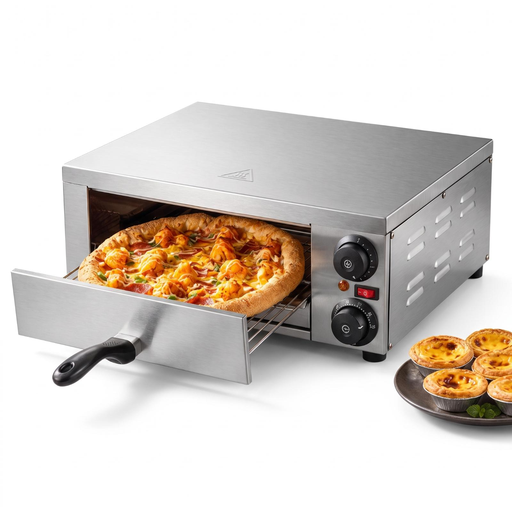
Stainless steel pizza oven, 2000 W
Described as a pizza oven, it’s only suitable for cheese scones if its heating method and baking tray work for your recipe.
2000 W, temperature up to 350 °C and timer up to 15 minutes according to the product name. Check that the settings suit your recipe and consider how you’ll monitor a longer baking session.
View at Joybuy
Frequently asked questions
Can I set the temperature specified in a cheese scone recipe?
For the recipe reviewed, Good Food specifies 200 °C with conventional heat or 180 °C with fan-assisted heat, and a baking time of 15–20 minutes. Choose the right heating method, preheat as instructed in the recipe, and check the colour and whether the scones are cooked through. Other recipes may give different instructions.
Can I bake two trays at once in an oven with several shelf positions?
Having several shelf positions doesn’t in itself confirm that you can bake two trays of scones at the same time. Check the instructions for the complete model designation to see whether the manufacturer recommends this, whether a second compatible tray is available, and whether there’s enough space between the heating elements and the food.
What should I bear in mind when positioning and cleaning the oven?
Check the intended location against the external dimensions and installation guidance in the manual for the specific model. The Clatronic MB 3746 manual warns, among other things, about hot surfaces, leaving the appliance unattended and cleaning it while it’s plugged in. These instructions apply to this model and don’t provide standard clearance measurements for all mini ovens.
Does Germany have a statutory legal guarantee?
For a purchase from a business seller covered by EU consumer rules, there is a statutory legal guarantee of at least two years from the date you receive the goods. The European Union distinguishes this statutory guarantee from a voluntary manufacturer’s guarantee. These rules don’t apply to purchases from private individuals.
Does every mini oven need an EU energy label?
No, not every mini oven is covered by the energy labelling rules referred to for household ovens. The European Commission lists small and portable ovens as exceptions to the scope of the rules. Whether a specific model is covered depends on its features; the absence of a label is not evidence of either low energy use or non-compliance.
What should I look for when buying an electrical appliance for use in Germany?
The Federal Network Agency lists, among other things, correct CE marking, identifiable manufacturer details, and German-language instructions with usage and warning information as part of its checks. Check the appliance you receive and its documentation.


