What should you look for when buying?
First, check that the tray and the space you have available will suit your kitchen. Then use your recipe requirements and the work involved in cleaning to help you choose.
| What matters when buying |
What to check |
Who it matters most to |
| Tray area |
Compare the tray’s dimensions and usable area, along with the shelf height and clearance from the heating elements, with the amount of dough you plan to make. |
If I’m only baking a few scones, I want to know whether they’ll fit on the tray with enough space between them. Around 33 % of consumers prioritise tray fit. |
| Heating function and temperature |
Compare the recipe instructions with the heating functions and temperature range available on the specific model. |
If my recipe calls for a particular heating function and temperature, I want to be able to select the right settings. Around 27 % of consumers prioritise the heating function and baking temperature. |
| A safe place to put it |
Allow for the appliance’s footprint, room to open the door, a socket and the clearances specified in the model’s instructions. |
If my worktop space is limited, I want to be able to position the appliance safely, with the required clearances. Around 27 % of consumers put the space needed first. |
| Use and care |
Check the cleaning instructions and crumb tray; don’t assume that the wattage tells you how much electricity each baking session uses. |
If I use the appliance regularly, I want to factor cleaning and running costs into my decision. Around 13 % of consumers prioritise use and care. |
For new electrical appliances in Germany that fall within the scope of the 1. ProdSV, the relevant requirements must be observed, including the EU Declaration of Conformity and CE marking. Instructions for use and safety information must be supplied in German. The applicable requirements are those set out in the 1. ProdSV, as published by the Federal Ministry of Justice on “Gesetze im Internet”.
Mini ovens at Joybuy
This selection at Joybuy includes mini ovens you can compare for cheese scones by capacity, heating function and temperature range. Also check the usable tray area and the positioning instructions for each model.
 No image available
WOLTU BF12sz mini oven, 32 l
If you’d like to cook other oven dishes as well as scones, compare the larger capacity with the space you have available.
The product title lists a capacity of 32 l, 1.600 W, a timer, a crumb tray and a temperature range of 100–250 °C.
View at Joybuy
 No image available
WOLTU mini oven, 10 l, with pizza function
For a small batch, compare this compact model with the dimensions of your tray and the worktop space available.
The product title lists a capacity of 10 l and a temperature range of 100–230 °C. The description lists upper and lower heating elements.
View at Joybuy
 No image available
WOLTU mini convection oven, 28 l
If you’re planning to cook other oven dishes as well as scones, compare the extra features with your space requirements and the recipes you have in mind.
The product title lists a capacity of 28 l, a temperature control and a timer. The description gives a temperature range of 100–230 °C.
View at Joybuy
 No image available
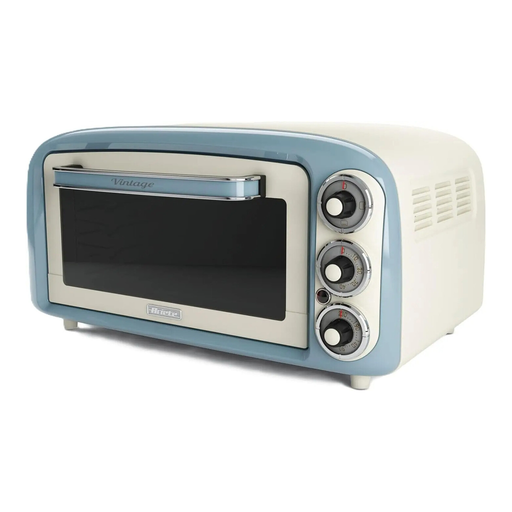
Ariete Vintage 97905 mini oven, 18 l
If you’d like to cook other dishes as well as scones, check that the capacity and included accessories suit what you plan to make.
The product title lists a capacity of 18 l, 1.380 W, an aluminium baking tray insert and a 60-minute timer. The description says the appliance should be placed on a stable, heat-resistant surface and kept away from naked flames and direct heat sources.
View at Joybuy
Frequently asked questions
Does a mini oven need a fan to bake cheese scones?
No, not every recipe calls for a fan. Good Food’s cheddar scone recipe specifies 220 °C for conventional heat or 200 °C with a fan. Check your recipe’s instructions against the heating functions and temperature range of the specific appliance.
Can I put a mini oven inside a kitchen cupboard?
Not just because the appliance fits. The instructions for the Severin TO 2052 prohibit installing it in a cupboard and require 12 cm of clearance at the sides and back, and 30 cm above. Other models have their own positioning instructions.
Does the wattage tell me how much electricity one batch of scones will use?
No. Watts describe the power input, not the energy used for a complete baking session. The Verbraucherzentrale recommends checking the appliance’s actual electricity consumption. Small and portable ovens are also outside the scope of the EU energy label for domestic ovens.
What should I check when buying a new mini oven in Germany?
New electrical appliances within the scope of the 1. ProdSV must meet the relevant requirements. These include the conformity assessment procedure, the EU Declaration of Conformity and CE marking. Instructions for use and safety information must be supplied in German. These requirements apply under the relevant regulation; CE marking is not a blanket guarantee that an independent appliance test has been carried out. Refer to the information published by the Federal Ministry of Justice on “Gesetze im Internet”.
How should I clean a mini oven after baking?
Follow the cleaning instructions for your specific model. For the Severin TO 2052, the manufacturer says to unplug the appliance and let it cool before cleaning. The appliance must not be immersed in liquid.


