First, choose a baking dish that’s the right size for your portion, then compare its external dimensions, including the handles, with the usable oven space. The capacity in litres alone isn’t enough. Next, check that you can leave the ventilation clearances required for your model at the intended spot. A smaller oven takes up less worktop space, but may limit your choice of dish, while a larger one needs more room in your kitchen.
Who is a mini oven suitable for?
Clafoutis bakers short on space
If you want to bake a berry clafoutis in a dish you already own but have little room for a freestanding oven, the internal dimensions and ventilation clearances at the intended spot are key. Rommelsbacher specifies 4 cm of clearance at the sides and 1 m above the BG 1055/E; according to the manufacturer, this model is not suitable for built-in installation.
Regular bakers of small portions
If you make other small dishes as well as clafoutis, check whether you can select top and bottom heat and fan-assisted cooking. Rommelsbacher lists both heating modes for the BG 1055/E, while Steba says the KB M19 has switchable fan assistance. The details for the specific model matter – not just its oven capacity.
Occasional bakers making a single portion
If you prefer a particularly small appliance, choose a dish and portion to suit its size. Severin lists a capacity of 9 litres and top and bottom heat for the TO 2052, but no fan-assisted function, so check the usable internal dimensions against your dish.
What should you look for when buying?
First compare your dish with the oven space and the available spot. Then check the heating modes for your recipe, followed by cleaning and electricity use.
| What matters |
What to check before buying |
Who it matters most to |
| Will the clafoutis dish fit? |
Compare the dish’s external dimensions, including handles, with the usable internal dimensions or the maximum dish size explicitly stated. Also check the dish height and shelf position. |
If I want to use a dish I already own, including its handles, the fit matters more than the oven’s capacity in litres. Around 31% of consumers say fit is their top priority. |
| Is the chosen spot suitable? |
Compare the appliance dimensions and the clearances in the instructions for the specific model with the intended location. Rommelsbacher requires 4 cm of clearance at the sides and 1 m above the BG 1055/E, and says it must not be built in. |
If there’s only limited space available in my small kitchen, there also needs to be enough room for air to circulate. Around 31% of consumers say finding a safe spot is their main concern. |
| Which heating mode suits clafoutis? |
Check the model’s temperature range and available heating modes. Le Creuset’s berry clafoutis recipe specifies 190 °C for top and bottom heat or 170 °C for fan-assisted cooking, with a baking time of 30–35 minutes. |
If I want to follow the recipe using the right heating mode, I check which modes the oven actually lets me select. Around 23% of consumers say the choice of heating mode matters most to them. |
| How easy is it to use and clean? |
Look for removable crumb trays and available spare parts. To compare electricity costs, only compare consumption figures in kWh when the recipe, quantity and heating mode are the same; the Verbraucherzentrale points out that actual consumption is what matters. |
If I bake often, easy cleaning and clear running costs matter to me. Around 15% of consumers prioritise ease of care or ongoing costs. |
Common buying mistakes
-
Choosing based on oven capacity alone
Internal dimensions and the maximum dish diameter vary from one model to another. Handles and the height of your dish can further reduce the usable space.
Measure the outside of your dish and compare its width, depth and height with the details for the specific appliance before you decide.
If your chosen dish doesn’t fit, you may need a smaller one for the portion you’re planning to make.
-
Assuming the appliance dimensions are all the space you need
A freestanding oven needs space around its casing for the required air circulation. For the BG 1055/E, Rommelsbacher specifies model-specific ventilation clearances and says the appliance must not be built in.
Before buying, check the instructions for that exact model and compare the stated clearances with the intended location.
-
Taking the wattage as the electricity used per baking session
The rated power in watts is not the same as the energy used for a particular baking session. The Verbraucherzentrale recommends looking at the appliance’s actual consumption.
Compare kWh figures only when the quantity baked, heating mode and baking time are the same. Don’t assume a lower cost based on wattage alone.
Brands to consider
Rommelsbacher
The BG 1055/E combines a relatively compact oven space with a maximum round baking dish size specified by the manufacturer.
- Rommelsbacher lists a capacity of 18 litres, baking dishes up to 25 cm in diameter, a temperature range of 80–230 °C, and top and bottom heat plus fan-assisted cooking.
- The manufacturer requires 4 cm of ventilation clearance at the sides and 1 m above, and says the model must not be built in. The stated dish size doesn’t confirm that every dish, including its handles, has been tested in the oven.
Steba
The KB M19 may suit small-batch baking if specific internal dimensions and switchable fan assistance are important to you.
- Steba lists a capacity of 19 litres and internal dimensions of 23.5 × 31 × 25.5 cm, in height × width × depth order. Trays and wire racks are available as spare parts.
- Check your dish’s external dimensions to see if it will fit; the manufacturer’s information doesn’t provide comparative baking results.
Severin
The TO 2052 is a particularly small appliance, suitable if a small dish and a suitably sized portion are all you need.
- Severin lists a capacity of 9 litres, with top and bottom heat that can be switched on separately or together.
- No fan-assisted function is listed for the TO 2052, so check that its usable internal dimensions will accommodate your dish.
Clatronic
The MBG 3726 is a 20-litre option for buyers who need adjustable top and bottom heat.
- Clatronic lists a temperature range of 90–230 °C, three shelf positions and a removable crumb tray.
- The product page doesn’t mention a fan-assisted function, so check whether the listed heating modes suit your recipe.
CASO Design
The TO 20 is worth considering if you need fan-assisted cooking as well as top and bottom heat, and a longer timer.
- CASO Design lists a temperature range of 70–230 °C, a timer of up to 120 minutes, an interior light and a crumb tray.
- The stated external dimensions don’t confirm that a particular clafoutis dish, including its handles, will fit inside the oven.
Joybuy products
The range includes everything from small tabletop ovens to larger pizza ovens. For each model, check that your clafoutis dish will fit and that there’s enough room at the intended spot.
 No image available
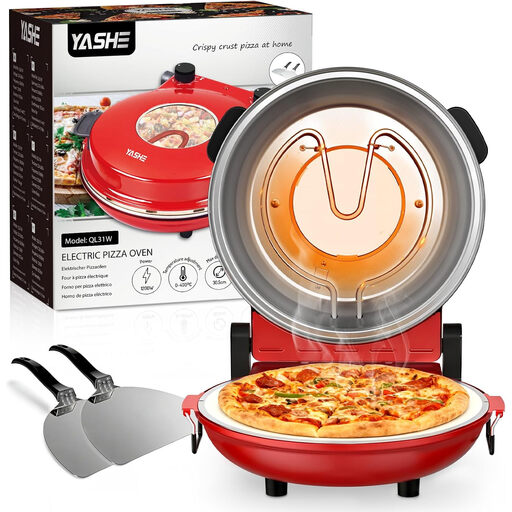
YASHE QL31W pizza oven, 1200 W
Worth considering if you’re looking for a tabletop appliance with top and bottom heat; check that your clafoutis dish will fit inside before choosing it.
Features a 30 cm ceramic stone, built-in timer and viewing window. Stated external dimensions: 32,5 × 35 × 16,5 cm.
View at Joybuy
 No image available
WOLTU BF12sz mini oven, 32 litres
Could be suitable for a range of baking tasks if you can make room for its larger footprint in your kitchen.
Features a temperature range of 100–250 °C, a 60-minute timer and a crumb tray; the product details say it’s suitable for baking and grilling. Stated power: 1600 W.
View at Joybuy
 No image available
WOLTU mini oven, 10 litres
Could suit a small portion if your dish, including its handles, fits inside the limited oven space.
Features top and bottom heat, a temperature range of 100–230 °C and a 60-minute timer. Stated external dimensions: 37 × 26,5 × 21 cm.
View at Joybuy
 No image available
WOLTU mini fan oven, 28 litres
Could be a good option if you want to cook other dishes as well as clafoutis in a tabletop oven; check your dish dimensions against the oven space.
Features top heat, bottom heat and combined operation, a temperature range of 100–230 °C and a 60-minute timer.
View at Joybuy
 No image available
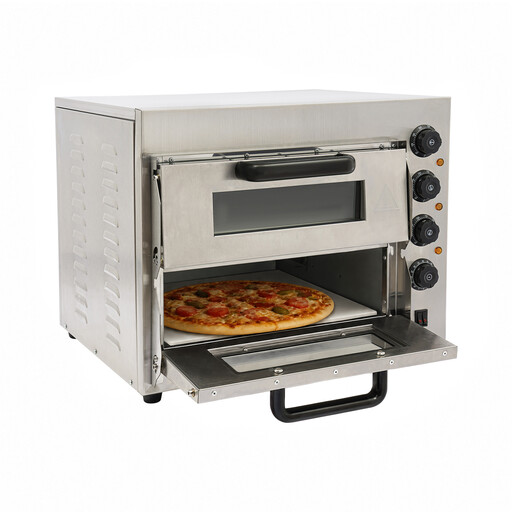
Electric double-deck pizza oven, 20 litres
The stated appliance dimensions take up a lot of room in a small kitchen, so measure the available space before considering this model.
Features separate temperature controls for the upper, middle and lower heating elements, a temperature range of 50–350 °C and a timer of 1–60 minutes. Stated external dimensions: 57 × 47,5 × 44 cm.
View at Joybuy
Frequently asked questions
Can I use the temperature from a berry clafoutis recipe as it is?
Use the temperature for the heating mode specified in the recipe as a starting point, and check whether the clafoutis is cooked through. Le Creuset’s recipe specifies 190 °C for top and bottom heat or 170 °C for fan-assisted cooking, with a baking time of 30–35 minutes. It warns that opening the oven too early can make the clafoutis collapse. These settings don’t guarantee the same baking time in every mini oven.
Can I fit a mini oven into a tight-fitting shelf?
Not just because the appliance dimensions fit inside the shelf. Rommelsbacher says the BG 1055/E must not be built in and requires 4 cm of clearance at the sides and 1 m above. Other models have their own manufacturer’s instructions; these clearances aren’t a general requirement for all mini ovens.
How should I clean the oven if berry batter has spilt?
Let the appliance cool before cleaning it, and follow the instructions for the specific model. The manufacturers list removable crumb trays for the BG 1055/E and KB M19; this doesn’t mean that all parts of either appliance are dishwasher-safe.
How can I estimate electricity costs, and what happens if the oven develops a fault?
To estimate electricity costs, you’ll need a consumption figure in kWh based on comparable baking conditions, as well as your electricity tariff. A wattage figure alone doesn’t tell you how much energy is used per clafoutis. In Germany, the statutory legal guarantee provided by the seller is different from a voluntary manufacturer’s guarantee, as explained by the Verbraucherzentrale.


