Tart bakers short on worktop space
If you have limited worktop space, the oven must also be positioned safely, with the clearances specified in its installation instructions. The casing dimensions alone don’t tell you that.


Start by choosing a mini oven based on the external dimensions of your tart tin and the heating mode specified in the recipe. Then check that the oven, including the door when open and the required clearance, will fit on your worktop. A smaller casing may take up less space, but that doesn’t automatically mean there’s enough room inside for your tin. A larger model gives you more flexibility but needs a bigger footprint.
If you have limited worktop space, the oven must also be positioned safely, with the clearances specified in its installation instructions. The casing dimensions alone don’t tell you that.
If you want to keep using your existing tin, compare its full external dimensions with the usable cooking space. Dr. Oetker’s recipe gives you the choice of a rectangular tin measuring 35 × 11 cm or a round tin with a diameter of 24 cm.
If you bake different cakes, check which heating mode each recipe calls for and whether the oven offers that setting. Dr. Oetker’s recipes show that preparation steps and baking instructions vary from one recipe to another.
First compare the tin with the cooking space, then check the heating mode and available space. Rommelsbacher and Steba’s manufacturer information makes it clear that the clearances required when setting up an oven vary by model.
A good fit if: You use a small tin and have checked the internal dimensions and installation clearances for the specific model. According to the manufacturer, the Steba KB 9.2 has a 9 l capacity and an interior measuring 26.5 cm wide × 24 cm deep.
Consider: A smaller casing doesn’t necessarily provide enough usable depth. The KB 9.2 instructions require at least 10 cm of clearance on all sides.
A good fit if: Your tin is the right size and you want to choose between the available heating modes. The manufacturer states that the Rommelsbacher BG 1055/E has an 18 l capacity and accommodates round baking tins up to 25 cm in diameter.
Consider: Rommelsbacher requires 4 cm of clearance at the sides and 1 m above the BG 1055/E for ventilation. It may not be suitable beneath a low wall cupboard.
A good fit if: Your tin needs more cooking space and you also have room for the oven and its required clearances. The manufacturer states that the Rommelsbacher BGE 1580/E has a 30 l capacity and accommodates round baking tins up to 29 cm in diameter.
Consider: According to the manufacturer, this larger model needs a footprint of 48.5 × 39.5 cm. More room for your tin won’t automatically solve a lack of space.
| Buying priority | What to check before buying | Especially important for |
|---|---|---|
| A safe place to position the oven | Compare the casing dimensions, door opening and clearances specified in the instructions with the space available. | If I need to fit the oven on a crowded worktop, I also need to consider the distance from the wall and wall cupboard. Around 29% of consumers are likely to put safe positioning first. |
| A suitable tart tin | Measure the tin’s outside dimensions, including the rim and handles; check them against the rack and usable interior dimensions. | If you want to keep using your existing tart tin, the capacity in litres alone isn’t enough. Around 29% of consumers are likely to prioritise whether their tin will fit. |
| Heating mode and controls | Compare the recipe with the available heating modes; check the timer and shelf position for the baking you have planned. | If I bake different recipes, I want to be able to select the heating mode they specify. Around 24% of consumers are likely to focus mainly on recipe-specific heating modes and controls. |
| Ongoing costs and effort | Check what’s included, the crumb tray, spare parts availability and energy use under comparable baking conditions. | Once you’ve sorted out space, tin size and recipe, you can give more weight to cleaning, accessories and running costs. Around 18% of consumers are likely to put these considerations first. |
A mini oven may fit on your worktop but still fail to meet the required clearances from a wall or cupboard.
Measure the space up to nearby surfaces and check the installation instructions for the specific model before buying.
If you can’t maintain the required clearances where you planned to put it, you may need to find another spot or choose a different appliance.
The capacity doesn’t tell you whether the rack and usable cooking space are wide and deep enough for a tin with a rim or handles.
Compare the tin’s external dimensions with the usable interior and the rack. Depending on the shape of your tin, you may need a different one.
For Dr. Oetker’s blueberry pudding tart, you bake the base first and add the cream afterwards. For its pudding cake, the filling is baked with the cake.
Follow the heating mode, timing and preparation steps for the specific recipe.
The models mentioned differ in cooking capacity and the size of tin they can accommodate.
The KB 9.2 is a 9 l option for baking with a small tin.
The TO 2052 is a compact option for smaller baking projects.
According to the manufacturer, the Vintage 0979/04 has an 18 l capacity and switchable top and bottom heat.
This Joybuy selection includes mini ovens for different types of baking, from compact models to options with several heating modes.
 No image available
For baking projects where a larger mini oven is an option. Check the tin dimensions and the space needed for the appliance separately.
32 l, 1.600 W, temperature control from 100 to 250 °C, timer and crumb tray; described as suitable for baking and grilling.
 No image available
An option for limited space only if your tin fits in the usable cooking space and you can maintain the required clearances where the oven will be positioned.
10 l; stated external dimensions: 37 × 26.5 × 21 cm. Temperature control from 100 to 230 °C, 60-minute timer, and top and bottom heating elements.
 No image available
For recipes where you want to choose between the specified heating modes. Check that the tin and the space available suit the oven’s dimensions.
28 l; top heat, bottom heat or both together. Temperature control from 100 to 230 °C and a 60-minute timer.
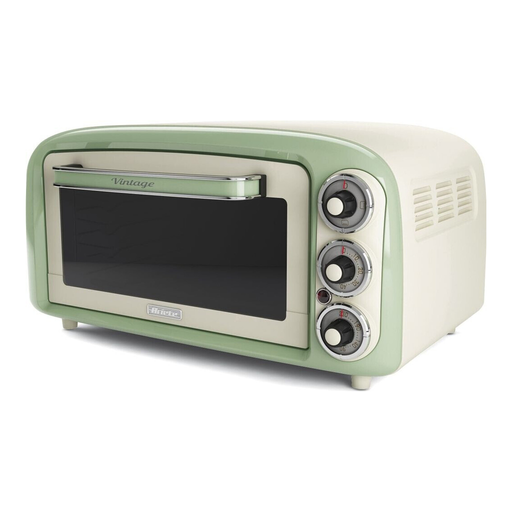 No image available
For baking with selectable top and bottom heat. Check that the oven, tin and required clearances will all fit in the space you have in mind.
18 l, 1.380 W, temperature control up to 230 °C and a 60-minute timer. Top heat, bottom heat or both heating elements together are listed as options.
No. Compare the tin’s full external dimensions with the rack and usable cooking space. For example, Dr. Oetker’s blueberry pudding tart recipe calls for a rectangular tin measuring 35 × 11 cm or, alternatively, a round tin with a diameter of 24 cm. Each shape makes different demands on the cooking space.
Only if the installation instructions for the specific model allow for the clearances available there. Rommelsbacher requires 4 cm of clearance at the sides and 1 m above the BG 1055/E; the Steba KB 9.2 has its own requirements. Check the instructions for your chosen appliance and the space up to the cupboard.
No. For Dr. Oetker’s blueberry pudding tart, you bake the base first and add the pudding cream afterwards. The filling is baked with the pudding cake from the same provider. Follow the heating mode, timing and tin size specified in your recipe.
According to consumer information from the European Union, purchases from a business seller are covered by a legal guarantee of at least two years. This is separate from a voluntary manufacturer’s warranty. When monitoring the market for electrical household products, the German Federal Network Agency lists product identification and German-language instructions with the necessary warnings among the points it checks.