Holidaymakers with a family-sized dish
If you want to bake a cobbler for several people in a dish you already own, compare its full dimensions with the oven’s capacity.


First, choose a mini oven that can accommodate your filled cobbler dish, handles included, and can be placed in your holiday cottage with the required clearances. Then check that the recipe’s heating method and temperature are compatible with the specific model. A larger capacity may make it easier to bake a single batch, but it takes up more worktop space; with a smaller oven, you may need to bake in batches. Before buying, also check that the information on the rating plate matches the power supply at your holiday cottage.
If you want to bake a cobbler for several people in a dish you already own, compare its full dimensions with the oven’s capacity.
If space is tight, you could use a smaller dish or bake in batches. Remember to allow for the clearances specified in the manual for the oven’s location.
If you’re making a particular cobbler recipe, check that the oven offers the heating method and temperature it calls for, and that its controls are easy to understand.
| What matters | What to check before buying | Who should pay particular attention? |
|---|---|---|
| Dish size and portion size | Compare the full external dimensions and height of the filled dish, including handles, with the usable interior dimensions and shelf position. | If I’m baking for several people in a dish I already own, it needs to fit in the oven, handles and all. Around 33% of consumers put dish fit and portion size first. |
| Space and power supply | Check the clearances required for the specific model, and compare the voltage and frequency on its rating plate with the power supply at your holiday cottage. | With limited kitchen space at a holiday cottage, I want to know whether the oven and its required ventilation clearances will fit, and whether the power supply is suitable. Around 25% of consumers prioritise space and the power supply. |
| Heating method for your recipe | Compare the heating method and temperature specified in the recipe with the settings available on the specific oven. | If my cobbler recipe gives different temperatures for conventional and fan-assisted cooking, I want to be able to choose the right setting. Around 25% of consumers prioritise the heating method required by their recipe. |
| Controls and cleaning | Check the controls, timer, removable crumb tray and cleaning instructions in the model’s manual. | While I’m away, I want to keep an eye on the bake without any fuss and be able to remove any residue as directed. Around 17% of consumers put easy operation and cleaning first. |
A stated diameter for round dishes doesn’t tell you whether a rectangular dish with handles will fit, with enough clearance.
Measure your whole dish and compare its dimensions with the oven interior and shelf position, then check the manual.
Depending on the dish, you may need a different one that fits or to bake in batches.
The product description for a WOLTU 21 l mini oven on Joybuy Germany states 120 V; the listing is marked as no longer available. This doesn’t confirm the specifications of other models. The VDE gives 230 V and 50 Hz as the standard supply in Germany.
Check the permitted voltage and frequency on the specific appliance’s rating plate and compare them with the power supply at your holiday cottage.
A plum cobbler recipe published by Good Food in 2009 specifies 200 °C without a fan or 180 °C with fan assistance. These temperatures are for that particular recipe and don’t automatically apply to others.
Follow the temperature specified for the heating method you’re actually using, and use your recipe’s instructions as a guide while baking.
The BGE 1580/E is a countertop oven with conventional heating and optional fan assistance. Rommelsbacher states that it has a capacity of 30 l and can fit round dishes up to 29 cm in diameter.
According to Severin, the TO 2068 is a 20-l option with conventional heating and fan-assisted cooking that can be switched on separately or together.
According to CASO Design, the TO 26 SilverStyle has a capacity of 26 l and offers conventional and fan-assisted heating.
According to Clatronic, the MBG 3726 is a 20-l mini oven with top and bottom heating.
These models are worth considering as mini ovens for making cobbler. For each one, check the dimensions of your dish, the space you’ll need and the power supply specifications.
 No image available
The stated capacity can help you narrow down your options, but you’ll still need to compare the filled dish dimensions with the available space.
The product title lists a capacity of 32 l, 1.600 W, a 60-minute timer, a temperature range of 100–250 °C and a crumb tray.
Before choosing, check the permitted voltage and frequency on the rating plate.
 No image available
The 28-l capacity can help when comparing models; whether your cobbler dish will fit depends on its full dimensions and the usable interior space.
The product title describes this model as a convection oven and lists a temperature control and timer.
Before choosing, check the permitted voltage and frequency on the rating plate.
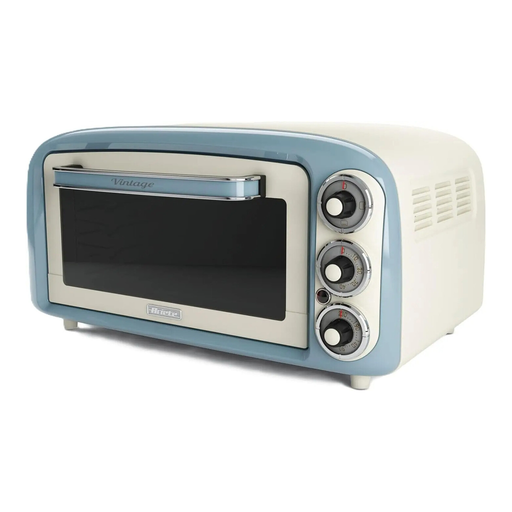 No image available
The product description specifies a round opening for plates up to 30 cm; still, check that your cobbler dish will fit, taking its actual shape and height into account.
Specifications include a capacity of 18 l, 1.380 W, an aluminium baking tray and a 60-minute timer.
The product description states 220 V. Compare this with the rating plate and the power supply at your holiday cottage; the VDE gives 230 V and 50 Hz as the standard supply in Germany.
It depends on the recipe and the heating method you choose. A plum cobbler recipe published by Good Food in 2009 specifies 200 °C without a fan or 180 °C with fan assistance. Don’t assume these temperatures will work for other recipes.
Only if the manual for the specific model says it’s suitable for your chosen location. External dimensions alone aren’t enough to check; take hot surfaces and all required clearances into account.
For the Severin TO 2068, the manual recommends unplugging the appliance and letting it cool before cleaning; it must not be immersed in liquid. For other models, follow the relevant manual.
If a product is faulty, the seller is generally your point of contact for your statutory rights. The Verbraucherzentrale states that these rights last for two years from delivery; goods ordered online can generally be returned within 14 days under the right to cancel. Conditions and exceptions depend on the purchase.
For electrical appliances covered by the relevant harmonised EU rules, the manufacturer uses the CE marking to declare conformity; it isn’t a certificate issued by a central EU body. The Bundesnetzagentur lists German-language instructions and warnings among the things consumers can look out for.