Baking for a party with lots of guests
You want to make the planned amount of cake in as few batches as possible, so you’re comparing tray dimensions with your recipe first.


When choosing a mini oven for a plum traybake, start by checking the usable tray dimensions and how much cake you plan to make, rather than relying on the oven’s capacity alone. Dr Oetker’s recipe makes around 16 portions and calls for a 40 × 30 cm tray; the original tray supplied with Rommelsbacher’s 42-litre BG 1805/E measures 38.5 × 31.5 cm. If you need to use the recipe tray as it is, check the usable shelf dimensions of a suitable oven carefully. Otherwise, you could adapt the recipe or bake in several batches.
You want to make the planned amount of cake in as few batches as possible, so you’re comparing tray dimensions with your recipe first.
You can plan to make smaller cakes or bake in several batches, but you need an oven that fits safely in your kitchen with the recommended clearance around it.
You want to follow the recipe reliably, so you’re checking the heating method, tray fit and browning separately.
First, check whether the tray you need will fit and how many batches you’ll need to bake. Then consider the heating method and where you can position the oven safely. Dr Oetker’s plum cake recipe makes around 16 portions and calls for a 40 × 30 cm tray; Rommelsbacher lists the original tray supplied with the BG 1805/E as measuring 38.5 × 31.5 cm.
| What matters | What to check before buying | Who it matters most to |
|---|---|---|
| Amount of cake and tray area | Compare the full dimensions of the recipe tray, including its rim, with the usable shelf dimensions. The oven’s capacity alone won’t tell you whether it will fit. | If I want to make as many portions as possible in one batch for a party, I check the usable tray area first. Around 36% of consumers put the amount of cake first. |
| Heating method and browning | Check for conventional top and bottom heat or fan-assisted cooking, the temperature range and the shelf position needed to follow your recipe. | If I want to follow the temperature settings in my recipe, I need the right heating method and want to be able to keep an eye on browning. Around 29% of consumers prioritise following the recipe. |
| A safe place to put the oven | Measure the space available and check that the door can open. Follow the setup instructions for the specific model. Rommelsbacher gives the BG 1805/E’s width, including its feet, as 55 cm. | If I have limited worktop space, I’d rather make smaller cakes or bake extra batches than put the oven somewhere unsuitable. Around 21% of consumers prioritise where the oven will go. |
| Baking batches and accessories | Check what’s included and whether a replacement tray is compatible with your exact model. Having several shelf levels doesn’t mean that two trays can be used at the same time. | If I’m planning to prepare several batches, I care about the baking schedule and having the right accessories. Around 14% of consumers say that organising multiple batches is their main concern. |
The 40 × 30 cm tray called for in the recipe is larger than the original tray documented for Rommelsbacher’s 42-litre BG 1805/E. A capacity stated in litres doesn’t prove that a particular tray will fit.
Compare the full dimensions of the recipe tray with the usable tray and shelf dimensions of the specific model.
If you use a smaller tray, you may need to adjust the recipe quantities or plan to bake in extra batches.
The number of shelf levels alone doesn’t tell you whether two trays will fit in the oven together or whether the oven is designed to be used that way.
Check the accessories and instructions for the exact model before planning to bake two trays at once.
Baking in separate batches takes extra time; having another compatible tray can make preparation easier.
Rommelsbacher gives the BG 1805/E’s width, including its feet, as 55 cm and says it isn’t suitable for narrower worktops. You’ll also need to allow for the clearances specified in the instructions.
Measure the space where you plan to put the oven, and take the door opening and model-specific setup instructions into account.
Documented models range from 30 to 42 litres and also differ in the size of their original trays.
Severin’s range includes the 42-litre TO 2058 mini oven and toaster oven, as well as the more compact 20-litre TO 2068.
The KB M19 is a more compact model with a 19-litre capacity.
The TO 26 SilverStyle is a 26-litre model with conventional top and bottom heat and fan-assisted cooking.
These product suggestions cover mini ovens for baking cakes. Before buying, check that the tray fits your recipe and that the oven has the heating method you need.
 No image available
The stated temperature range of 100 to 250 °C includes the approximately 200 °C specified in Dr Oetker’s recipe for conventional top and bottom heat. Check the heating method on the exact version separately.
Product details: 32 l, 1,600 W, temperature range of 100 to 250 °C, timer and crumb tray.
 No image available
If your recipe specifically calls for conventional top and bottom heat, check the heating methods available on the exact version. The product name alone won’t tell you.
Product details: 28 l, temperature control and timer.
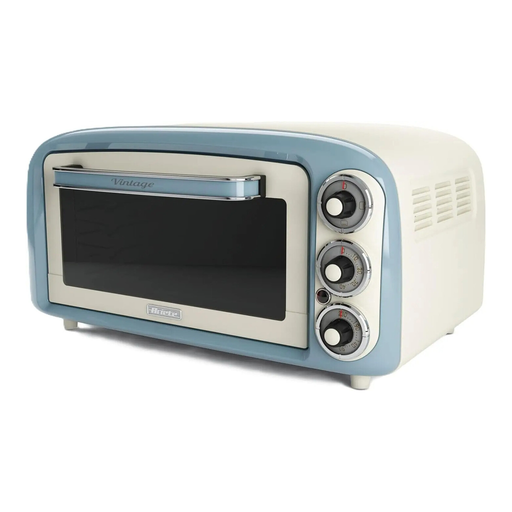 No image available
A smaller capacity may suit you if you’re planning to make smaller amounts or bake in several batches. Compare the tray dimensions with your recipe before deciding how much cake to make.
Product details: 18 l, 1,380 W, aluminium baking tray and 60-minute timer.
Not on the original tray documented for this model: it measures 38.5 × 31.5 cm. Adjust the quantities or baking schedule, or choose an oven with usable shelf dimensions that are confirmed to accommodate the tray as it is.
Dr Oetker’s recipe recommends around 200 °C with conventional top and bottom heat, or around 180 °C with fan-assisted cooking, after preheating. The stated baking time is approximately 35 minutes. These are recipe instructions, not a guaranteed baking time for every mini oven or an adjusted quantity of ingredients.
Follow the instructions for your specific model. Severin’s instructions for the TO 2068 say to unplug the oven and let it cool before cleaning; the appliance must not be immersed in liquid.
Check whether a second, exactly compatible tray is included or needs to be bought separately. According to the Verbraucherzentrale, retailers in Germany are generally responsible for ensuring goods were free from defects when supplied for two years. This is separate from any voluntary manufacturer’s guarantee.
Appliances covered by the EU Low Voltage Directive must meet the relevant conformity requirements. The Bundesnetzagentur lists correct CE marking, identifiable manufacturer details and German-language instructions with warnings among the requirements. CE marking is not an independent safety test of the specific product on offer.