Hosts making lots of puff pastry sticks
If you’re baking a larger quantity for a family gathering, compare the usable tray area and plan your batches accordingly. The capacity in litres alone won’t tell you exactly how many sticks will fit at once.


For a family gathering, start by comparing the usable tray area and planning how many batches you’ll need: the oven’s capacity in litres alone won’t tell you how many sticks will fit on a tray. Fan-assisted cooking is worth considering if the specific model offers the right heating mode and, where applicable, supports baking on multiple levels. Larger appliances also take up more worktop space. Check the accessories, installation instructions and labelling for the exact model too.
If you’re baking a larger quantity for a family gathering, compare the usable tray area and plan your batches accordingly. The capacity in litres alone won’t tell you exactly how many sticks will fit at once.
If you want to match the heating mode to different recipes, check the settings on the specific oven. Having several shelf positions doesn’t automatically mean you can bake on two trays at once.
If you need the oven to fit in a limited space, compare its external dimensions with the spot you have in mind and follow the installation instructions. A smaller appliance may mean planning more batches.
When choosing a mini oven for puff pastry sticks at a family gathering, four questions can help you weigh up your options: how much will fit on a tray, which heating mode do you need, where can you put the oven, and what will make it easier to use regularly? The percentages refer to consumers choosing a mini oven for this occasion.
| What matters | What to look for when buying | Who it matters to |
|---|---|---|
| Tray area and batch size | Measure your shaped sticks and compare their length and spacing with the tray supplied. Only plan to use a second tray if suitable accessories are available for the oven. | If I’m baking lots of sticks for guests, I want to plan how many will fit in each batch based on the actual tray area; around 36 % of consumers prioritise tray area and batch size. |
| Heating mode and shelf positions | Check the heating modes for the exact model. Only use multiple levels if the manual or manufacturer says they can be used at the same time with your chosen heating mode. | If I want to use fan-assisted cooking as specified in a recipe or bake different recipes, the available settings matter to me; around 29 % of consumers prioritise the heating mode and the option to use multiple levels. |
| Worktop space and positioning | Check the external dimensions and door opening against the space available. Also consider the position of power sockets and the clearance and ventilation requirements in the manual. | If my worktop space is limited, I need to be able to put the oven in a suitable spot, even if that means baking smaller batches; around 21 % of consumers mainly consider the space needed and positioning. |
| Cleaning and running costs | Check whether the crumb tray can be removed, whether suitable replacement trays are available and whether comparable energy consumption figures are provided. The rated power alone doesn’t tell you how much a batch will cost to cook. | If I use the oven regularly, easy cleaning, suitable accessories and clear running-cost information matter to me; around 14 % of consumers prioritise these points. |
Even ovens with different capacities can have different usable tray areas. So the capacity in litres won’t give you a reliable number of sticks per batch.
Measure your shaped pieces of pastry and compare them with the dimensions of the supplied tray. If necessary, plan to bake them in several batches.
Heating modes and suitability for baking on multiple levels vary by model. According to the manufacturer, fan-assisted cooking is always on in the Steba KB 27 U.2, while it can be switched on in the Rommelsbacher BGE 1580/E.
Check the full list of settings for the exact model, as well as the manufacturer’s guidance on baking on multiple levels at the same time.
The power rating and oven capacity alone don’t show how much electricity it takes to bake the full quantity, including any extra batches needed. The Verbraucherzentrale recommends taking actual consumption into account.
Where available, compare consumption figures measured on the same basis and factor in the number of batches you’ll need.
The BGE 1580/E and BG 1805/E models differ in several respects, including oven capacity and the supplied tray. The details here apply to these models, not the entire range.
The TO 2058 is an oven and toaster with a 42 l capacity and fan-assisted cooking.
The KB 27 U.2 is a compact oven with a 20 l capacity.
According to the manufacturer, the TO 26 SilverStyle offers several heating modes, including fan-assisted cooking, top heat and bottom heat.
The Ofen Allround 68875 is a compact model with a capacity of around 18 l.
The mini ovens and air fryer ovens below are described as having a baking function, with capacities ranging from smaller to larger. Compare the tray area and usable shelf positions as well as the capacity in litres.
 No image available
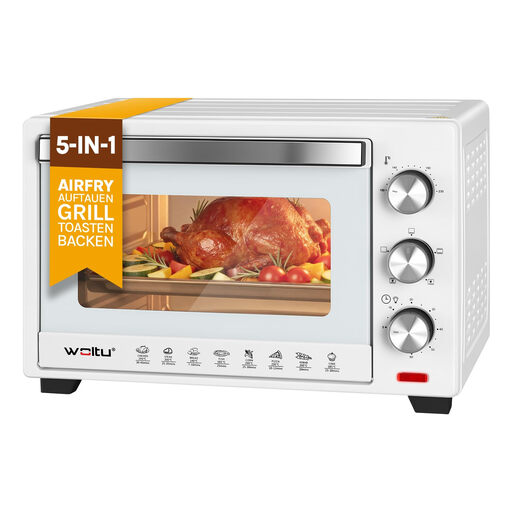
Described as a 32-l mini oven with a baking function, suitable for baking a family-sized portion.
32 l; 1.600 W; temperature range 100–250 °C; baking tray and wire rack listed in the product details.
 No image available
The product description mentions baking and several shelf positions. Before baking on two levels, check that this is approved for the setting you want to use.
28 l; three heating modes; temperature range 100–230 °C.
 No image available
Baking is listed as a function, and the manufacturer describes the appliance as suitable for 6–8 people.
30 l; 360° airflow; 21 presets; 1.800 W. The product also lists a rotisserie and a dehydrating function.
 No image available
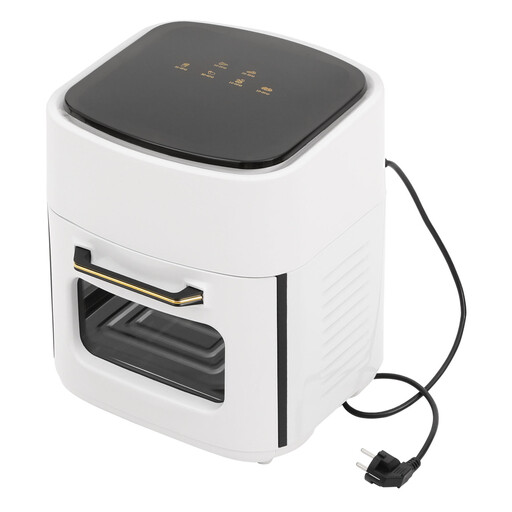
Described as a compact air fryer oven with a baking function. Its smaller capacity makes it an option for smaller batches, without promising a specific number of sticks.
15 l; 1.400 W; 360° heating; touch controls with presets.
 No image available
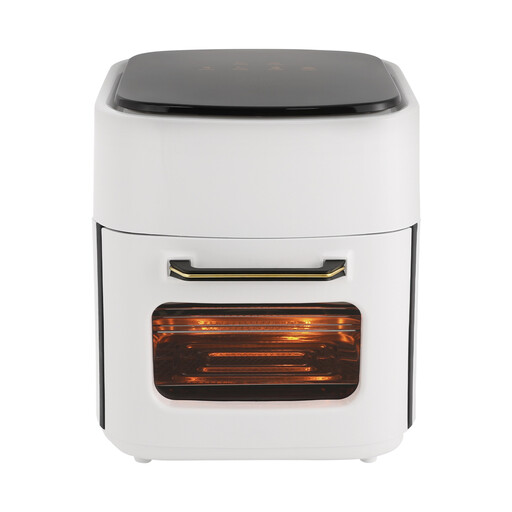
The description mentions baking and family meals. Its smaller capacity makes it an option for smaller batches, without promising a specific number of sticks.
15 l; 1.400 W; 360° heating; temperature range 80–200 °C; timer from 5–65 minutes.
Not necessarily. A recipe quantity of around 30 sticks doesn’t tell you whether they’ll fit on the tray of a particular mini oven. Compare the length and spacing of the sticks with the actual tray, and divide them into several batches if needed.
Not on their own. Check whether the manual for the exact model allows you to bake on two levels at once using your chosen heating mode, whether you have a second compatible tray and whether there’s enough clearance from the heating elements.
Position the appliance according to the clearance and ventilation requirements in its manual. For the BGE 1580/E, Rommelsbacher lists a removable crumb tray and a detachable door; these features aren’t necessarily available on other models.
No. The wattage tells you the stated power, not the measured consumption for a complete batch. To compare costs, you need consumption figures measured on a like-for-like basis per baking session, and you’ll need to factor in the number of batches required.
A new mini oven that falls within the scope of the Low Voltage Directive, such as a household appliance designed for 230 V alternating current, must meet the relevant safety requirements and carry the required CE marking. The Federal Institute for Occupational Safety and Health explains the scope of the directive; according to information from the European Union, the manufacturer is responsible for the declaration of conformity. CE marking is not proof of an independent product test. Check the labelling and manufacturer’s information for the specific product and appliance.