For preparing portions for several days
If you roast pumpkin wedges for several working days, the usable tray area is key: the oven’s capacity alone won’t tell you how many wedges will fit on the tray with space between them.


First, measure how much usable space your baking tray offers for your usual quantity of pumpkin wedges. Then check where the oven will go, how the door opens and what clearances the instructions require. A compact oven may suit smaller portions; if you regularly prepare portions for the week, a larger tray is likely to be more suitable, provided you have enough worktop space. Before buying, also check the conformity documents for the exact version of the appliance on offer.
If you roast pumpkin wedges for several working days, the usable tray area is key: the oven’s capacity alone won’t tell you how many wedges will fit on the tray with space between them.
A more compact appliance may be enough for smaller portions. As well as measuring the external dimensions, allow space for the door to open and check the clearances specified in the instructions for the model.
If you use the oven regularly, look for removable accessories and check the care instructions. Also plan how you’ll cool and store your prepared lunchbox portions after cooking.
First, check that your usual portion will fit on the usable tray area and that the appliance can be set up safely. Then consider the heating settings and how much cleaning it will need to make sure it suits your everyday routine.
| Consideration | What to look for when buying | Who is this important to? |
|---|---|---|
| Space for portions for the week | Measure your usual quantity and compare it with the usable tray area. Don’t judge capacity by the litre figure or number of shelf positions alone. | When I’m preparing several lunchboxes, I want to be able to spread the wedges out on the tray. Around 36 % of consumers say having enough tray space is their top priority. |
| A safe place to position the oven | Compare the external dimensions, door movement, suitable supporting surface and clearances in the instructions with the space you have in mind. | When worktop space is limited, I want to know whether the appliance will fit safely, including room for the door and required clearances. Around 29 % of consumers prioritise where the oven will go. |
| The right heating setting | Check that the oven has the heating setting you want and the temperature required by your recipe. Adjust the first cooking session to suit the appliance and portion size. | When I want to try a pumpkin recipe, I need an oven with the heating setting it calls for. Around 21 % of consumers prioritise having the right heating setting. |
| Everyday cleaning | Check which trays or crumb trays can be removed, and follow the care instructions for the specific model. | When I roast several times a week, I want to be able to remove any residue without too much effort. Around 14 % of consumers say cleaning is their top priority. |
The litre figure doesn’t tell you how many pumpkin wedges will fit on the supplied tray with space between them. If the tray is too small, you may need to cook in extra batches.
Use your usual portion size as a guide and check the actual tray dimensions.
When planning where to put the oven, allow for the door to open, a suitable supporting surface and the clearances specified in the instructions for that appliance.
Before deciding, compare your chosen spot with the instructions for the exact model.
The power rating alone doesn’t tell you how much energy a complete cooking session will use for the same quantity of pumpkin. The Verbraucherzentrale recommends looking at energy efficiency when buying an oven, too.
Only compare energy consumption figures for similar portion sizes, heating settings and cooking times; don’t assume a saving across the board.
The German Federal Institute for Risk Assessment recommends cooling hot food quickly to below 7 °C if you’re going to store it for longer.
Plan how you’ll cool and transport your portions as part of your meal prep.
The BGE 1580/E is a mini oven with a 30 l capacity, switchable fan-assisted cooking and a baking tray included.
According to the manufacturer, the KB M19 has a 19 l capacity, a baking tray, top and bottom heat, and switchable fan-assisted cooking.
According to the manufacturer, the TO 2068 has a 20 l capacity and fan-assisted cooking, as well as top and bottom heat that can be selected separately or together.
The TO 20 SilverStyle comes with a baking tray and, according to the manufacturer, offers fan-assisted cooking as well as top and bottom heat.
According to the manufacturer, the MBG 3727 has a 25 l capacity, fan-assisted cooking and a combination of top and bottom heat.
The options below range from a 2-in-1 air fryer with a mini oven function to compact and larger mini ovens. For pumpkin wedges, the key things to consider are still the right heating setting, the tray’s usable area and the space you have available. Mains-powered appliances covered by the EU Low Voltage Directive must meet the applicable conformity requirements in the specific version offered. The European Commission assigns conformity assessment, the EU Declaration of Conformity and CE marking to the manufacturer; check the documentation for the exact version on offer.
 No image available
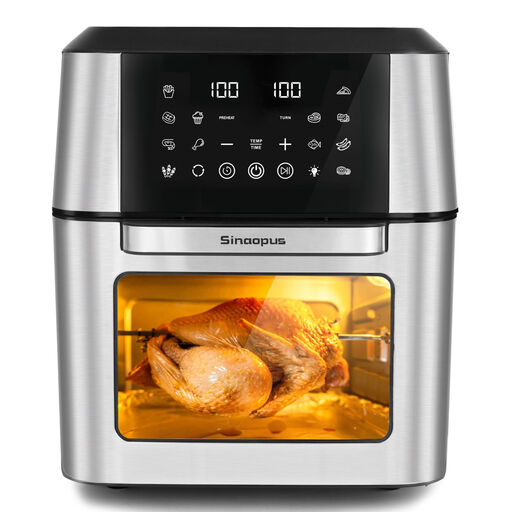
The roasting function and hot air circulation may suit roasted pumpkin wedges. Check which accessories are included in the specific offer for the way you plan to cook.
12 l; 1800 W; 80–200 °C; 12 programmes; timer and touchscreen. According to the product description, the basket is removable and dishwasher-safe.
 No image available
This model may be worth considering for larger portions if the baking tray offers enough usable space and you have room for the oven and required clearances in your kitchen.
32 l; 1600 W; 100–250 °C; timer with a 60-minute run time. A baking tray, wire rack and removable crumb tray are listed. External dimensions: 52.3 × 36 × 32.2 cm.
 No image available
This compact model may suit smaller portions and kitchens with limited space. Compare the dimensions and tray area with the quantity you plan to cook, rather than using the litre figure to estimate how many wedges will fit.
10 l; 100–230 °C; top and bottom heat; baking tray, wire rack and timer. External dimensions: 37 × 26.5 × 21 cm.
 No image available
The three heating modes may come in handy if you want to follow a particular version of a recipe. Check that the tray will hold your portion and that the appliance’s dimensions suit your available space.
28 l; 100–230 °C; three heating modes, including top and bottom heat; three shelf positions. A baking tray, wire rack and crumb tray are listed.
Yes, as long as your mini oven has the heating setting and temperature specified in the recipe. Cooking time may vary depending on the appliance and portion size. A recipe from EDEKA Rezeptwelt calls for 220 °C with top and bottom heat or 200 °C with fan-assisted cooking. Keep an eye on the first batch and adjust the cooking time if needed.
If you’re storing cooked food for longer, cool it quickly and keep perishable ingredients chilled. The German Federal Institute for Risk Assessment recommends cooling hot food quickly to below 7 °C; make sure you have a suitable way to keep it cool during transport, too.
That depends on the instructions for the specific model. Check the required clearances, suitable supporting surface and door movement in the manual; the external dimensions alone aren’t enough to decide where to put it.
Appliances covered by the EU Low Voltage Directive must meet the applicable conformity requirements in the specific version offered. The European Commission lists conformity assessment, the EU Declaration of Conformity and CE marking as the manufacturer’s responsibility. Check the information for the exact version on offer; CE marking is not an independent test result.
As a general rule, consumers buying online have a 14-day right to withdraw from the purchase; according to the Verbraucherzentrale, the period starts when the contract is concluded or the goods are received, depending on the circumstances. This right to change your mind is separate from your statutory rights if goods are faulty. A voluntary manufacturer’s guarantee is also different from your statutory rights relating to defective goods.