Baking for several guests
If you want to bake lots of filled pastries in as few batches as possible, compare the usable tray area and check whether the manufacturer allows you to use multiple levels with that specific model.


If you’re making just a few spinach pastries and have limited worktop space, a compact fan-assisted mini oven could be a good fit. For larger batches, the usable tray area matters most – not just the oven’s capacity. Also check the tray dimensions, the space available and the required clearances, as well as the electrical connection. EDEKA recommends baking at 180 °C on the fan setting after preheating. Use this as a starting point, rather than expecting identical results from every mini oven.
If you want to bake lots of filled pastries in as few batches as possible, compare the usable tray area and check whether the manufacturer allows you to use multiple levels with that specific model.
If space is tight and you’re happy to bake smaller batches, consider the door clearance and installation requirements as well as the oven’s external dimensions. The manufacturer’s measurements and clearance guidance will help you work out whether it will fit in your holiday cottage kitchen.
For occasional use, make sure the connection and location are suitable, and that parts needing regular cleaning are easy to reach. The manufacturer’s instructions explain the requirements for installation, use and cleaning.
A good fit if: saving space matters more to you and you don’t mind baking in several batches.
The trade-off: A smaller oven cavity may limit how many pastries you can bake at once. Having several shelf positions doesn’t necessarily mean you can bake on multiple levels at the same time.
A good fit if: you’re making pastries for several guests and have enough room for a larger tray.
The trade-off: A larger tray takes up more space. According to the manufacturer, the Rommelsbacher BGE 1580/E can be used on multiple levels only under certain conditions, such as thorough preheating and using the fan setting.
First decide what matters more to you: baking more pastries in each batch or taking up less space.
| Criterion | What to check | Who it matters to |
|---|---|---|
| Tray area and batch size | Check the dimensions of the tray supplied and allow space between the pastries. Only use a second level if the manufacturer approves it for that model. | If I’m baking for several guests, the usable area per batch matters more to me than the oven’s capacity in litres alone; around 40% of consumers also prioritise batch size. |
| Space required | Check the oven’s width, depth and door clearance, and compare its installation requirements with the space available in your holiday cottage kitchen. | If worktop space is limited, I want to fit the oven and allow room for the door to open, so I’m happy to bake smaller batches; around 30% of consumers put a small footprint first. |
| Installation and connection | Read the requirements for the supporting surface and clearances, and check that there’s a suitable electrical connection where you plan to use it. | If I’m using the oven in an unfamiliar spot in a holiday cottage, the space and electrical connection both need to be suitable; around 20% of consumers prioritise this. |
| Ease of use and cleaning | Compare what’s included and the cleaning instructions. The wattage alone doesn’t tell you how much electricity a baking session will use. | For occasional baking, I want to be able to clear away crumbs easily and won’t estimate running costs from the wattage alone; around 10% of consumers put ease of use, cleaning or costs ahead of other buying criteria. |
The oven’s capacity doesn’t tell you how many filled pastries will fit on the supplied tray with enough space between them. Rommelsbacher gives the tray dimensions for the BGE 1580/E as 32,5 × 28,5 cm; this size doesn’t apply to other models.
Check the tray dimensions and what’s included with the specific oven, then plan your portions accordingly. Only use multiple levels if the instructions or manufacturer say that this is permitted for your model.
Recipe instructions are a starting point, not a guarantee of identical results with every appliance or amount of food.
Preheat the oven, keep an eye on the pastries as they bake and follow the instructions for your specific model if using multiple levels.
With a freestanding oven, hot surfaces, required clearances and the recommended supporting surface can all affect whether a spot is actually suitable.
Before buying, check the space available, including room for the door to open and the installation requirements for your model.
The BG 1055/E and BGE 1580/E have different oven capacities. For your batch sizes, pay particular attention to the tray dimensions of the specific model.
The TO 2068 is a 20-litre mini oven with a fan-assisted setting that may suit smaller batches.
The TO 26 SilverStyle is a 26-litre fan-assisted option. Its stated internal and external dimensions can help you check whether the tray and oven will fit.
The KB M19 is a 19-litre fan oven with published internal and external dimensions to help you plan where to put it.
This selection includes mini ovens and air fryer ovens for baking. For the model you’re considering, check whether a fan setting is explicitly listed and whether the tray and available space suit your spinach pastries and holiday cottage.
 No image available
For baking when you need a larger oven cavity. Before buying, check whether it has the fan setting you want for your spinach pastries.
32 l; 1600 W; temperature range 100–250 °C; 60-minute timer; baking tray and crumb tray listed.
 No image available
For small batches when space is limited. Check whether the stated heating method is suitable for what you plan to bake.
10 l; 800 W; top and bottom heat; temperature range 100–230 °C; 60-minute timer and baking tray listed.
 No image available
For baking with a model specifically described as a convection oven. Check that the tray and the space available meet your needs.
28 l; 1600 W; temperature range 100–230 °C; three heating modes and three adjustable shelf positions listed.
 No image available
An alternative for anyone looking for an appliance with two cooking zones. Check that the product details specify the heating method you need for spinach pastries and a suitable tray.
23 l; two independently controlled cooking zones and a removable divider listed in the product description.
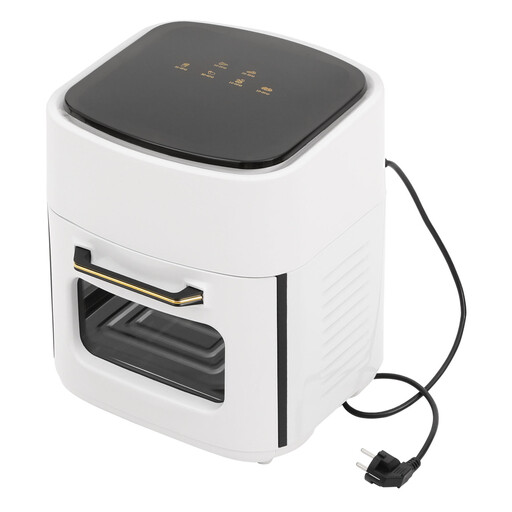 No image available
For anyone considering a compact appliance with touch controls. First check that the heating method is suitable and that there’s room for the baking tray.
15 l; 1400 W; 360° fan-assisted heating and touch controls listed.
For its recipe, EDEKA recommends 180 °C on the fan setting after preheating, for around 20 minutes on the middle shelf. This is a recipe recommendation, not a guaranteed time or temperature for every mini oven. Thawed spinach should be drained first.
Only if the manufacturer allows you to use multiple levels with that specific model. For the Rommelsbacher BGE 1580/E, the manufacturer requires thorough preheating, a fan programme and enough room for the air to circulate, among other things. For other models, follow the instructions provided.
Follow the installation and connection requirements for your specific model. The Severin TO 2068 instructions require a correctly installed earthed socket, warn that surfaces can become hot and say to unplug the appliance and let it cool before cleaning.
You can’t reliably work out the savings per portion from the rated power alone. Severin points out that how long the appliance is switched on depends on the temperature, food and surrounding conditions. Where possible, compare consumption figures on the same basis and take your electricity tariff into account.
New electric ovens placed on the German market and designed for 50 to 1,000 volts AC are subject to the relevant EU requirements, including CE marking. According to the EU information website, by affixing the CE mark, the manufacturer declares that the product complies with the applicable product rules. Check the marking on the specific appliance. The Verbraucherzentrale distinguishes between the statutory rights you have against the seller and a voluntary guarantee. If a product is faulty, the first step may be to ask for it to be repaired or replaced.