Making lasagne in a dish you already own
If you want to use a particular dish, compare its full external dimensions with the usable oven interior, shelf height and clearance from the heating elements.


Choose your mini oven by checking the full external dimensions of your oven dish, including its handles, against the usable interior – not by relying on capacity in litres alone. If you’re aiming to eat at the same time, make sure the heating function and timer suit the recipe, and plan preheating, preparation, layering and baking as separate steps. Also check the shelf height and the model-specific clearances from the heating elements and walls.
If you want to use a particular dish, compare its full external dimensions with the usable oven interior, shelf height and clearance from the heating elements.
If you’re sharing the preparation, layering and baking, look for a suitable heating function and timer that fit into your shared routine.
Alongside the appliance’s footprint, take into account the safety clearances specified in the instructions for the particular model.
First, check that your dish will fit inside the oven. Then consider the heating function, timing and a safe place to position it.
| What you need | What to check when buying | Who is this important to? |
|---|---|---|
| Oven dish fit | Compare the dish’s external dimensions, including handles, with the internal dimensions, shelf position and clearance from the heating elements. | If you want to keep using a dish you already own, you’ll need enough room for both the dish and easy handling. Around 36% of consumers prioritise this fit above all else. |
| Heating function and timer | Check that the heating function specified in the recipe is available, and find out how to use the timer and alert. | If you’re coordinating the cooking steps to serve a meal at the same time, you’ll want to be able to schedule the baking stage easily. Around 29% of consumers prioritise this. |
| Safe positioning | Take the appliance’s external dimensions and the clearances specified in the instructions for that particular model into account. | When worktop space is limited, check that there’s room not only for the appliance but also for the required clearances around it. Around 21% of consumers prioritise finding a safe place for the appliance first. |
| Running costs and support | Only compare energy figures when they’re based on the same conditions. Check what’s included, whether spare parts are available and who to contact about the exact model. | If you’re weighing up running costs and support with accessories or faults, you’ll need clear information about the specific appliance. Around 14% of consumers focus on this. |
A rectangular dish may catch on the shelf or heating elements because of its handles or height, even if the oven seems to have plenty of capacity.
Compare the dish’s full external dimensions with the usable interior and the shelf position you plan to use.
If your existing dish doesn’t fit, you may need to buy a different oven dish.
Preparation, layering and preheating all take time too, so baking time alone doesn’t give you the full picture.
Divide up the tasks and schedule preheating and baking as separate steps. Don’t assume a recipe’s stated time is the guaranteed total cooking time for your oven.
Hot surfaces and model-specific safety clearances may rule out a spot that looks big enough at first glance.
Before buying, check your chosen location against the clearance requirements in the instructions for the model you’ve selected.
Rated power and the actual energy used for preheating and baking are two different things.
Only compare energy figures for baking cycles measured on the same basis, and don’t assume you’ll save money compared with a larger oven.
The BG 1550 and BGE 1580/E are 30-litre countertop ovens with several heating functions. The BGE 1580/E also has electronic controls and suggested cooking times.
The TO 26 SilverStyle combines a 26-litre interior with convection, top heat and bottom heat.
The KB M19 is a more compact 19-litre option, with optional convection and separately controlled top and bottom heat.
The TO 2068 is a 20-litre baking and toasting oven with convection, a timer, and top and bottom heat.
This selection of Joybuy products includes mini ovens and a pizza oven, with different interior capacities and timer or temperature settings. Before choosing, check that your oven dish, including its handles, will fit inside the usable interior.
 No image available
Its larger stated capacity may suit your dish, but check the internal dimensions and shelf position before buying.
Specifications include a 32-litre capacity, 1.600 W, external dimensions of 52,3 × 36 × 32,2 cm, a 60-minute timer and a temperature range of 100 to 250 °C.
 No image available
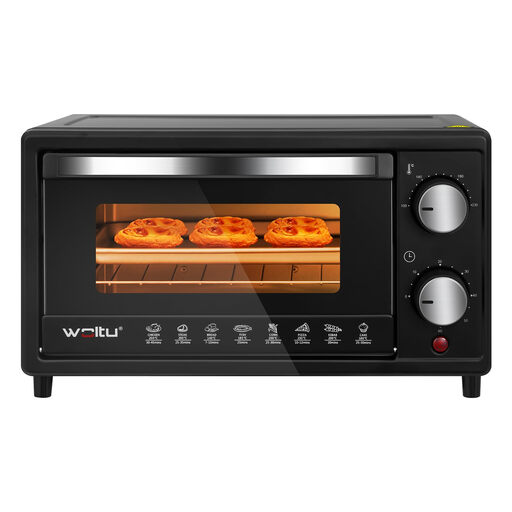
Its compact stated capacity may suit a small space, but check particularly carefully that your lasagne dish will fit inside.
Specifications include a 10-litre capacity, a temperature range of 100 to 230 °C, top and bottom heat, and a 60-minute timer.
 No image available
The selectable heating modes may help you match the oven to your recipe. Choose based on the heating function you need and whether your dish will fit.
Specifications include a 28-litre capacity, three heating modes (top heat, bottom heat or a combination of both), a temperature range of 100 to 230 °C, and a 60-minute timer with alarm.
 No image available
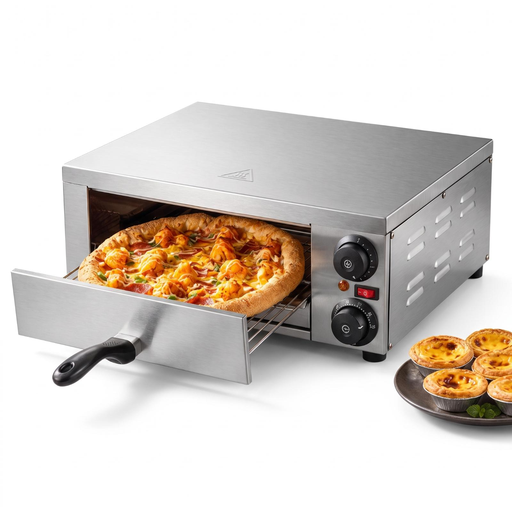
The description also lists oven-baked dishes as a possible use. Before buying, check that your dish and planned cooking method are suitable for this appliance.
Specifications include 2.000 W, a temperature setting of up to 350 °C, and a timer from 0 to 15 minutes. If you need a longer baking time, check how to use the timer during your chosen cooking process.
For the BG 1550 and BGE 1580/E models, Rommelsbacher says that recipe temperatures and times can generally be followed, although you may need to adjust the quantity. This advice applies to the models listed, not to all mini ovens. Factor in the heating function and check how well the dish is cooked as you plan.
No. Capacity in litres alone won’t tell you whether a rectangular dish, including its handles, will fit on the shelf and under the heating elements. Compare the dish’s full external dimensions with the usable internal dimensions and shelf position of the specific model.
Plan preparation, preheating, layering and baking as separate steps, and divide the tasks to suit your schedule. A recipe’s baking time isn’t automatically the total preparation time, nor does it guarantee the same result in every oven.
It depends on the model, so follow the instructions for your appliance. For the Steba KB M19, the manufacturer specifies a 10 cm gap between the back of the appliance and the kitchen wall. Don’t apply this measurement to other appliances, and make sure you also follow any warnings about hot surfaces.
Wattage alone doesn’t tell you how much energy a particular baking cycle will use. Verbraucherzentrale recommends focusing on the appliance’s actual energy consumption. So compare figures measured on the same basis, and don’t assume you’ll save money compared with a larger oven.