Shared kitchens with limited worktop space
If you share a worktop, check not only the appliance dimensions but also the clearances required in the instructions when the appliance is hot and in use.


Choose a mini oven only if it can be used safely in its intended location in line with its own instructions, and if your whole garlic bulb and ovenproof dish will fit inside. Conventional top-and-bottom heat is a sensible starting point for a recipe that uses this setting. A larger cooking cavity may let you prepare other dishes too, but it will also take up more space. If you can use a shared oven and your dish fits, you may not need an additional appliance.
If you share a worktop, check not only the appliance dimensions but also the clearances required in the instructions when the appliance is hot and in use.
If you want to cook whole bulbs in an ovenproof dish you already own, the dish, bulb height and heating type all need to suit the usable cooking cavity.
If you want to use the oven for other small dishes too, extra heating types and a larger cooking cavity may be useful. Be sure to allow for the space it needs and the cleaning involved.
Check the intended location, your dish and the functions you actually need separately, rather than relying on the capacity in litres alone to judge whether an oven is suitable.
| What matters | What to check before buying | Who should pay particular attention? |
|---|---|---|
| Safe placement and connection | Compare the specific model’s external dimensions and required clearances in its instructions with the available space; check the rating plate and power connection. | If I want to place a hot appliance on a shared worktop, I need enough space around it and a suitable connection. Around 36% of consumers put placement and connection first. |
| Bulb and dish | Measure the dish, including handles, and the height of the bulb; compare them with the usable internal dimensions, shelf position and conventional top-and-bottom heat setting. | If I want to roast whole bulbs in a dish I already own, whether it actually fits matters more than the stated capacity in litres alone. Around 29% of consumers prioritise a good fit for the bulb and dish, as well as a suitable heating type. |
| Cleaning after use | Check which trays or crumb trays can be removed and what cleaning methods the instructions allow. | If several people use the same appliance, I want to be able to remove any residue easily after roasting. Around 21% of consumers put straightforward shared cleaning first. |
| Other oven dishes | Make a note of the dishes you plan to cook and the containers they need; consider only the heating types and cooking cavity required for them. | If I want to cook other oven dishes as well as garlic, I need suitable functions without taking up unnecessary worktop space. Around 14% of consumers prioritise versatility. |
An appliance may fit on the worktop but still be unsafe to use there if its instructions require additional clearance. In a shared kitchen, you can’t assume that this space will be available.
Before buying, compare the intended location with the instructions for the exact model.
The cooking cavity’s volume alone won’t tell you whether a particular dish will fit. Manufacturers give different internal dimensions or maximum dish diameters for individual models.
Measure the dish, including its handles, and the height of the dish with the bulb inside. Then compare these measurements with the specifications for the exact model.
If the dish doesn’t fit, you may need a smaller ovenproof dish or to cook in several batches.
A 120 V model is not proof that it can be connected safely in Germany unless its suitability has been confirmed.
Before buying, check the rating plate and manufacturer’s documentation for the exact version. If the information conflicts, don’t assume it is suitable.
Cooking cavity, heating types and rated power describe different features of an appliance, but they don’t show how much electricity it uses to cook a portion of garlic compared with another model.
Choose features to suit the dishes you actually plan to make, and don’t claim a cost saving without comparable energy-use data.
The BG 1055/E is an 18-litre option. The manufacturer lists several heating types and a maximum dish size.
The KB M19 is worth considering if its internal dimensions and model-specific placement instructions suit the space you have available.
According to the manufacturer, the range includes both a particularly compact oven and an option with a larger cooking cavity.
The TO 20 SilverStyle is another option if its heating types and dimensions suit the way you plan to use it.
According to the manufacturer, the Toast N’Grill TL6008 combines a toaster and mini oven for households that want both functions.
The products below range from a pizza oven to a mini oven and an air fryer with an oven function. For each specific model, check that your dish and bulb will fit, and verify the mains voltage and relevant conformity information for the connection you plan to use.
 No image available
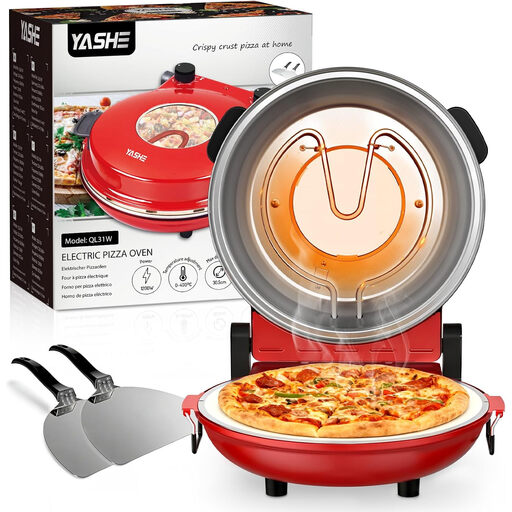
May suit shoppers considering conventional top-and-bottom heat; check whether the bulb and dish you already own will fit in the cooking cavity.
1200 W, 30 cm ceramic stone, conventional top-and-bottom heat, built-in timer and viewing window.
 No image available
May appeal to shoppers short on space; compare its actual external and internal dimensions with your intended location and dish.
10 l, with pizza function.
 No image available
May suit shoppers planning to cook other oven dishes as well as garlic; check that the larger cooking cavity will fit in the available space.
28 l, temperature control and timer.
 No image available
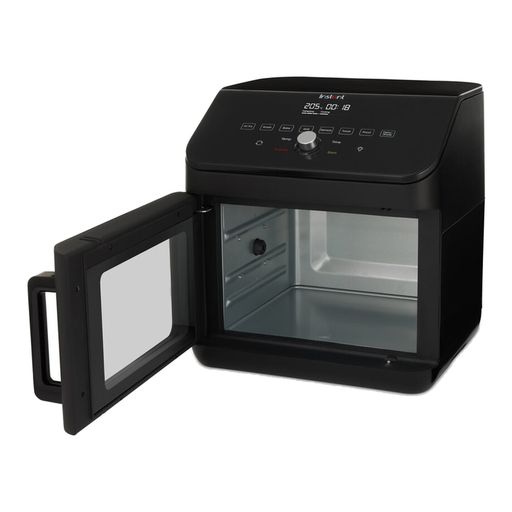
May appeal to shoppers planning to use several oven functions; check that the dish and bulb will fit for the way you intend to use it.
Air fryer with oven function, 13 l.
 No image available
May suit shoppers who want to bake and grill and use a removable crumb tray; make sure you have room for the appliance.
1600 W, timer, removable crumb tray, temperature range from 100 to 250 °C.
A REWE recipe suggests around 200 °C using conventional top-and-bottom heat for about 45 minutes for a whole bulb with the top sliced off and drizzled with oil. This is a recipe recommendation, not a cooking time measured for every mini oven. Check the result and follow your appliance’s instructions.
Measure the dish, including its handles, and its height with the bulb inside. Compare both measurements with the usable internal dimensions and shelf position of the specific model. The capacity in litres alone doesn’t prove that it will fit.
Don’t assume so based on the oven’s external dimensions alone. Check the clearances in the instructions for the exact model. For example, the Steba KB M19 instructions specify a 10 cm gap between the back of the appliance and the kitchen wall; this doesn’t mean the same requirement applies to other appliances.
Compare the mains voltage on the rating plate with the connection you intend to use, and check the documentation for the specific version. Electrical appliances covered by the EU Low Voltage Directive must meet the relevant requirements. CE marking is the manufacturer’s declaration, not an independent certificate.
The German Federal Institute for Risk Assessment advises against making and storing homemade garlic or other vegetables in oil in the home for later use. Home preparation methods cannot generally rule out the formation of botulinum toxin. This advice concerns storage in oil, not choosing a particular oven model.