Which oven is right for you?

If you’re preparing a large number of portions

When baking several batches, what matters is how many flatbreads will fit on the usable area, with space between them. Rommelsbacher specifies that the BG 1805/E can accommodate tins up to 31.5 cm in diameter, but this doesn’t tell you exactly how many flatbreads will fit in one batch.

If space is limited

Compare not only the appliance dimensions, but also the clearances required during use in the instruction manual. For the TO 2068, Severin specifies clearances of 12 cm at the sides and rear, and 30 cm above the appliance during use.

If your recipe calls for a baking stone

Check that the stone size and baking method suit your dough. The manufacturers specify a 30 cm stone for the CASO TO 26 SilverStyle and a 31 cm stone for the G3 Ferrari Delizia G10006 02.

What to look for when buying

Larger mini oven with a tray

A good fit if: You’re planning to bake several flatbreads per batch and have enough space for the appliance. Rommelsbacher specifies a 42 l capacity and compatibility with tins up to 31.5 cm in diameter for the BG 1805/E.

Consider: The appliance measures 54,50 × 43,00 × 36,00 cm. Having four shelf positions doesn’t mean you can use four trays at once.

More compact mini oven with a stone

A good fit if: A more compact baking session and a stone-baking method matter more than a large tray area. Severin specifies a 20 l capacity, fan-assisted cooking and a 29 cm pizza stone for the TO 2068.

Consider: The stone isn’t a substitute for a large tray area. Also check the clearances required for the specific model.

Mini oven with a tray and a stone

A good fit if: You’d like to switch between a tray and individual stone-baked batches depending on the recipe. CASO specifies a 26 l capacity and internal dimensions of 350 × 200 × 300 mm for the TO 26 SilverStyle.

Consider: The 30 cm stone doesn’t tell you how many flatbreads will fit on the tray at once.

Specialist electric stone oven

A good fit if: You want to bake individual flat pieces of dough directly on a stone, and your recipe is suitable. G3 Ferrari specifies a 31 cm stone for the Delizia G10006 02.

Consider: The manufacturer’s claim that the thermostat can be set to up to 400 °C isn’t an independent test of its performance with flatbreads. Also check that the version and after-sales service meet your needs.

Buying criterion What to check before buying Who it matters most to
Usable baking area Compare flatbread size and spacing with the actual tray area; check what’s included and whether a suitable replacement tray is available. If I need to bake several flatbreads per batch for a sale, usable area matters more than the capacity in litres. Around 40% of consumers are likely to make batch capacity their top buying priority.
Baking method for your dough Check whether the recipe calls for a tray or direct contact with a stone; don’t assume the stone size is the same as the tray area. If my recipe calls for baking on a stone, I check the stone size and heating method rather than assuming there’s a large tray area. Around 30% of consumers are likely to prioritise a suitable baking method.
Space and power connection Check the appliance dimensions and the clearances specified in the manual against the intended location; check the connection requirements for the specific model in its manual. If I have limited space, I need to be able to position the oven safely with the required clearances. Around 20% of consumers are likely to see available space as their top buying priority.
Cleaning and serving Check for a removable crumb tray and suitable baking accessories; make separate arrangements for cooling or safely keeping food hot. If cleaning after several batches and safely serving topped flatbreads are both part of the plan, I factor them in alongside buying the oven. Around 10% of consumers are likely to place the greatest emphasis on care and preparation afterwards.

Common buying pitfalls

  • Assuming capacity in litres tells you how many flatbreads will fit

    The oven’s internal capacity and the maximum tin diameter don’t tell you how many flatbreads in your chosen size will fit on the tray at once.

    Measure your flatbreads, allowing for space between them, and compare the result with the usable tray area. Plan extra batches if you can’t fit the quantity you need on one tray.

    Depending on the quantity, you may need to bake more batches. An additional compatible tray can make the process easier, if one is available for your model.

  • Thinking a pizza stone can replace a large tray for a sale

    A stone and a tray have different usable surfaces. The diameter of a stone doesn’t tell you how many flatbreads will fit on a tray.

    Choose a stone for recipes that call for baking directly on it, and choose a tray based on the batch area you need. A combination appliance is only worth considering if you plan to use both methods.

    If the stone can only accommodate individual flatbreads, you may need extra batches to prepare enough for a sale.

  • Allowing only for the appliance dimensions when choosing where to put it

    For the Severin TO 2068, the manufacturer specifies an additional 12 cm of clearance at the sides and rear, and 30 cm above the appliance during use.

    Measure the intended space using the manual for the exact model and follow its instructions for positioning the appliance.

  • Confusing keeping food warm with safe storage

    The German Federal Institute for Risk Assessment (BfR) distinguishes between chilling perishable foods and keeping prepared dishes hot under controlled conditions.

    Plan how to keep ingredients chilled until they’re prepared or eaten. If you need to keep food hot, the BfR recommends at least 60 °C throughout; a keep-warm function alone doesn’t guarantee this temperature.

Key brands at a glance

Rommelsbacher

For different flatbread sizes, options include the 30-l BGE 1580/E and the 42-l BG 1805/E. Rommelsbacher specifies that the larger BG 1805/E can accommodate tins up to 31.5 cm in diameter.

  • The manufacturer lists top and bottom heat, as well as fan-assisted cooking options, for both models.
  • The stated tin size doesn’t confirm how many flatbreads will fit on a tray or whether several trays can be used at once.

Severin

According to Severin, the TO 2068 is a 20-l mini oven for baking and toasting, with a pizza stone and fan-assisted cooking.

  • The manufacturer specifies a 29 cm stone.
  • Severin requires clearances of 12 cm at the sides and rear, and 30 cm above the appliance during use. Make sure you have enough space for this.

CASO Design

According to the manufacturer, the TO 26 SilverStyle combines a 26-l appliance with a baking tray, wire rack and pizza stone.

  • You can compare the internal dimensions of 350 × 200 × 300 mm and the 30 cm stone with your recipe and preferred flatbread size.
  • The stone size doesn’t tell you how many flatbreads can be baked on the tray or on several levels at once.

G3 Ferrari

The Delizia G10006 02 is an electric stone oven for individual batches baked directly on the stone.

  • G3 Ferrari specifies a 31 cm stone and a thermostat that can be set to up to 400 °C.
  • The manufacturer’s claims about its results with pizza aren’t independent evidence of its performance with flatbreads or of its suitability for a particular quantity for sale.

Joybuy products for baking flatbreads in batches

These product options cover stone-baked batches for individual flatbreads and tray-baked batches using mini ovens. Your recipe, preferred batch size and available space are what matter most.
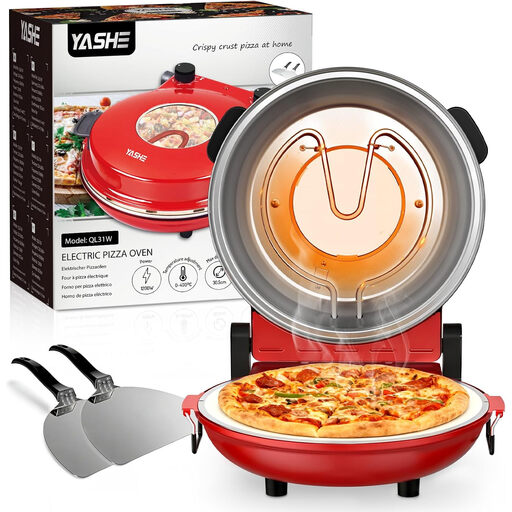
YASHE QL31W pizza oven with ceramic stone

YASHE QL31W pizza oven

For individual flatbreads using a recipe that calls for baking directly on a stone.

1200 W; 30 cm ceramic stone; top and bottom heat; integrated timer and viewing window.

View product

WOLTU BF12sz mini oven with baking tray

WOLTU BF12sz mini oven, 32 l

For flatbreads baked on the supplied tray. Compare its usable area with the size of your dough.

1600 W; temperature control from 100 to 250 °C; 60-minute timer; top heat, bottom heat and combined heating modes; crumb tray.

View product

WOLTU mini oven with pizza function, 10 l

WOLTU mini oven with pizza function, 10 l

For smaller batches, if a compact appliance with a baking tray suits the size of your flatbreads.

Temperature control from 100 to 230 °C; 60-minute timer; top and bottom heat; baking tray and wire rack. Stated appliance dimensions: 37 × 26,5 × 21 cm.

View product

WOLTU mini convection oven, 28 l

WOLTU mini convection oven, 28 l

For tray-baked batches, with several heating modes. Check that the tray has enough space for your flatbreads.

1600 W; temperature control from 100 to 230 °C; three heating modes; 60-minute timer; product description states it can accommodate a pizza up to 26 cm.

View product
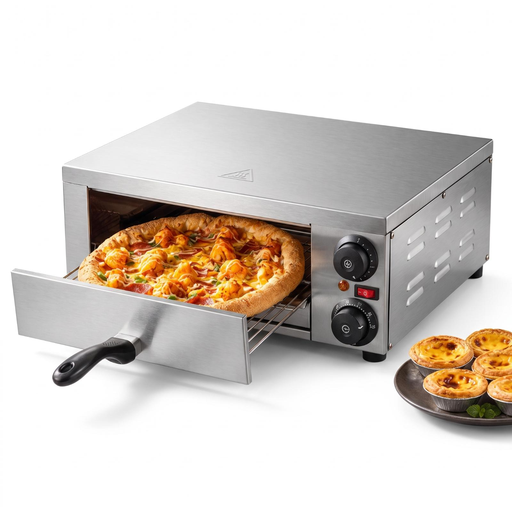
Stainless steel pizza oven, 2000 W

Stainless steel pizza oven, 2000 W

For individual pieces of dough baked directly on a stone, provided your recipe is suitable for this method.

12-inch pizza stone; dual heating elements; temperature control up to 350 °C; timer from 0 to 15 minutes; removable crumb tray.

View product

Frequently asked questions

Are four shelf positions enough to bake four trays of flatbread at once?

No, you can’t tell from the number of shelf positions alone. Check whether the specific model is designed for use on multiple levels, which trays fit and whether there’s enough space between the flatbreads.

Can I put the Severin TO 2068 on a kitchen shelf?

Only if its position meets the requirements for this model. Severin specifies clearances of 12 cm at the sides and rear, and 30 cm above the appliance during use. The instruction manual also states that it must not be built into a cupboard.

How should I store flatbreads with perishable toppings after baking?

The German Federal Institute for Risk Assessment recommends keeping perishable foods chilled until they’re prepared or eaten. If you’re keeping prepared dishes hot, the BfR recommends at least 60 °C throughout. A keep-warm function without temperature control doesn’t guarantee this.

Do I need to register a one-off school fair as a food business and label allergens?

There’s no single answer that applies to every event. In 2012, the European Commission explained that the EU food hygiene regulation doesn’t cover occasional, small-scale food sales by private individuals, such as at school fairs, as a business activity; national law still applies. The federal portal outlines the registration requirements for food businesses. Berlin’s veterinary and food inspection authority says that allergen information for non-prepacked food can be provided in writing, electronically or verbally. Check the type of event, who’s responsible and local requirements with the organiser or the relevant food safety authority.

What additional accessories should I check before buying?

Check whether you’ll need a second compatible tray for the quantity you’re planning to bake, and whether one is available for the specific model. You can’t work out the electricity use per flatbread from the rated power alone: preheating time, actual running time and power consumption during use all make a difference.