Android emulator testers
You use Android Studio and virtual devices. Google recommends at least 16 GB RAM for a good emulator experience; hardware acceleration also plays a part.


For local iOS simulations with Xcode, you need a compatible Mac; for Android emulators, suitable Windows or Linux mini PCs are an option. Apple Developer describes the iOS Simulator as part of Xcode on macOS, while Google recommends at least 16 GB RAM for a good Android emulator experience. Choose your test platform first, then check the memory, hardware acceleration, ports and separate user accounts – the size of the case alone won’t answer these questions.
You use Android Studio and virtual devices. Google recommends at least 16 GB RAM for a good emulator experience; hardware acceleration also plays a part.
You test apps locally with Xcode and the iOS Simulator. Apple Developer provides the Simulator as part of Xcode on macOS; check that the Xcode version you need is compatible with the supported macOS version.
You set up computers for different users and connected test devices. Germany’s Federal Office for Information Security recommends separate, password-protected accounts with appropriate access rights for shared devices.
A good fit if: Android Studio and virtual Android devices are your priority, and you don’t need a local Xcode iOS Simulator.
Keep in mind: Google recommends at least 16 GB RAM for a good emulator experience; hardware acceleration and the operating system configuration also need to be suitable.
A good fit if: Xcode and the local iOS Simulator are part of your testing workflow; Apple Developer associates the Simulator with Xcode on macOS.
Keep in mind: The Xcode version you need must be compatible with the supported macOS version; also check the specific memory and port configuration.
A good fit if: you’re focusing on real devices or features that a virtual device can’t fully replicate.
Keep in mind: Allow for the devices, cables and available ports you’ll need. Physical devices complement emulators, but don’t replace their range of virtual devices and API levels.
| Requirement | What to check before buying | Who is it most important to? |
|---|---|---|
| Android emulator | Google recommends at least 16 GB RAM for a good emulator experience. Also check whether hardware acceleration is supported and can be set up correctly. | If I’m testing Android apps with virtual devices, a reliable emulator workflow is my priority. Around 36% of consumers have Android emulators as their main requirement. |
| Local iOS Simulator | Check that the Xcode version you need is compatible with the supported macOS version. If you’re buying a Mac, confirm the specific RAM and SSD configuration. | If I need to test apps locally with Xcode, a compatible Mac is essential to my workflow. Around 29% of consumers have the local iOS Simulator as their main requirement. |
| Shared use | Agree separate accounts and appropriate permissions with your IT team. Factor screen locking and approved software into your workflow, as recommended by Germany’s Federal Office for Information Security. | If several people use the same computer, I want to keep accounts and access properly separate. Around 21% of consumers prioritise shared use. |
| Ports and what’s included | Make a list of your devices, cables and occupied ports. If you’re buying a barebone, check whether RAM, an SSD and an operating system are included. | If I’m connecting real smartphones or tablets, I want to be able to use them in my planned test setup without constantly swapping cables. Around 14% of consumers have physical test devices as their main requirement. |
Apple provides the local iOS Simulator as part of Xcode on macOS. A Windows computer therefore won’t support this type of testing.
Before choosing your hardware, decide whether you need to run local iOS simulations. If you’re buying a Mac, check that the Xcode version you need is compatible with the supported macOS version.
A barebone may not include RAM, an SSD or an operating system. COMPUTER BILD explicitly notes this for the relevant model in its mini PC list.
Compare what’s included in the specific offer with the components your shared test station needs.
You may need to buy and set up any missing components and the operating system separately.
If the title and specifications don’t match, it may not be clear which memory configuration you’ll receive.
Confirm the full model and memory configuration before buying.
Otherwise, data and settings from different users can end up mixed together on a shared computer. Germany’s Federal Office for Information Security recommends separate, password-protected accounts with appropriate permissions.
Set up individual accounts, lock the computer when leaving the workstation, and agree with your IT team which software is approved.
Mac mini for local testing with macOS and Xcode when the iOS Simulator is part of your workflow.
The A5 Pro 2026 Edition is a documented Windows mini PC option for an Android-focused test station.
The Cubi NUC 1M is a compact PC option; the specific features depend on the model.
The NucBox M6 Ultra was included as another compact PC option in a general mini PC review.
The Pro Mini 400 G9 range is designed for managed workstations.
This selection includes a Mac for local Xcode and iOS testing, as well as Windows mini PCs for Android emulators and connected test devices. For each model, check that the operating system and memory configuration suit your testing workflow.
 No image available
macOS is the right choice if you want to work locally with Xcode and the iOS Simulator; check that the Xcode version you need is compatible with the supported macOS version.
The listed specification includes 16 GB unified memory, a 512 GB SSD, Thunderbolt 4, USB-C, HDMI and 2.5GbE.
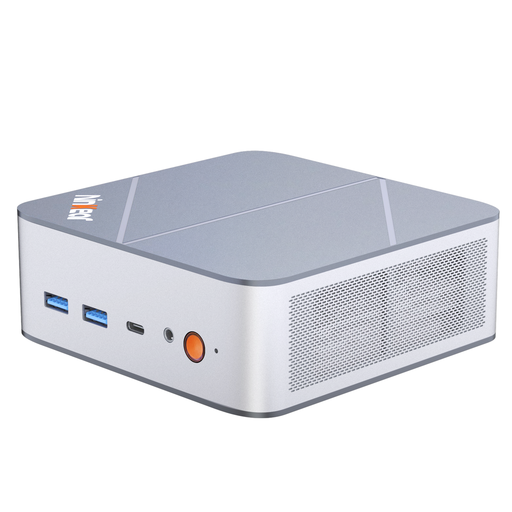 No image available
The listed 16 GB RAM meets Google’s recommendation for a good Android emulator experience; it doesn’t guarantee a particular number of virtual devices running at the same time.
The title lists an AMD Ryzen 7 8745HS, 1 TB SSD and Windows 10/11. The description also lists Wi-Fi 6 and 2.5 Gigabit Ethernet.
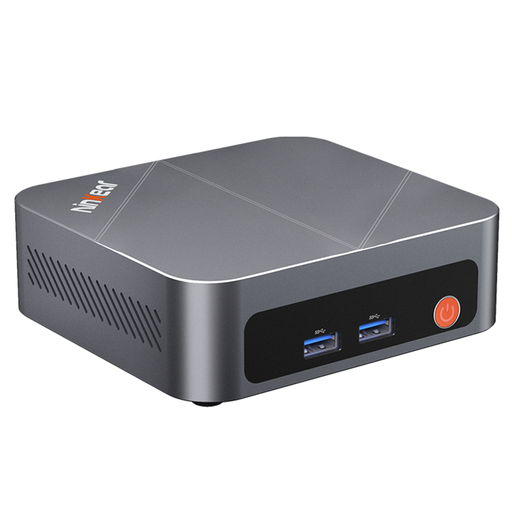 No image available
The listed 16 GB RAM meets Google’s recommendation for a good Android emulator experience; it doesn’t guarantee a particular level of emulator performance.
The title lists Windows 10/11, Ubuntu compatibility and support for three displays.
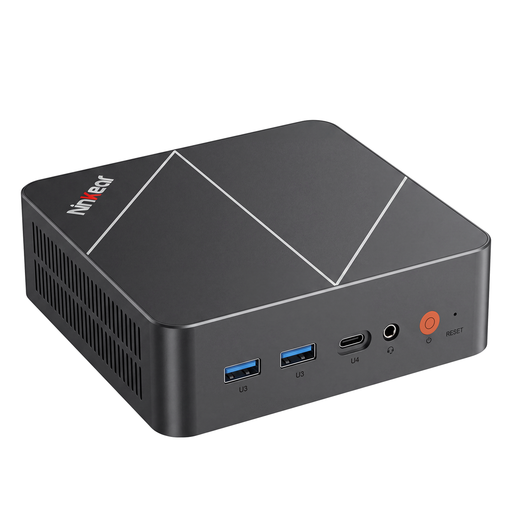 No image available
The listed 16 GB RAM meets Google’s recommendation for a good Android emulator experience; also check that the specific configuration suits your test setup.
The title lists a 512 GB or 1 TB SSD, Windows 11 and support for three 4K screens. The case volume is listed as 0.66 L.
 No image available
The listed 16 GB RAM meets Google’s recommendation for a good Android emulator experience. The USB ports listed may be useful for a test station with several connected devices.
The title lists Windows 11 Home, HDMI 2.1, DisplayPort 1.4, Wi-Fi 6 and 2.5G Ethernet. The description lists six USB 3.0 ports and one USB-C port.
No, not for using the local iOS Simulator as part of Xcode: Apple Developer describes this testing workflow as running on macOS. If you’re buying a Mac, also check that the Xcode version you need is compatible with the supported macOS version.
No. Google recommends at least 16 GB RAM for a good emulator experience; larger virtual devices or higher API levels may need more resources. This recommendation doesn’t guarantee a particular number of emulators running at the same time.
Germany’s Federal Office for Information Security recommends that each user has a separate, password-protected account with appropriate permissions. It also recommends locking the computer when you leave your workstation and only using software approved by your IT team.
Not in every case. The European Union’s consumer information states that covered consumer purchases come with a minimum two-year legal guarantee, but excludes purchases by private individuals. For a business purchase, check the contracting party and applicable terms separately.
Check whether RAM, an SSD and an operating system are included. COMPUTER BILD explicitly notes that components are missing from one model in its mini PC list; what you need to add depends on what’s included with the specific product.