What should you look for when buying?
First check the platform and the tools you’ll use at the same time, then consider RAM, connections and the space needed for the specific configuration.
| What you need |
What to check before buying |
Who should pay particular attention? |
| Headroom for an IDE and local services |
Check the installed RAM, the maximum amount supported and the requirements of all the programmes you’ll use at the same time. JetBrains lists 8 GB of total memory for IntelliJ IDEA; remember to allow for additional programmes too. |
If I use an IDE alongside local services, I plan for the full workload rather than just the editor. Around 27% of consumers put an IDE and local services first. |
| The right basic specification |
Compare the operating system, installed RAM and SSD, as well as what’s included with the specific version. Microsoft recommends a 1.6 GHz or faster processor and 1 GB of RAM for Visual Studio Code; these figures don’t cover other applications. |
If I mainly write code in a lightweight editor, I want a suitable basic specification rather than high performance I won’t use. Around 27% of consumers prioritise this. |
| Connections for monitors and devices |
Check the video outputs, monitor inputs and USB ports you need against the exact model, and allow for any adapters required. |
If I want to keep using my existing monitors and peripherals, their connections need to match the PC. Around 20% of consumers prioritise their monitor and peripheral setup. |
| Space and noise |
Check the device’s dimensions, including its power supply and cables. For noise levels, measurements of the specific version under comparable workloads are more useful than the size of its case. |
If desk space is limited or I’m sensitive to noise, I consider the space it takes up and how loud it is in use. Around 13% of consumers prioritise these workstation requirements. |
| Compatible development platform |
Check that the operating system, processor architecture and project tools are compatible. For Docker Desktop on Windows, also check Docker’s Windows requirements and the backend you want to use. |
If my project requires a particular platform, I decide based on compatibility first and performance specifications second. Around 13% of consumers put platform requirements first. |
Joybuy products for coding from home
The following Joybuy options are mini PCs for coding and your home-office desk. Check the specifications of each version to make sure it suits your workflow.
 No image available
SOYO Y5Pro mini PC – Intel Core i5 8250U/8350U, 8 GB DDR4, 256 GB SATA SSD
Worth considering for a Windows setup with a lightweight editor, if the specifications suit the programmes you use.
The product name specifies Windows 11, 8 GB DDR4 and a 256 GB SATA SSD; it lists the processor options as Intel Core i5 8250U/8350U.
View at Joybuy
 No image available
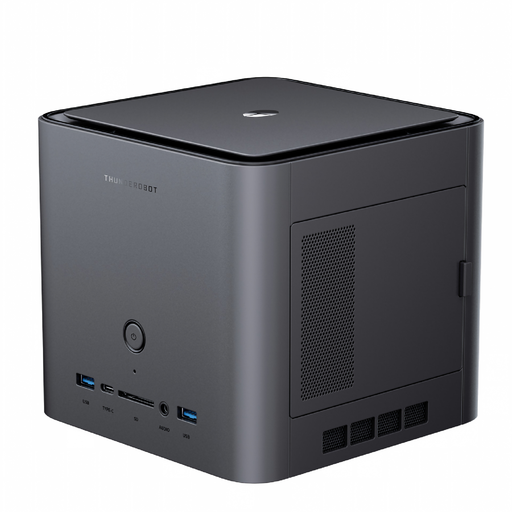
THUNDEROBOT Mini-PC Workstation AI Max+ 395
Could be worth considering for a workflow that calls for more RAM, as specified. Check the operating system and compatibility with your development tools separately.
The product name specifies 128 GB LPDDR5X at 8000MT/s and a 1 TB SSD.
View at Joybuy
 No image available
BMAX B7A Plus mini PC – AMD Ryzen 5 6600H, 12 GB LPDDR5, 512 GB NVMe SSD
An option for coding if the listed memory and other specifications suit the programmes you use at the same time.
The product name specifies an AMD Ryzen 5 6600H, 12 GB LPDDR5 and a 512 GB NVMe SSD.
View at Joybuy
 No image available
FIREBAT AM02L mini PC – AMD 6600H, 16 GB LPDDR5, 512 GB M.2 NVMe, Windows 11 Home
Worth considering for a Windows workstation if the listed configuration suits your applications and connections.
The product name specifies AMD 6600H, 16 GB LPDDR5, a 512 GB M.2 NVMe SSD and Windows 11 Home.
View at Joybuy
 No image available
FIREBAT mini PC – AMD Ryzen 7 7735HS, Radeon 680M, 16 GB RAM, 512 GB SSD
Worth checking for a development workstation with multiple monitors, if the connections on the specific version suit your setup.
The product name specifies AMD Ryzen 7 7735HS, Radeon 680M, 16 GB RAM, a 512 GB SSD and two M.2 slots.
View at Joybuy
Frequently asked questions
Are Visual Studio Code’s minimum requirements enough to choose a whole PC?
No. They describe Visual Studio Code, not your entire workstation. Allow for browsers, other IDEs and local services too; JetBrains lists separate requirements for IntelliJ IDEA.
What should I check before installing Docker Desktop on Windows?
Check the Windows edition and version documented by Docker, along with the backend you want to use, such as WSL 2. A processor or RAM specification alone doesn’t confirm that these requirements are met.
What should I check about what’s included and my consumer rights?
Check whether the specific configuration includes any adapters, monitor and input devices you need. Your Europe – European Union explains that covered consumer purchases in the EU come with a minimum two-year legal guarantee; an additional manufacturer’s guarantee doesn’t replace these rights.
How can I check that a product meets the requirements for sale in Germany?
Products covered by the relevant EU harmonisation legislation must carry the CE marking. The German Federal Network Agency also lists product identification, manufacturer details, any required German-language information and the declaration of conformity as points to check; a general statement about a product range doesn’t confirm compliance for an individual unit.
How should I dispose of an old mini PC?
Electrical and electronic waste must not go in household rubbish. The German Federal Ministry for the Environment lists local collection points, manufacturers and retailers as authorised disposal routes; whether a retailer must take it back depends on the legal requirements.


