Developers who run large builds frequently
If you often compile larger projects, assess performance under sustained load rather than relying solely on a short-term boost clock speed.


For frequent, larger builds, start by looking at performance under sustained load and the amount of memory available for tools running at the same time. A pre-configured mid-range system may be enough for smaller projects. Then make sure the operating system, upgrade options, ports and footprint suit the way you work. A barebone system needs additional components and setup, while a fixed configuration may limit future changes.
If you often compile larger projects, assess performance under sustained load rather than relying solely on a short-term boost clock speed.
If containers, databases or virtual machines run alongside your editor and build, make sure the installed memory, upgrade options and SSD capacity suit your complete toolset.
For a small desk, it’s not just the case you need to consider: allow space for the power supply, cables and monitor mount too. Lenovo describes mini PCs as an option for compact workspaces; MSI lists VESA 100 × 100 mm support for the Cubi NUC 1M family.
When choosing a mini PC for compiling on a compact desk, four questions are particularly important.
A good fit if: your development tools require Windows or you want a pre-configured Windows environment.
Consider: specifications and upgrade options vary by model. A barebone system may need additional components and setup.
A good fit if: your project requires macOS or Apple tools, or you specifically want a macOS environment.
Consider: check that your tools and dependencies are compatible first. Published configurations don’t provide a direct comparison of build times with Windows mini PCs.
| Buying consideration | What to check before buying | Who should pay particular attention |
|---|---|---|
| Performance under sustained load | Check the CPU model and sustained-load tests for the specific configuration. A brief boost clock speed doesn’t prove how it will perform during a build. | If I frequently compile large projects, I want to assess performance over longer workloads. Around 36% of consumers put build time first. |
| RAM and SSD | Check the installed memory and SSD capacity of the configuration you’re considering. If needed, check the available slots and supported upgrades. | If I run my editor, builds and containers or virtual machines at the same time, I need enough RAM and SSD capacity for all of them. Around 29% of consumers prioritise memory and SSD capacity for this reason. |
| Space and ports | Allow for the case, power supply and cable routing together. Check that the ports you need are available and that any VESA mount is compatible with your specific monitor. | If desk space is limited, my entire setup needs to fit, not just the case. Around 21% of consumers put space requirements first. |
| Platform compatibility | Before choosing a configuration, note down the operating system, processor architecture, IDE and, where applicable, container backend you need. | If I need a particular operating system or build architecture, I check compatibility before comparing hardware. Around 14% of consumers prioritise a suitable development platform. |
Compiling can take a while and use several processes at once. A short-term clock speed figure on its own doesn’t show how a system will perform under sustained build loads.
If you frequently run large builds, check sustained-load tests for the exact model and configuration.
A GMKtec NucBox M6 Ultra variant sold as a barebone may not include RAM, an SSD or an operating system. Configurations with the same model name can have different specifications.
Compare the complete configuration you actually intend to use, including compatible components and setup.
With a barebone system, you may need to buy RAM, an SSD and an operating system, and allow time for setup.
The power supply, cables and the monitor or USB ports you need also take up space. A VESA specification alone doesn’t prove that a mount will fit every monitor.
Measure the available space, including cable routes, and check that any mount is compatible with your monitor.
Depending on the available ports, you may need extra room for adapters, the power supply and cables.
The Verbraucherzentrale distinguishes between the statutory guarantee, which applies against the seller, and a voluntary manufacturer’s warranty, which has its own terms.
Make a note of the seller and check the warranty terms separately from your statutory rights.
GEEKOM offers pre-configured mini PCs. For the A5 Pro 2026 Edition, the manufacturer lists a configuration with a Ryzen 5 7530U, 16 GB RAM, a 1 TB SSD and Windows 11 Pro.
The NucBox M6 Ultra is worth considering if you want to explore a Ryzen 5 7640HS configuration and upgrade options.
The Cubi NUC 1M family offers a compact business case with documented memory and connectivity options.
The Pro Mini 400 G9 is a business alternative. For model number CP9G3EA#ABD, HP lists Windows 11 Pro, a Core i7-14700T, 16 GB RAM and a 512 GB SSD.
The Mac mini is a compact macOS option if your development environment or project requires this platform.
This selection includes compact mini PCs for your desk, as well as a small-form-factor desktop. Compare the exact RAM and SSD specifications in particular, and check that the operating system and tools suit your build workflow.
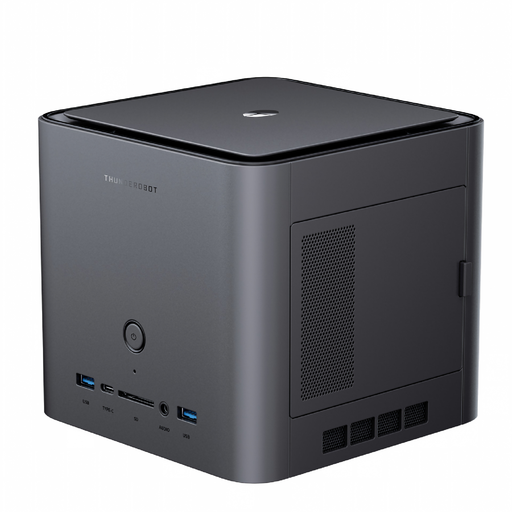 No image available
The mini PC form factor could suit a compact build workstation. Before choosing, check the exact RAM and SSD configuration and make sure it’s compatible with your development tools.
 No image available
This configuration may suit smaller projects, provided the RAM and storage capacity meet the needs of your tools.
Intel Celeron N5095 (4C/4T); 16 GB LPDDR4X; 256 GB M.2 2280 SATA SSD; HDMI 2.0; Windows 11 Pro.
 No image available
If you run several development tools at once, compare the listed memory and SSD configuration with your project’s actual requirements.
AMD Ryzen 7 7735HS; 24 GB LPDDR5; 512 GB NVMe SSD; two M.2 2280 slots; Windows 11 Pro.
 No image available
For smaller projects and extra SSD capacity, compare the listed base specifications and storage options with your requirements.
AMD Ryzen 7 7735HS; 16 GB RAM; 512 GB SSD; two M.2 slots; Wi-Fi 6.
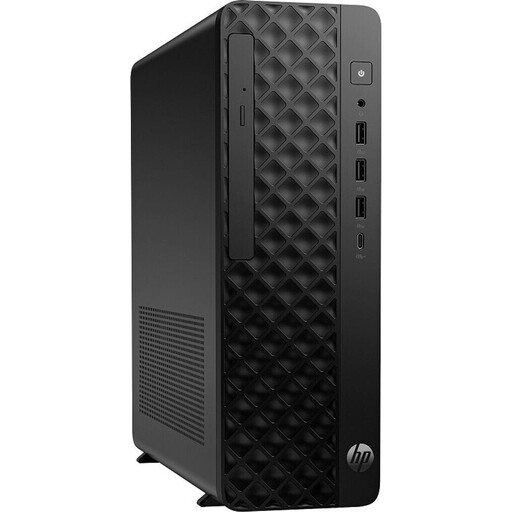 No image available
If you’re considering a small-form-factor system instead of a mini PC, check that its case size and specifications suit your workspace.
Intel Core Ultra 7 265K (20 cores); 32 GB DDR5-5600; 1 TB M.2 SSD; RTX A400 with 4 GB; Windows 11 Pro.
For smaller development projects, 16 GB can be a starting point. If you’re also running containers, virtual machines or local databases, a German guide to developer PCs recommends planning for 32 to 64 GB. This is a guide for those workloads, not a universal minimum requirement.
Check the exact configuration on offer: an M6 Ultra version explicitly sold as a barebone is supplied without RAM, an SSD or an operating system. Allow for compatible components, fitting them and installing the operating system. The same model name doesn’t automatically mean the same specifications.
Check Docker’s requirements for your chosen version of Windows, architecture and backend. Docker supports options including WSL 2, Hyper-V and Docker VMM (Beta). The words “Windows 11” alone don’t mean that your preferred setup is already configured or compatible.
No. The Verbraucherzentrale distinguishes between the statutory guarantee against the seller and a voluntary manufacturer’s warranty with its own terms. Online purchases are also generally subject to a right of withdrawal, usually within 14 days of receiving the goods. Exceptions and the terms of the specific contract apply.
Don’t put it in your household rubbish. The German Environment Agency lists recycling centres and suitable retailer take-back schemes as ways to dispose of electrical equipment.