What should you look for when buying?
First check the configuration you will actually receive and the software required for your course. Then consider noise levels and the ports you need for your workspace.
| What matters |
What to check before buying |
Who should consider this? |
| RAM and upgrade options |
Check the RAM supplied and potential upgrades for the exact model separately. |
If I use lots of notebooks and analysis tools at the same time, the RAM actually installed and whether it can be upgraded matter to me. Around 31% of consumers prioritise RAM and upgrade options. |
| Noise during longer sessions |
Compare reviews of the exact model, ideally including how it performs under load. |
If other people are studying or working right next to me, I want to be able to judge the computer's noise levels as accurately as possible. Around 25% of consumers prioritise quiet operation. |
| Course software and GPU |
Check the requirements for the operating system, GPU and acceleration backend. |
If an assignment specifically requires a particular GPU or software environment, my computer needs to be compatible. Around 19% of consumers prioritise compatibility with course software and GPU tasks. |
| Ports and desk space |
Check the monitor, USB and network ports, and how they are positioned in relation to your desk. |
If my workspace is small or has fixed cabling, I want to connect my existing monitors and devices without unnecessary workarounds. Around 13% of consumers prioritise ports and desk space. |
| Complete setup |
Check what is included, which operating system it has and which components come with the version you have chosen. |
If I want to set up the device straight away, it matters whether RAM, an SSD and an operating system are already included. Around 12% of consumers prioritise a complete setup and manageable additional costs. |
Suitable devices at Joybuy
This selection includes compact Windows mini PCs as well as Mac mini configurations. For each device, check that its specifications meet your course requirements and provide the ports you need.
 No image available
SOYO Y5Pro mini PC, Intel Core i5 8250U/8350U
A compact option if you need two HDMI outputs for your workspace.
8 GB DDR4 RAM and a 256 GB SATA SSD.
Two HDMI outputs, Type-C, four USB ports and 1 Gbit Ethernet.
The product name lists the 8250U/8350U processor variants; check which version is on offer.
View at Joybuy
 No image available
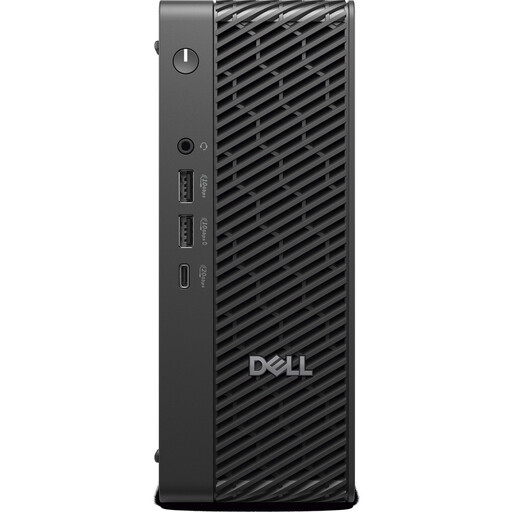
Dell Pro Max Micro FCM2250, Core Ultra 7
A micro PC configuration for a space-conscious workspace, if Windows 11 Pro suits your tools.
16 GB DDR5-6400 RAM and a 512 GB M.2 PCIe SSD.
Intel graphics, Gigabit LAN and Wi-Fi 7.
The product name specifies a 14-core processor with an NPU.
View at Joybuy
 No image available
Apple Mac mini, M6, 16 GB, 256 GB SSD
A macOS option if your course software is compatible with the platform.
12-core CPU, 12-core GPU, 16 GB unified memory and a 256 GB SSD.
PyTorch documents MPS for macOS. MPS is not CUDA and will not meet the requirements of a course that specifically requires CUDA.
View at Joybuy
No image available
Apple Mac mini, M6, 24 GB, 512 GB SSD
A macOS option if your course software is compatible with the platform and you're looking for this memory configuration.
12-core CPU, 12-core GPU, 24 GB unified memory and a 512 GB SSD.
PyTorch documents MPS for macOS. MPS is not CUDA and will not meet the requirements of a course that specifically requires CUDA.
View at Joybuy
 No image available
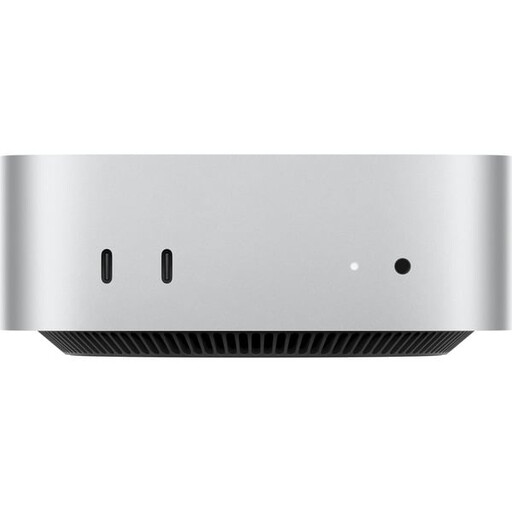
Apple Mac mini MHQL4_CTO_8 A3534, M6, 24 GB, 1 TB SSD
A macOS configuration with a 1 TB SSD, if your course software is compatible with the platform.
12-core CPU, 12-core GPU and 24 GB unified memory.
PyTorch documents MPS for macOS. MPS is not CUDA and will not meet the requirements of a course that specifically requires CUDA.
View at Joybuy
Frequently asked questions about mini PCs for data science students
Do I need a dedicated GPU for every data science course?
No. Studying data science does not automatically mean you need a dedicated GPU. Check your course assignments: scikit-learn documents CPU parallelisation, while for courses that explicitly require CUDA, PyTorch specifies a CUDA-capable NVIDIA GPU. For macOS, PyTorch instead documents the MPS backend.
What should I check before setting up a barebone mini PC?
Check whether the specific version includes RAM, an SSD and an operating system. A barebone version listed at Joybuy is sold without these three components; this does not apply to other mini PCs or versions.
How can I tell if a mini PC will be too noisy in a shared office?
Compare reviews of the exact model, ideally including tests under load, rather than relying on the size of the case alone. Notebookcheck described the Minisforum EliteMini UM890 Pro it tested as quiet and the GEEKOM A8 it tested as audible under load; these findings apply to the devices tested.
What rights apply when buying online as a private customer in Germany?
For a standard online purchase of goods, you generally have a 14-day withdrawal period from the date you receive the goods, as explained by the Verbraucherzentrale. Your statutory rights if goods are faulty are separate from any voluntary manufacturer's guarantee; exceptions and the circumstances of the individual case are still relevant.
What should I check on a mini PC's product labelling?
For electrical and electronic equipment, the German Federal Network Agency lists correct CE marking, manufacturer details, a clear product identifier and German-language instructions among the points retailers must check before offering a product for sale. Your Europe explains the manufacturer's responsibility for meeting the applicable EU requirements. Check the labelling on the specific device and power supply rather than relying on a general product description.


