For schema design, SQL and documentation, a mini PC with a separately selected monitor is a space-saving starting point, provided its ports match your existing monitor. If you also plan to run a development environment and local databases or containers, the requirements of the specific software, along with memory and upgrade options, matter more. A larger desktop remains an option if potential upgrades matter more to you than keeping your desk clear.
Who is a mini PC suitable for on a small desk?
Designing schemas on a compact desk
If you need space for a diagram, SQL editor and reference materials without giving up much room to a PC case, plan your monitor and ports separately from the computer itself. Lenovo Germany describes the ThinkCentre M70q Gen 6 as having a 1-litre case.
Development with local test databases
If you use a database IDE alongside your schema, and possibly containers too, check the requirements of the specific software you use against your chosen configuration. JetBrains lists 8 GB of RAM in total and 3 GB of available memory for IDE processes for DataGrip; Docker Desktop on Windows has its own requirements.
A workspace that needs ongoing support
If long-term use is important, check the exact RAM and SSD configuration, upgrade options and agreed service terms. Lenovo Germany lists 16 GB of RAM and a 512 GB SSD for variant 13A4007KEZ.
Which buying criteria matter for a small desk?
When choosing a desktop PC for database schema design, the main question is whether you prioritise clear desk space, local development tools, monitor connectivity or future maintenance.
Mini PC with a separate monitor
Best suited to: A desk with limited space, where the computer is mainly for schema design, SQL and working with several windows at once.
Things to consider: The monitor, stand, power supply and cables still take up space. Ports and upgrade options also vary by model.
Larger small form factor PC or tower
Best suited to: If future hardware upgrades matter more than having the smallest possible case, and you can keep the computer off your work surface.
Things to consider: The larger form takes up more room; the stated requirements for schema design do not make additional graphics performance essential.
| Buying priority |
What to check before buying |
Who should pay particular attention |
| Clear desk space |
Consider the case, monitor footprint, power supply and cables together; only factor in mounting options if you have a compatible bracket. |
If you want room on your desk for a monitor, input devices and reference materials, consider the whole set-up. Around 36% of consumers put clear desk space first. |
| Local development |
Compare the requirements of the software you actually use with the RAM and upgrade options. JetBrains lists 8 GB of RAM in total and 3 GB of available memory for IDE processes for DataGrip. |
If you plan to run an IDE, test database or containers alongside your schema, choose a configuration to suit those applications. Around 29% of consumers prioritise local development tools. |
| Monitor and device connections |
Check the inputs, cables and required display combination against the specific PC variant; the maximum number of monitors alone is not enough. |
If you want to use existing monitors, or more than one, for diagrams, SQL and documentation, the right ports are essential. Around 21% of consumers put monitor connectivity first. |
| Upgrade options, what’s included and service |
Check the RAM, SSD, included operating system and accessories for the exact configuration; consider service terms separately from your statutory rights. |
If future changes and reliable support are priorities, there is more to consider than case size alone. Around 14% of consumers prioritise maintenance and future needs. |
Avoid common buying mistakes
-
Assuming a small case means a space-saving overall set-up
The monitor stand, power supply and cables can still take up desk space, even if the computer is compact.
Plan your entire workspace and check the mounting options for the specific computer and monitor combination.
-
Assuming the maximum number of displays guarantees the right ports
Whether your existing monitors will work depends on the specific model variant and the combination of ports and monitors.
Check the required resolution, your displays’ inputs and the ports on your chosen PC configuration.
-
Comparing only processor names instead of the full configuration
According to COMPUTER BILD, the tested GEEKOM A5 Pro did not include a keyboard or mouse; a tested barebone also needed RAM, storage and an operating system to be added.
Check the operating system, RAM, SSD, accessories and agreed service cover for the specific offer.
Key brands and product ranges to consider
Lenovo
ThinkCentre M70q Gen 6 Tiny for a compact workspace with a separately selected monitor.
- Lenovo Germany lists a 1-litre case and ports for up to four monitors for this product range.
- Variant 13A4007KEZ is listed with 16 GB of RAM and a 512 GB SSD; check the display combination and cabling for the specific configuration.
HP
Pro Mini 400 G9 for a compact Windows workspace with a separately chosen monitor.
- HP lists 16 GB of RAM, a 512 GB SSD and Windows 11 Pro for the documented variant 937U0EA#ABD.
- HP lists a separately available mounting bracket. Check the accessories and service packages for the variant you order.
Apple
Mac mini (2024) with M4 for workflows where the database tools and other programmes are compatible with macOS.
- Apple documents 16 GB of unified memory for the M4 base configuration, along with display combinations via Thunderbolt and HDMI.
- These details refer to the model introduced in 2024. Check compatibility with any Windows tools you specifically need.
GEEKOM
A5 Pro 2026 Edition as a compact Windows option with a choice of processor and storage configurations.
- For the Ryzen 5 7530U variant, GEEKOM lists 16 GB of RAM, a 1 TB SSD and expandable storage. These are the manufacturer’s specifications, not independent performance test results.
- For the combination it tested, COMPUTER BILD noted that a keyboard and mouse were not included.
Dell
OptiPlex Micro, a compact business design for a tidy workspace.
- Dell describes mounting options and product-specific support for the OptiPlex Micro range.
- Check the RAM, SSD and ports for the specific variant you choose.
Joybuy products for a workspace with a separate monitor
These mini PCs are intended for use with a separately selected monitor. Before buying, check that the operating system, ports and configuration suit your database software and existing devices.
 No image available
SOYO Y5Pro mini PC, Intel Core i5 8250U/8350U
The mini PC format is worth considering if you want the computer case to take up less room on a small desk.
The listed configuration includes 8 GB DDR4, a 256 GB SATA SSD and Windows 11.
Wireless standards listed include BT5.2 and Wi-Fi 5.
View at Joybuy
 No image available
Apple Mac mini, M6, 16 GB, 256 GB SSD
The compact Mac mini format is an option if the programmes you need are compatible with the operating system listed.
The product name specifies an Apple M6 with a 12-core CPU and 12-core GPU, 16 GB of unified memory, a 256 GB SSD and macOS.
View at Joybuy
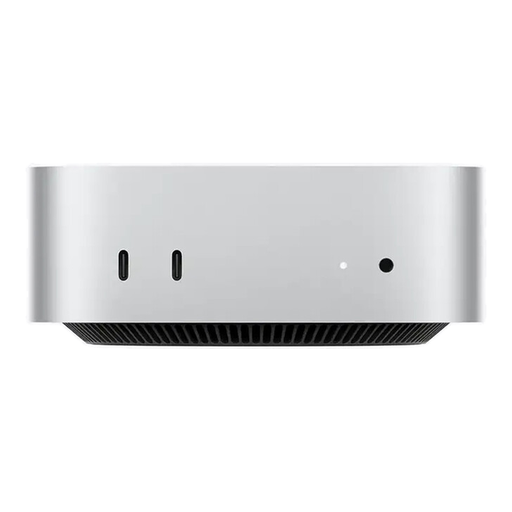 No image available
Apple Mac mini, M6, 16 GB, 512 GB SSD
The compact Mac mini format is an option if the programmes you need are compatible with the operating system listed.
The product name specifies an Apple M6 with a 12-core CPU and 12-core GPU, 16 GB of unified memory, a 512 GB SSD and macOS.
View at Joybuy
 No image available
Apple Mac mini, M6, 24 GB, 512 GB SSD
The compact Mac mini format is an option if the programmes you need are compatible with the operating system listed.
The product name specifies an Apple M6 with a 12-core CPU and 12-core GPU, 24 GB of unified memory, a 512 GB SSD and macOS.
View at Joybuy
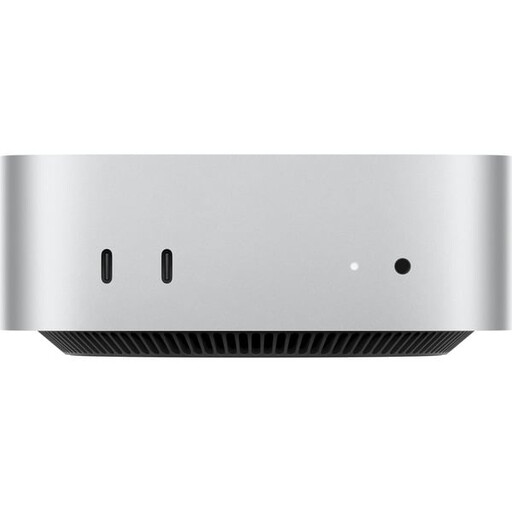 No image available
Apple Mac mini A3534, M6, 24 GB, 1 TB SSD
The compact Mac mini format is an option if the programmes you need are compatible with the operating system listed.
The product name specifies an Apple M6 with a 12-core CPU and 12-core GPU, 24 GB of unified memory, a 1 TB SSD and a silver finish.
View at Joybuy
Frequently asked questions about desktop PCs for database design
Is a small PC powerful enough to design a database schema?
The first thing to consider is the software you actually use, not just the size of the case. JetBrains lists 8 GB of RAM in total and 3 GB of available memory for IDE processes for the documented version of DataGrip; any applications running at the same time will need additional resources.
What should I consider when running local database containers on Windows?
If you plan to use Docker Desktop on Windows, check its documented Windows, WSL and installation requirements for your chosen configuration. These are not general minimum PC requirements if you do not use Docker.
How can I set up a mini PC without cluttering my small desk?
Check for a mounting bracket that is compatible with your specific PC and monitor, and plan how to route the cables. HP lists a bracket for its mini desktop computers as an accessory; it is not listed as included with the documented variant.
Is a manufacturer’s guarantee the same as your statutory rights?
No. If a product is faulty, your statutory rights are against the seller; a guarantee is a voluntary offer with its own terms. The consumer advice organisation Verbraucherzentrale recommends considering additional service cover separately.
What should I look out for when buying an electrical PC in Germany?
For its market surveillance, the German Federal Network Agency lists the CE marking, product and manufacturer details, and German-language instructions with the necessary information among the things to check. Check these details for the specific offer; a general product description does not automatically confirm that an individual device complies with the relevant requirements.


