A mini PC may be suitable for a simple menu project, provided its operating system, graphics API, memory and monitor connections meet the requirements of your chosen engine. If you’re also developing demanding 3D scenes in Unreal Engine, check Epic Games’ higher recommendations and compare a powerful mini PC with a compact desktop. Make sure its dimensions and upgrade options suit your workspace, too.
Which PC is right for you?
Menu developers with limited desk space
You’re mainly designing a game menu and need room on your desk for a monitor and input devices as well as your PC. First, check your engine’s requirements and the space available. Godot Engine and Unity publish their own editor requirements.
Developers working on larger 3D projects
You’re creating the menu as part of a more demanding game, so you should check the requirements for the whole project. Epic Games publishes its own hardware recommendations for Unreal Engine.
Developers planning future upgrades
You want to allow for changes to your project down the line, so check which components can be replaced in the exact configuration before you buy. GMKtec and BOSGAME list different specifications across their respective product ranges.
What should you consider when choosing?
Mini PC for simple menu work
A good fit if: You want to keep as much space as possible free on a small desk, and your project is limited to menu design or simple 2D content.
Trade-off: A compact design doesn’t tell you whether the RAM can be upgraded later or whether the PC can handle a larger 3D project.
Powerful gaming mini PC
A good fit if: You want to work on more demanding 3D content as well as your menu, but have limited space. Make sure the exact specification is suitable for your engine.
Trade-off: A more powerful model may offer more than you need for a simple menu project. Check the specification and model variant carefully.
Compact desktop
A good fit if: You can place the computer beside or under your desk and want a configurable system for larger projects.
Trade-off: The word ‘compact’ doesn’t replace checking the case dimensions, connections and space available.
Technical requirements vary depending on the engine, version and project scope. Godot Engine and Unity document their editor requirements, while Epic Games publishes its own recommendations for Unreal Engine.
| Criterion |
What to check before buying |
Who it matters most to |
| Desk space |
Compare the dimensions and orientation of the exact model with the space available. Allow room for cables and clear ventilation openings, too. |
If I need to fit a monitor and input devices on the same small desk as my PC, desk space is my top priority. Around 36% of consumers put it first when choosing a PC for a game menu. |
| Specifications suited to menu work |
Check the engine, version, operating system, graphics API and RAM against the relevant documentation. Godot 4.4 lists 4 GB RAM as the minimum for simple projects; Unity 6.5 recommends at least 8 GB for the Editor. These figures don’t automatically apply to larger projects. |
I need a computer that suits menu work in the engine I’m actually using, rather than one with maximum graphics performance just in case. Around 29% of consumers prioritise specifications suited to simple menu work. |
| Headroom for 3D |
For Unreal Engine on Windows under the conditions described, Epic Games recommends 32 GB RAM and at least 8 GB of graphics memory. Check the complete configuration against your project’s requirements. |
If I’m also developing extensive 3D scenes, I choose a configuration to suit the whole game project. Around 21% of consumers put performance headroom for demanding 3D content first. |
| Upgrade options |
Check separately whether the RAM and drives can be replaced in the exact model variant. GMKtec describes the EVO-X2’s onboard RAM as non-upgradeable and lists two M.2-2280 slots. |
If I want to upgrade my PC for larger projects later, I first check whether the RAM and drives can actually be replaced. Around 14% of consumers prioritise future upgrades. |
Common buying misconceptions
-
‘Gaming PC’ doesn’t automatically mean ‘necessary for my game menu’
Godot Engine outlines the basics for simple projects, while Epic Games publishes separate recommendations for Unreal Engine. So you can’t assume you need a configuration designed for a large game project just because you’re creating a menu.
Start by deciding on your engine, version and project scope. Then compare the complete PC specification with the relevant requirements.
-
‘Mini’ doesn’t mean the PC will fit on every small desk
Case dimensions and placement options vary. Your monitor, input devices and cables need space, too.
Measure the space you have and compare it with the dimensions of the exact model. Leave room for connections and clear ventilation openings as well.
-
The form factor doesn’t tell you whether the RAM can be upgraded
GMKtec describes the EVO-X2’s onboard RAM as non-upgradeable, but lists two M.2-2280 slots for drives. These details apply to this model only and shouldn’t be assumed to apply to other mini PCs.
For the exact variant you’re ordering, check separately whether the RAM and SSD can be replaced and which upgrades are supported.
Brands worth considering
ASUS ROG
The ROG NUC range includes compact PCs for buyers who are also planning to tackle more demanding graphics tasks.
- The German ASUS specifications overview lists different laptop GPUs, RAM configurations and SSDs for different ROG NUC variants.
- The specification of one variant doesn’t automatically apply to the whole range; these are manufacturer-provided specifications.
GMKtec
The EVO-X2 is a small desktop with integrated Radeon graphics and a choice of memory configurations.
- GMKtec lists two M.2-2280 slots for the EVO-X2.
- The manufacturer describes the onboard RAM as non-upgradeable. Its performance claims aren’t independent evidence that the PC will suit a particular menu project.
BOSGAME
BOSGAME describes the M5 as a compact PC for developers planning to take on other computing tasks alongside menu work.
- The manufacturer lists a Ryzen AI Max+ 395 with integrated Radeon 8060S for the M5.
- The manufacturer’s claims about gaming and productivity don’t prove that these specifications are necessary for a simple game menu.
GEEKOM
The A9 Mega is a mini PC range for buyers planning to use more memory.
- GEEKOM lists 128 GB Unified Memory for the Ryzen AI Max+ 395 variant and 64 GB for the 388 variant. Both configurations are described as having two M.2-2280 slots.
- The manufacturer’s claims about AI and sustained-load performance don’t demonstrate any additional need for a simple game menu.
Joybuy products for small workspaces
This selection includes mini PCs for a space-limited workspace and game menu development. Compare the operating system, processor, memory and connections of the specific variant with your engine’s requirements and your monitor.
 No image available
SOYO Y5Pro mini PC, Intel Core i5 8250U/8350U
The mini PC form factor may suit a space-limited workspace. Check which of the listed processor variants is available and whether it suits your engine.
8 GB DDR4 RAM, 256 GB SATA SSD and Windows 11.
Joybuy
 No image available
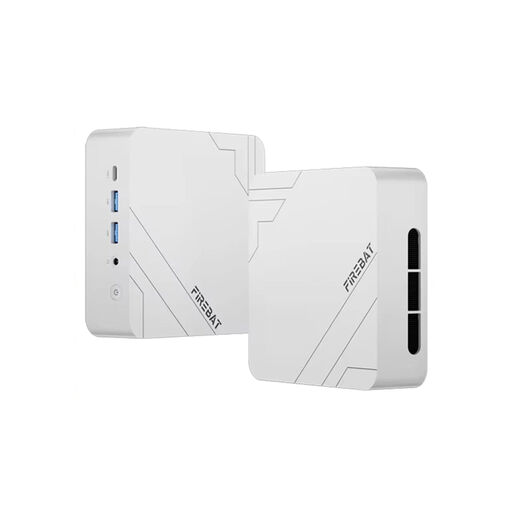
FIREBAT F1 P mini PC, AMD Ryzen 7 H 255
The mini desktop form factor is an option when desk space is limited. Check the exact configuration against your engine’s requirements and your monitor.
16 GB DDR5 RAM, 512 GB SSD and Windows 11 Pro.
Joybuy
 No image available
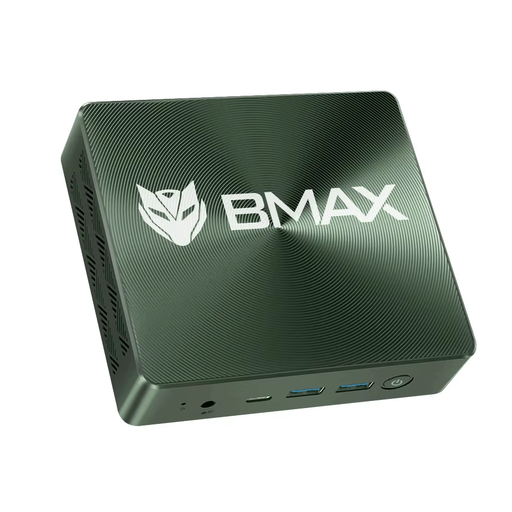
BMAX B6 Pro mini PC, Intel Core i5-1030NG7
This PC is described as a compact mini desktop and may suit a space-limited workspace. Check the dimensions of the exact variant before buying.
16 GB LPDDR4 RAM, 512 GB NVMe SSD and Windows 11.
Joybuy
 No image available
FIREBAT AM02L mini PC, AMD 6600H
The mini PC form factor suits the small-desk scenario. Check that the listed display connections match your monitor.
Radeon 660M, 16 GB LPDDR5 RAM, 512 GB M.2 NVMe SSD and Windows 11 Home. HDMI 2.1 and DP 1.4 are listed.
Joybuy
 No image available
FIREBAT mini PC, AMD Ryzen 7 7735HS
The mini PC form factor may suit a workspace with limited room. Check that the listed specification is right for your engine and monitor.
Radeon 680M, 16 GB RAM, 512 GB SSD, two M.2 slots and support for three displays.
Joybuy
Frequently asked questions
Do I need a dedicated gaming graphics card for a game menu?
No, not for every simple project. Depending on the renderer and graphics API, Godot 4.4 lists requirements that can also be met with integrated graphics. Larger projects and other engines have their own requirements.
How do I check a menu at different screen sizes?
Test the menu at the resolutions and aspect ratios you expect to use. Godot’s UI documentation explains how anchors and offsets control the position and resizing of interface elements when the parent area changes. A more powerful PC won’t replace this testing.
Can I simply add more RAM to a mini PC later?
It depends on the exact model. GMKtec describes the EVO-X2’s RAM as non-upgradeable, but lists M.2 slots for drives. Check the RAM type, slots and exact variant before buying.
What should I know about CE marking?
For products covered by harmonised EU rules that require CE marking, compliance with the applicable requirements is a prerequisite for placing them on the market. CE marking is not an independent quality award. Check the conformity information for the exact configuration.


