Photo book creators with large image collections
If you edit lots of photos before laying out your book or use additional image-editing software, check its requirements separately from those of your photo book software.


If you already have a suitable monitor and every centimetre of desk space counts, a Mini PC could be a good choice. If you’re buying the computer and screen together, an all-in-one may suit you; a larger desktop is an option if specific internal upgrade options matter more than keeping the footprint small. What matters most is what your photo and photo book software requires, having a monitor that’s suitable for assessing images, and keeping work areas separate and project files backed up.
If you edit lots of photos before laying out your book or use additional image-editing software, check its requirements separately from those of your photo book software.
If several people use the same computer or work on different projects, separate accounts, controlled file access and backups are important things to consider.
Consider whether a Mini PC with a monitor you already own or choose separately will be enough, or whether you need a complete workstation with a screen. Assess the monitor separately for photo work.
A good fit if: you’re short on space and already have a suitable monitor or plan to choose one separately.
Things to consider: a monitor and input devices aren’t automatically included; ports and upgrade options vary by model.
A good fit if: you want to buy the computer and screen together.
Things to consider: check the display specifications of the specific screen; the form factor alone doesn’t tell you whether it’s suitable for assessing images.
A good fit if: specific internal upgrade options matter more than keeping the computer as compact as possible.
Things to consider: it takes up more space and still needs a separate monitor.
| Buying criterion | What to look for | Who will find this most important? |
|---|---|---|
| Software and resources | Check the operating system, RAM and available storage against the requirements of the specific programmes you use. Saal Digital recommends 8 GB RAM for its desktop software; check the requirements for any additional image-editing software separately. | If I edit lots of photos as well as laying out photo books, the computer needs to meet the requirements of every application and suit my file collection. Around 33% of consumers put a demanding photo workflow first. |
| Accounts and backups | Check whether separate user accounts are available, who manages shared project folders, and how photos and project files are backed up and restored. | When devices are shared, I want to keep personal projects separate and decide who can access shared files and manage backups. Around 27% of consumers prioritise separate work areas and files that can be restored. |
| Screen and image assessment | Assess the monitor you’ll actually use and its calibration options; also check any resolution warnings from your photo book software. | If colour and the overall look of my images matter before I place an order, I want to view my photos on a properly set-up monitor. Around 20% of consumers prioritise image assessment. |
| Space and what’s included | Compare the case dimensions, monitor connections, included peripherals and upgrade options for the exact configuration. | In a cramped shared workspace, I want to know whether the computer will fit on the desk and what else I’ll need. Around 20% of consumers prioritise footprint and a complete workstation. |
Even a suitable computer doesn’t guarantee a suitable workstation: depending on the configuration, you may need to buy a screen and input devices separately.
Before buying, check what’s included with the specific offer and which monitor you’ll use, rather than assuming accessories come with it based on the case design.
Computer performance can’t replace checking the source files or viewing images on a suitable screen.
Pay attention to the image quality checks in your photo book software and assess colours on a properly set-up monitor.
Original photos aren’t the only files you may need for future work; project files can be important too. If files are shared, make sure everyone knows where they’re stored.
Decide which files to back up, who will manage the backup and how you’ll restore files if needed.
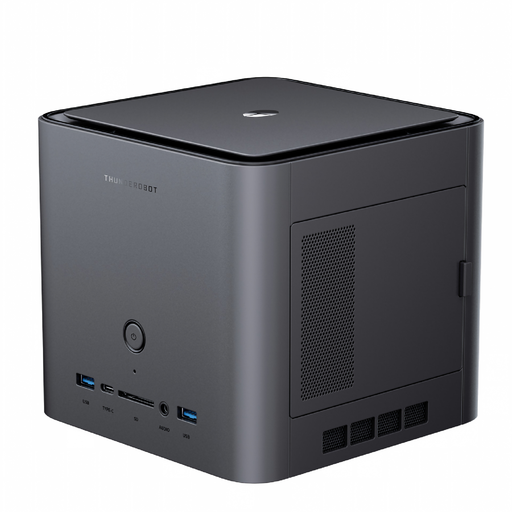
The A5 Pro 2026 Edition is an example of a compact Mini PC used with a separate monitor.
The Cubi NUC 1M is a compact desktop range for a workstation with a separate screen.
The NucBox M6 Ultra is another Mini PC range for a workstation with a separate monitor.
HP offers small business desktops such as the Pro Mini 400 G9 and the larger Pro 400 G9 SFF.
The ThinkCentre Neo 50q Gen 5 is a compact business desktop range for workstations with an existing or separately selected monitor.
This selection includes Mini PCs for use with a separately chosen monitor, as well as a desktop PC. Compare the software requirements, monitor, what’s included and storage for each configuration against your workflow.
 No image available
Listed as a desktop PC with Windows 11; check that its ports are compatible with your monitor and peripherals.
Core Ultra 9-285K, 32 GB RAM, 2 TB SSD, RTX 5080 and Windows 11.
CEWE supports Windows; Saal Digital lists Windows 11 as compatible with its desktop software. Check the requirements of any additional image-editing software separately.
 No image available
The Mini PC form factor is an option if you’re short on space and plan to use a separate monitor.
The product name lists 128 GB RAM and a 1 TB SSD.
Check the ports and what’s included to make sure they suit your monitor and shared peripherals.
 No image available
The compact design is intended for a workstation with a separately connected monitor.
The product name lists 24 GB RAM, a 512 GB SSD and macOS.
CEWE lists macOS as a supported operating system. Check compatibility with any other software used in your office.
 No image available
If you plan to use several screens at a shared workstation, check the ports and compatibility with your specific set-up.
The product name lists 24 GB LPDDR5, a 512 GB NVMe SSD and Windows 11 Pro; support for up to four 4K displays is also stated.
The Mini PC form factor requires a separately chosen monitor; check whether one is included.
Check the requirements of the specific software you use. Saal Digital lists 4 GB RAM as the minimum and 8 GB as the recommended amount for its desktop software on Windows; this doesn’t tell you what additional image-editing programmes require.
As Microsoft Support explains, Windows lets you set up separate user accounts with their own documents and settings. Also decide which project files should be shared and who will manage the backups.
The PC’s form factor isn’t the deciding factor: assess the screen and your chosen print workflow separately. Saal Digital recommends a well-adjusted, calibrated monitor and provides profiles for its soft proofing feature. This is a supplier recommendation, not a guarantee that screen and print colours will look identical.
Check what’s actually included and whether you’ll need a monitor, keyboard, mouse or a suitable backup solution. Microsoft lists external hard drives and network drives as backup options, particularly when you have large amounts of data or no internet access.
If an organisation processes personal photos, suitable technical and organisational safeguards are required, according to guidance from the Federal Commissioner for Data Protection and Freedom of Information. The measures should reflect the actual risk; separate user accounts can help with organisation, but don’t replace a thorough review of the safeguards needed.