Which setup is right for you?

Students taking occasional plant photos

You want to organise your observations from time to time and use your computer for other study tasks too. OpenVINO documents image classification and CPU inference; check that your specific software and model will run on the configuration you choose.

Students using a continuously connected camera

You want to take repeat photos in a fixed location. The Raspberry Pi documentation describes camera connections; before choosing your setup, make sure the camera type, power supply and planned software are all compatible.

Students building an AI project

You want to integrate the camera, model and, where appropriate, an accelerator yourself. The Raspberry Pi documentation describes local inference for supported tasks; compatibility with your specific model remains crucial.

What should you look for when buying?

Compact x86 all-in-one PC

A good fit if: you want to analyse saved photos using suitable Windows or Linux software and use the computer for your studies too.

Worth noting: ComputerBase describes the Beelink EQ14 with Intel N150, which it tested, as slow in benchmarks. This result applies to that model, not all x86 computers.

Mac mini

A good fit if: you use macOS or have confirmed that your plant software is compatible with Apple Silicon.

Worth noting: Apple’s information about the Neural Engine doesn’t prove that a particular plant model uses it. Also compare the available memory and SSD configurations with what you need.

Raspberry Pi 5, with optional AI HAT+

A good fit if: you want to connect a camera yourself and experiment with supported local vision models.

Worth noting: Plan the board, power supply, storage, case and, where needed, camera and HAT as a complete system. Acceleration only applies to supported tasks.

Priority What to look for when buying Who is this important to?
Software compatibility Check the model format, operating system and CPU or accelerator support for your planned workflow. If I want to run a specific plant model locally, I’ll first check that the software and hardware are compatible. Around 33% of consumers put software compatibility first.
Complete computer setup Check the computer, storage, power supply, camera, monitor and input devices against the specific offer. I want to get started with the equipment I already have and avoid discovering that components are missing when I set everything up. Around 27% of consumers prioritise an easy, all-in-one start.
Space and operating characteristics Consider measurements for the exact variant under a suitable workload, and plan for placement and airflow. If I’m taking repeat photos in the same room, the space the computer takes up and how it performs under my actual workload matter to me. Around 20% of consumers prioritise quiet, continuous operation and easy placement.
Camera and expansion options Check the camera type, connection and software, and, where applicable, whether the model is supported by an accelerator. If I want to connect a camera myself and might add an accelerator, compatibility across the whole setup is important to me. Around 20% of consumers prioritise camera integration and DIY flexibility.

Common buying mistakes

  • Assuming an AI performance figure means better plant recognition

    An accelerator can only handle supported tasks. Results from controlled photos of plants don’t automatically apply to your own houseplant photos.

    First, choose your plant model and decide how you’ll take the photos. Then check whether the software you plan to use is supported by your chosen hardware.

    An unsupported model could mean extra setup work or leave an accelerator unused.

  • Assuming the computer itself is a complete workstation

    Depending on the configuration, some essential parts of the setup may be missing. Lenovo notes that accessories for the specific ThinkCentre configuration are sold separately; a Raspberry Pi setup also needs its components planned to work together.

    For each option, make a list of the parts you’ll actually need, such as a camera, monitor, input devices, power supply, storage and case.

    Extra components mean more to source and set up.

  • Assuming “mini” automatically means quiet and fast

    The case size alone doesn’t tell you how a computer will perform under your planned workload. ComputerBase describes the Beelink EQ14 it tested as slow in benchmarks; Notebookcheck lists noise levels and space requirements as separate factors when choosing an office mini PC.

    Check measurements for the exact device configuration and a workload similar to the one you have in mind.

Key brands at a glance

Apple

The Mac mini is designed for a compact macOS workstation. Apple’s German specifications list configurations with M6 and M5 Pro.

  • Apple lists the Neural Engine and range of connections among the device’s features.
  • This doesn’t prove that a particular plant model uses the Neural Engine. Make sure the memory and SSD option, as well as the camera connections, suit your planned use.

ASUS

The ExpertCenter PN54 range includes compact mini PCs designed for Windows, with AMD Ryzen AI variants.

  • ASUS lists six USB ports and an NPU for the PN54.
  • The manufacturer’s information about its AI features doesn’t confirm support for your plant model or its classification accuracy.

Lenovo

The ThinkCentre Neo 50q Gen 7 is a configurable desktop for a combined study and image-processing workstation.

  • Lenovo lists specific CPU, RAM and SSD configurations for the German model.
  • These details don’t necessarily apply to other configurations in the range; accessories may be sold separately.

Beelink

The EQ14 with Intel N150 is an example of an entry-level x86 mini PC.

  • ComputerBase describes the tested EQ14 bundle as relatively energy-efficient in some respects.
  • ComputerBase rates the tested model’s benchmark performance as slow. This finding applies to the EQ14, not all Beelink devices or plant software.

Raspberry Pi

The Raspberry Pi 5 is a good base for DIY camera and edge vision projects. The AI HAT+ is an optional add-on for supported tasks.

  • The Raspberry Pi documentation describes camera connections and local inference for supported vision workflows.
  • You’ll need to plan for the power supply and accessories; the documentation doesn’t confirm general compatibility with plant models.

Joybuy products for plant photos

The following compact Windows and macOS computers could suit saved plant photos and other study tasks. Before buying, check that your specific classification software works with the operating system and processor in the model you choose.

HP Z2 Mini G1a with Ryzen AI Max+ PRO 395, 128 GB RAM and 2 TB SSD

HP Z2 Mini G1a, Ryzen AI Max+ PRO 395, 128 GB RAM, 2 TB SSD

A compact Windows workstation for saved plant photos and study tasks, provided the software you use works with this specific configuration.

Windows 11 Pro, 128 GB RAM and 2 TB SSD.

The listed dimensions are 200 × 85,5 × 168 mm.

Listed connections include Thunderbolt 4, USB-C and Mini-DisplayPort.

View at Joybuy

Apple Mac mini with M6, 24 GB memory and 512 GB SSD

Apple Mac mini M6, 24 GB memory, 512 GB SSD

A suitable choice for a macOS study workstation with saved plant photos, provided your specific classification software is compatible with Apple Silicon.

M6, 24 GB unified memory and 512 GB SSD.

Listed connections: Thunderbolt 4, HDMI and 2.5GbE.

According to the product description, the keyboard and mouse are sold separately.

View at Joybuy

BMAX B7A Plus with Ryzen 5 6600H, 12 GB LPDDR5 and 512 GB NVMe SSD

BMAX B7A Plus, Ryzen 5 6600H, 12 GB LPDDR5, 512 GB NVMe SSD

Worth considering as a compact Windows computer for saved plant photos and other PC tasks, provided your chosen software is supported on this configuration.

Ryzen 5 6600H, 12 GB LPDDR5 and 512 GB NVMe SSD.

The product description lists five USB 3.2 ports, two HDMI outputs and one Type-C port.

According to the description, the case measures 113 × 113 × 44,5 mm.

View at Joybuy
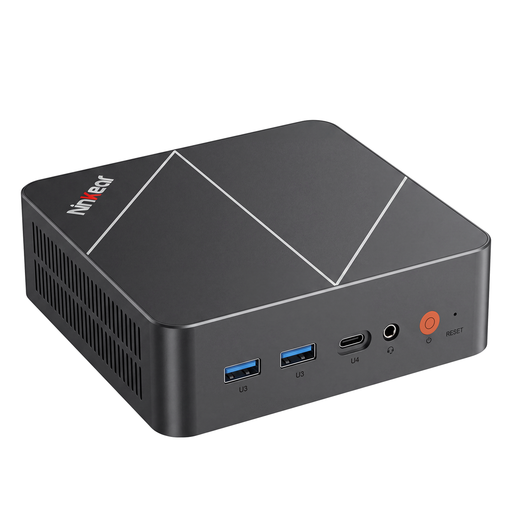
Ninkear L20 with Intel Core Ultra 5 226V, 16 GB RAM and choice of SSD

Ninkear L20, Intel Core Ultra 5 226V, 16 GB RAM

Worth considering for saved plant photos and other study tasks, provided the software you plan to use runs on Windows 11 and this configuration.

16 GB RAM; the product title lists either a 512 GB or 1 TB SSD.

The title lists support for three 4K displays, as well as Wi-Fi 6 and Bluetooth 5.3.

The case volume is listed as 0.66 litres.

View at Joybuy

FIREBAT AM02L with Ryzen 5 6600H, 16 GB LPDDR5 and 512 GB SSD

FIREBAT AM02L, Ryzen 5 6600H, 16 GB LPDDR5, 512 GB SSD

Worth considering as a compact Windows computer for plant photos and study tasks, provided your specific classification software runs on this configuration.

Windows 11 Home, Ryzen 5 6600H, 16 GB LPDDR5 and 512 GB M.2 NVMe SSD.

Listed display connections: HDMI 2.1 and DisplayPort 1.4.

View at Joybuy

Frequently asked questions

Do I definitely need an NPU to take occasional plant photos?

No, not necessarily: OpenVINO documents CPU inference for image classification. You’ll need to check whether your specific plant model runs on the computer you’ve chosen and how it performs there. A TOPS figure isn’t a substitute for checking compatibility.

Can I connect a camera for ongoing observations?

It depends on the camera type, connection and software. The Raspberry Pi documentation describes USB and MIPI camera connections for the Raspberry Pi 5. Before buying, check that the camera you want is compatible with your planned system and workflow.

How can I check whether plant classification will work well in my room?

Test the model you plan to use with your own photos of the plants in question, and under the conditions in which you intend to use it. A study published in Frontiers in Plant Science in 2016 describes images of healthy and diseased leaves taken under controlled conditions; it doesn’t guarantee the same accuracy for plant photos in a student room.

What are my rights when buying online or if a product is faulty?

For online purchases from professional sellers in the EU, you generally have a 14-day right to cancel, starting from the day you receive the goods; exceptions and possible return costs may apply. The EU consumer portal Your Europe distinguishes this from the legal guarantee for faulty goods, which it says has a minimum duration of two years. A voluntary manufacturer’s warranty is separate.

Can I put an old mini PC in household rubbish?

No. The German Environment Agency explains that waste electrical equipment must be collected separately from mixed municipal waste, and lists local collection points as an option for returning it. Check with the relevant retailer to see whether you can return it there.